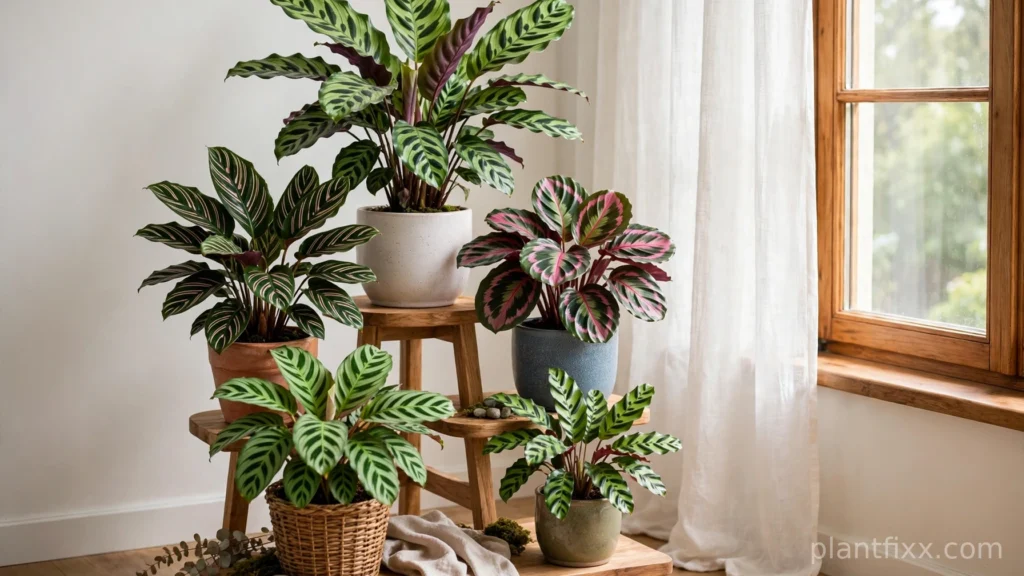
Calathea plant light requirements come down to one target: bright indirect light in the medium band, about 250 to 1,000 foot candles at the leaves, for 8 to 10 hours a day. That is a spot near a window where the plant sees the sky but the sun never lands on the leaves.
You know you have it when a reading at leaf level lands in that band and the patterns stay sharp month after month. This guide shows you how to measure your spot, what the readings mean, and how distance, window direction and season move the number.
Light is one of the four steady habits in our complete calathea plant care guide. It is also the habit owners get wrong most often, because a room that feels bright to you can be dim at leaf level.
Why Calathea Leaves Read Light So Closely
In the wild, calathea grows on the rainforest floor in Central and South America, under a canopy that breaks the sun before it lands. North Carolina State Extension notes for Goeppertia describe it as an understory plant that prefers bright indirect light.
That habitat shaped the leaf. Calathea leaves are thin and wide, built to catch scattered light across a large surface in dim forest shade, with little protective tissue. A sunbeam a thick snake plant leaf shrugs off can scorch that surface.
The patterns are light sensitive for the same reason. Patterned tissue carries less chlorophyll than plain green tissue, so it earns less energy per hour of light.
In weak light the plant leans on green tissue to feed itself, and new leaves come out plainer. In harsh light the pigments bleach first, before the leaf itself burns.
What You Need Before You Start
- A phone light meter app, or a basic handheld meter
- A sheet of white paper for the shadow test
- A sheer curtain for any south or west window
- A tape measure, because distance guesses are usually wrong
- A note to log readings by spot and season
One honest limit before you measure anything. Phone light sensors are not calibrated, and two phones can disagree on the same spot, so use readings to compare your spots against each other and against the bands below.
Calathea Plant Light Requirements at a Glance
| Reading at leaf level | Band | What a calathea does there |
|---|---|---|
| 50 to 250 foot candles, about 540 to 2,700 lux | Low light | Survives, growth slows, patterns dull toward green |
| 250 to 1,000 foot candles, about 2,700 to 10,800 lux | Medium light | The working target, steady growth and sharp patterns |
| More than 1,000 foot candles, above about 10,800 lux | High light | Risk zone if sun touches the leaves, bleaching then scorch |
These are the houseplant light bands published by the University of Minnesota Extension: low at 50 to 250 foot candles, medium at 250 to 1,000, and high above 1,000.
Calathea sits in the medium band. It never asks for the high band, and the low band is tolerance rather than a target.
Duration matters alongside strength: 8 to 10 hours of indirect light a day, with about 8 hours of darkness. The leaf folding rhythm of the prayer plant family runs on that cycle, a habit covered in our prayer plant care guide.
How to Measure Light for a Calathea Plant
With a Phone App
Download a free lux or foot candle meter app. Most read in lux, so compare against the lux figures in the table above.
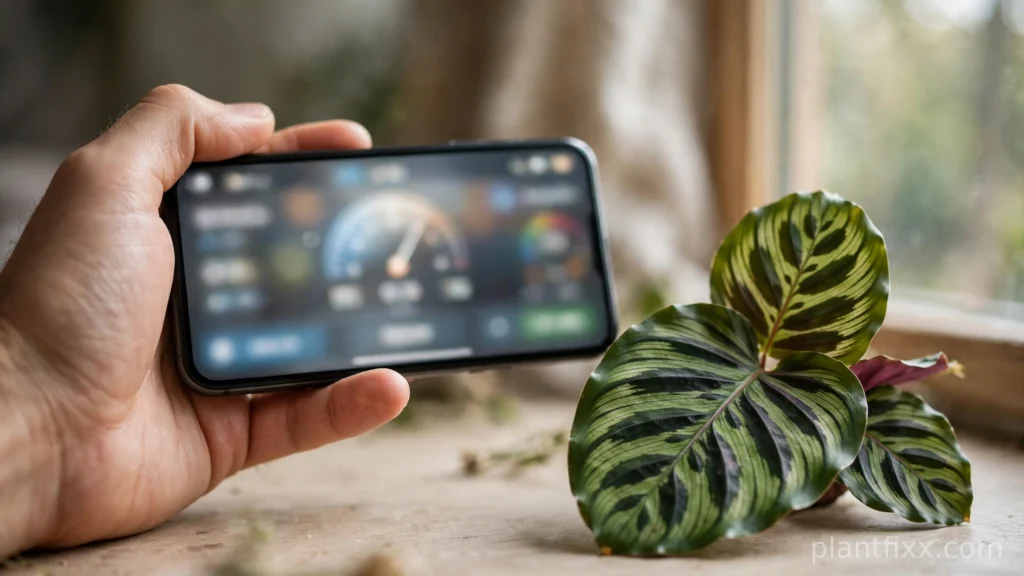
Hold the phone flat at the height of the top leaves, with the sensor facing up toward the light. The reading belongs to the leaf surface, not to the room.
Take three readings in one spot: mid morning, midday and mid afternoon. A spot that reaches the band for only one hour is not a medium light spot.
Repeat the set on a bright day and an overcast day. The gap between the two decides whether a grow light is worth adding. A handheld meter follows the same routine with better consistency.
With the Shadow Test, No Tools at All
Place a sheet of white paper where the plant would sit. Hold your hand 8 to 10 inches above the paper, between the paper and the light.
A crisp shadow with hard edges means direct sun is landing there, and that spot is too strong. A soft shadow with blurred edges is the bright indirect zone this plant wants, and a faint shadow means low light.
Distance From the Window: Where the Light Actually Falls
Light drops off fast as you move away from glass. The rule behind it is the inverse square law: double the distance from a light source and the intensity falls to about one quarter. A window is a wide source, so the drop in a real room is steep rather than exact.
When you move a plant closer to fix a low reading, move it in steps over a few days. A sudden jump from a dim corner to a bright sill can bleach leaves built for shade.
Window Direction: What Each One Gives a Calathea
| Window | Light character | Where to place the plant |
|---|---|---|
| East | Gentle morning sun, then bright indirect light | On the sill or within a few feet of the glass |
| North | The softest light, no direct sun | Close to the glass |
| South | The strongest light, direct sun much of the day | About 4 to 6 feet back, or behind a sheer curtain |
| West | Strong afternoon sun, the hottest part of the day | About 4 to 6 feet back, or behind a sheer curtain |
The RHS calathea growing guide gives the same shape: near a north or east facing window in summer, and a brighter spot in winter.
East is the forgiving default, and north works only close up. Put a calathea across the room from a north window and it is in low light, however pleasant the room feels.
South and west are not banned windows. They are strong windows, and strength is managed with distance or a curtain rather than avoided.
Sheer Curtains and Filtered Light, in Plain Words
As a rough guide, a thin sheer takes about a third off a peak reading. Weave varies a lot, so treat that figure as a starting point and not a promise.
The plain way to use one is to measure twice. Take a midday reading at the leaf without the curtain, then again with the curtain drawn, and compare both against the band.
If the curtained reading still sits above the band, add distance as well and measure a third time. If it drops into the low band, the curtain is too heavy for that window. Skip sheers on a north window, where filtering already soft light pushes a close plant toward the low band.
Grow Lights for Calathea Plants: Distance and Hours
A grow light is the honest fix for a room with no workable window, and the standard winter top up for a north window that falls short.
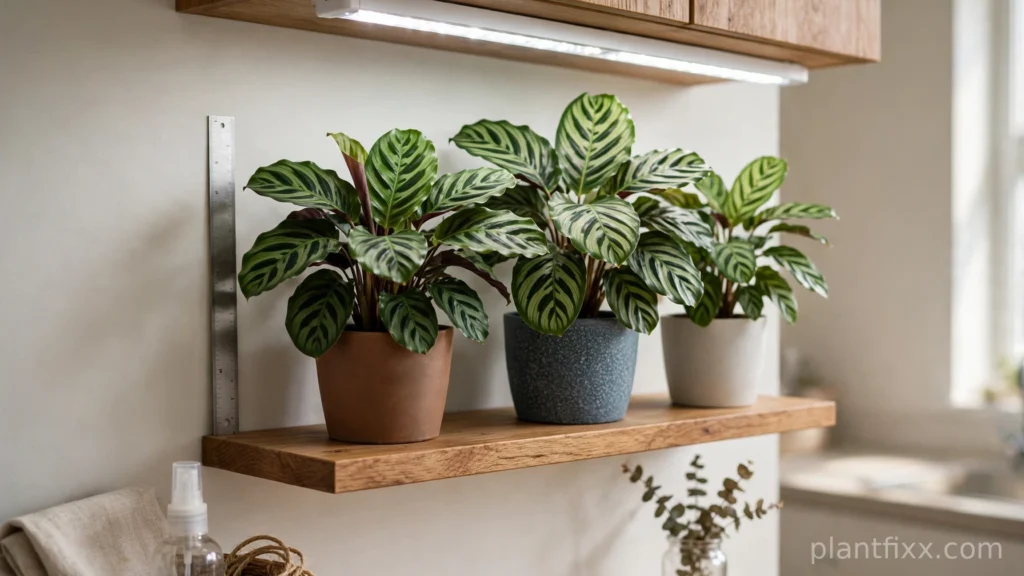
Hang a full spectrum LED 12 to 24 inches above the foliage. That distance range is the University of Minnesota Extension guidance for foliage houseplants, and it suits calathea well.
Run it on a timer for a total of 12 to 14 hours of light a day, counting any useful daylight the plant already gets. Keep the 8 hours of darkness, because the folding rhythm and the rest cycle run on it.
Judge the setup by the plant, not the box. New leaves holding pattern and size mean the distance is right, and bleaching means the light is too close.
Light Needs Differ by Leaf: Dark Leaves and White Variegation
Not every calathea reads the band the same way. The split runs along one line: how much of the leaf is green and able to feed the plant.
Dark green forms carry chlorophyll across most of the leaf, so they hold their colour toward the lower end of the medium band. White and cream variegated forms are different, because the white tissue carries no chlorophyll and the green parts alone feed the whole plant.
Those forms need the upper end of the medium band to grow at a steady pace. In low light they stall first, and new leaves often arrive smaller and greener.
That greener growth is the reversion response extension guidance describes for variegated plants in weak light: the plant trades pattern for food. Upper band never means direct sun, and white tissue scorches faster than green tissue when a sunbeam lands.
Seasonal Changes: Moving the Plant Through the Year
The spot that works in June can fail in December. Day length shortens, the sun sits lower, and a bright room can slide a full band down. The RHS guide makes the move plainly: a north or east position in summer, and a south facing windowsill in winter.
Re measure your main spot once in deep winter. If the midday reading has fallen into the low band, move the plant closer to the glass or start the grow light timer. Watch the other end in spring, when a south sill plant can meet direct sun as the days lengthen.
Small homes feel this swing hardest, because there are fewer alternative spots. Our list of the best low light indoor plants for small spaces shows which plants take the dim corner instead.
Signs of Too Much Light
Faded or bleached patches on the leaves facing the window are the first sign. The pattern washes out before any tissue dies, so fading is an early warning worth acting on.
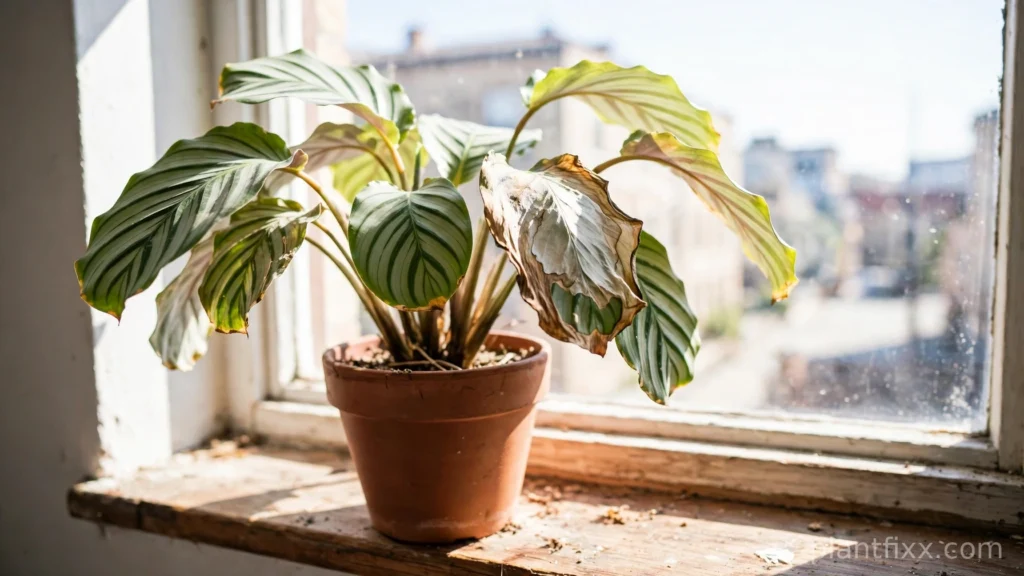
Leaves that fold during the day are also protecting themselves. A calathea folds at night by rhythm, but a midday fold in a bright spot points at stress. If the sun keeps landing, crispy scorched patches follow, and scorched tissue never turns green again.
Signs of Too Little Light
New leaves arriving smaller than the old ones, on longer and thinner stalks, is the classic low light shape. The plant is stretching toward the source.
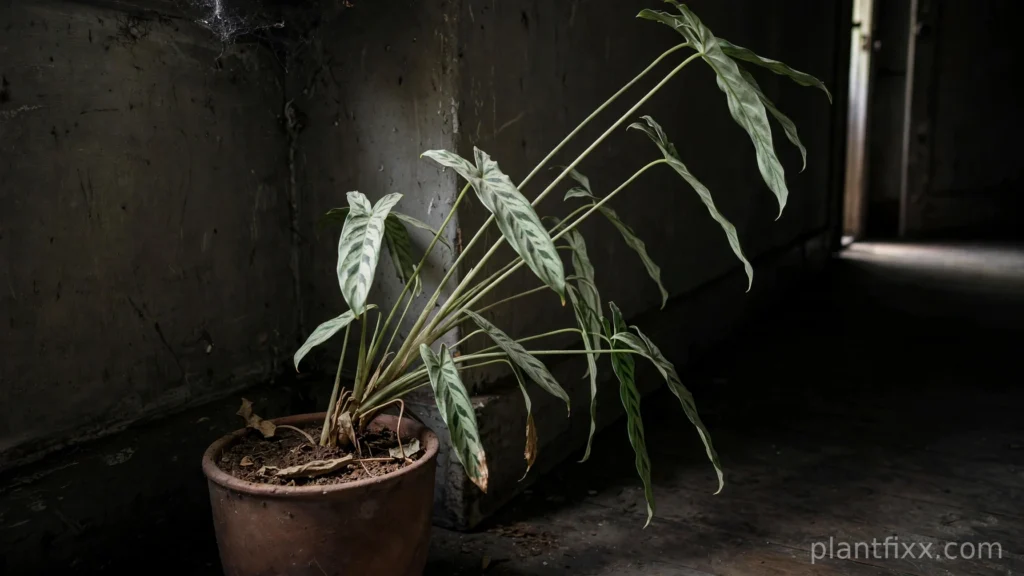
Patterns dull toward plain green, growth slows to a stop, and the evening fold grows weak or stops. Soil that stays wet far longer than it used to belongs on this list too, because a plant in weak light drinks slowly.
Calathea tolerates the lower end better than most patterned plants, which is why it appears in our guide to pet safe low light indoor plants. Tolerates still means slower and plainer, not thriving.
Signs Your Light Is Right
- New leaves unfurl at full size with the pattern as sharp as the leaf before
- Leaves fold up at night and open flat in the morning, on rhythm
- Growth stays compact, with no stretching stalks between leaves
- No new bleached patches or scorched areas between monthly checks
- The mix dries at a steady pace, because a well lit plant drinks steadily
A plant showing these signs needs no new product and no new spot.
The Honest Limits of Indoor Light
No window in a home matches the forest floor exactly, and no reading stays fixed across a year. This guide gives you a band and a routine, not a permanent answer. Skip calathea for a room with no window and no grow light.
One point in its favour for tricky homes: calathea is non toxic to cats and dogs, so a bright shelf is a safe shelf. Confirm any plant first with our pet safe plant checker for cats and dogs.
The Routine, in One Place
Measure at the leaf, place in the medium band, and keep the sun off the leaves. Recheck when the season turns, and let new growth grade your placement. The patterns you bought the plant for are the receipt that the routine is working.
How much light does a calathea need in foot candles?
The medium band, 250 to 1,000 foot candles at the leaves, for 8 to 10 hours a day.
Can a calathea grow in low light?
It tolerates low light for a while, but growth slows, stalks stretch and patterns fade toward green.
Which window is best for a calathea?
East is the easiest. North works close to the glass, and south and west work 4 to 6 feet back or behind a sheer curtain.
How far should a grow light be from a calathea?
12 to 24 inches above the foliage, for a total of 12 to 14 hours a day on a timer.
How do I know if my calathea is getting too much light?
Faded or bleached patches on the window side first, then crispy scorched areas. A midday leaf fold is another early sign.
Will a faded calathea pattern come back?
Not on that leaf. Move the plant into the medium band and new leaves will grow out sharp.
Can I use a phone app to measure light for my calathea?
Yes, for comparisons. Phone sensors are not calibrated, so compare your spots against each other and against the bands in this guide.
Does a calathea need darkness at night?
Yes, around 8 hours. The folding rhythm and the rest cycle run on it, so a grow light should switch off at night.
Pingback: Calathea Plant Care Guide: Light, Water, Humidity and Pet Safety