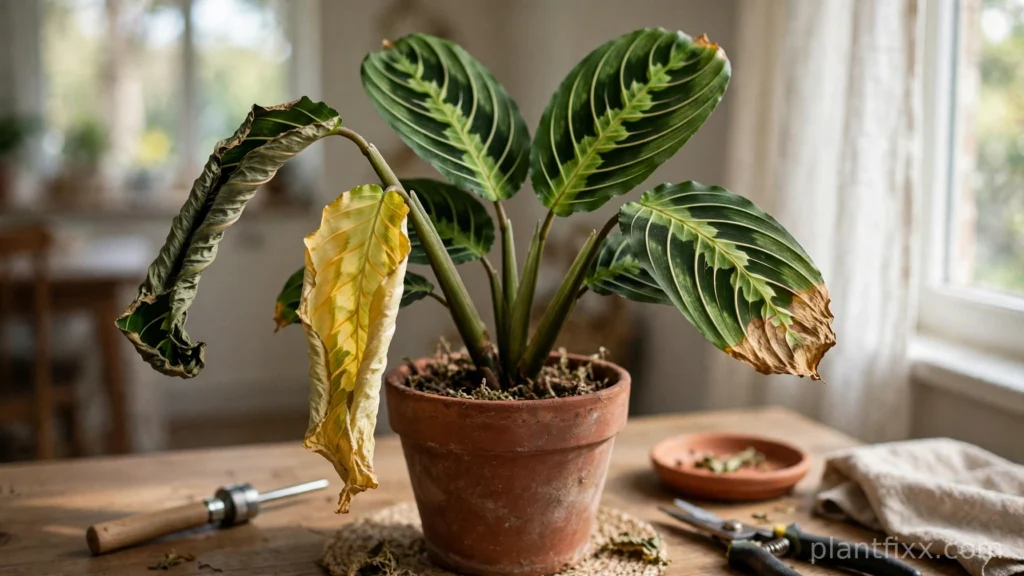
When prayer plant problems show up, one leaf rarely tells the whole story. Most prayer plant problems trace back to water, humidity or light, and the symptom in front of you tells you which one to test first today.
A plant can droop from thirst one week and yellow from wet roots the next. Reading the pattern before you act stops a small fix from turning into a second problem.
Use the table below to name your symptom and run its first check. Brief notes cover symptoms with their own guides, while the deeper sections cover the problems this hub owns.
Start With the Symptom: The Master Table
Find the row that looks most like your plant today. If two rows fit, start with the higher one, then run the triage order.
| Symptom | Likely cause | First check | Where the full fix lives |
|---|---|---|---|
| Leaves rolled into daytime tubes | Water loss, often dry soil or dry air | Feel the soil an inch down | Full guide in this cluster series on leaves curling |
| Several leaves turning yellow | Wet roots, low light, or aging | Note which leaves yellow first | Full guide in this cluster series on yellow leaves |
| Brown tips and crispy edges | Minerals in water or dry air | Look at the water you use | Full guide in this cluster series on brown tips |
| Whole plant drooping, leaves flat | Thirst, or roots failing in wet soil | Feel the soil and lift the pot | This hub, drooping section below |
| Leaves stay flat after dark | Stress, or room lights blurring the cycle | Watch one full evening | This hub, night fold section below |
| Pattern fading, stems stretching | Too little light over weeks | Compare new leaves with older ones | This hub, fading pattern section below |
| Speckles, webbing or white clusters | Spider mites or mealybugs feeding | Turn the worst leaf over | This hub, pests overview below |
| Sudden collapse, soft stem bases | Root rot in wet soil | Read the roots | This hub, root rot triage below |
Colour changes point at roots, light or feeding. Shape changes point at water moving through the plant, or failing to move.
Close family members show many of the same signs, as our complete calathea plant care guide shows. This hub stays with Maranta, because its night fold and shallow roots change how each sign reads.
The Triage Order: Five Checks, Always in This Sequence
Run these checks in order when more than one symptom shows at once. Each step rules out a common cause before a rarer one.
Check Soil Moisture First
Push a finger an inch into the mix and lift the pot. Dry mix and a light pot point one way, while heavy mix wet for days points the opposite way.
Read the Fold Timing Next
Look at midday and again after dark. A leaf flat by day and lifted at night is moving as it should, even if another symptom needs work.
Check Light Third
Note which side faces the glass. Bleached patches face strong light, while stretched stems lean toward the only bright spot in a dim room.
Turn Leaves Over Fourth
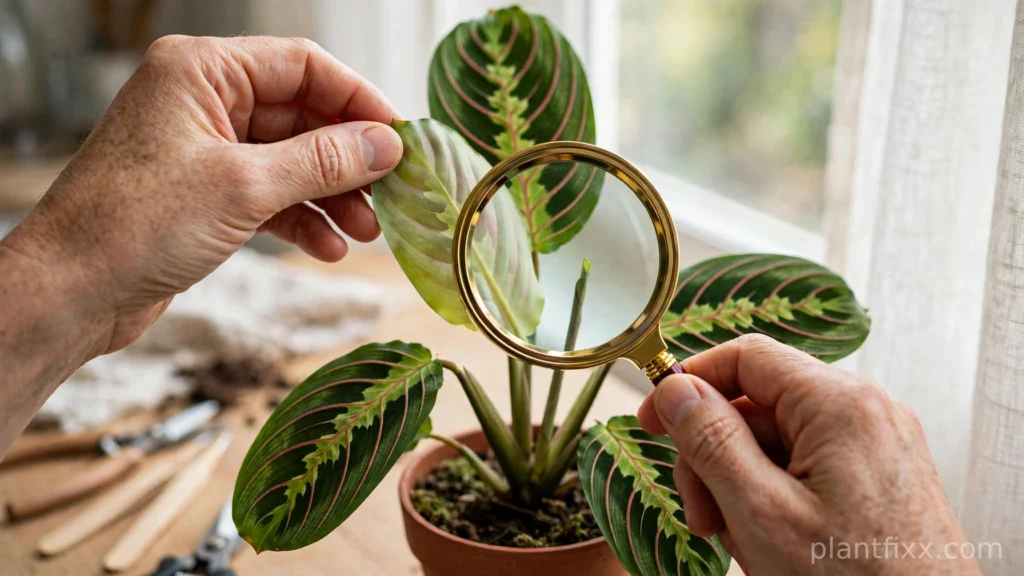
Inspect the underside of the worst leaf in good light. Fine webbing and cottony clusters hide there, where the stalk joins the blade.
Check Roots Last
Tip the plant out only when wet soil, soft stems or collapse point that way. Root checks disturb a plant, so save them for cases the first four checks cannot explain.
What You Need Before You Start
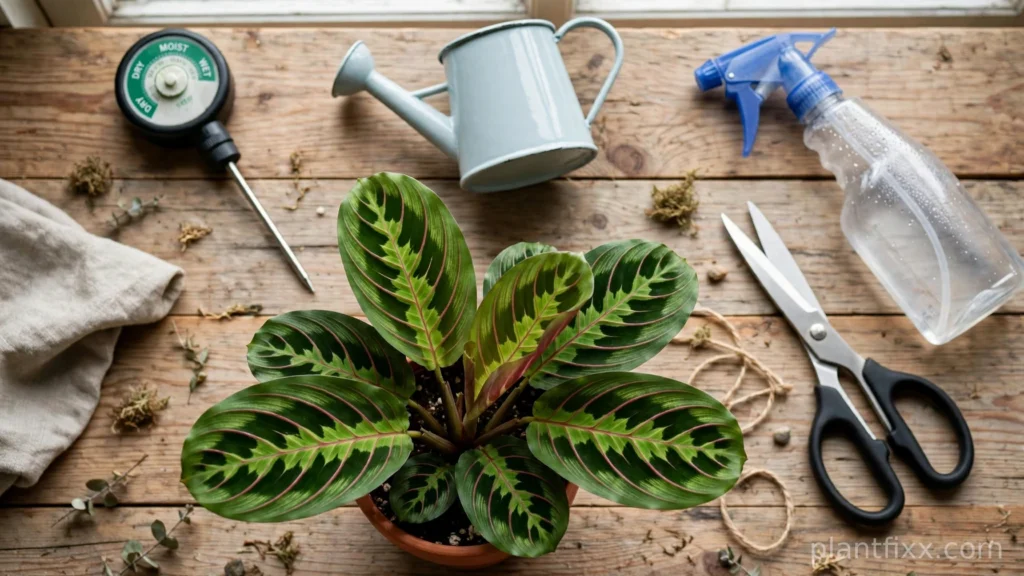
- A moisture meter, or a clean finger for the soil check.
- Soft water at room temperature, from a jug kept by the plant.
- Clean scissors for dead leaves and soft roots.
- A magnifying glass or phone camera for leaf undersides.
- A spare drained pot, ready if the root check finds rot.
- Ten minutes in daylight, plus one evening look after dark.
Skip new products at this stage. Feed and sprays cannot help until you know where the fault sits.
The Brief Summaries: Curling, Yellow Leaves and Brown Tips
Three symptoms here have their own full guides in this cluster, so this hub covers each one briefly, with the first check only.
Leaves Curling Into Tubes
A daytime tube usually means the blade loses water faster than roots supply it. Dry soil is the first test, then the air around the plant.
Our full guide in this cluster series on prayer plant leaves curling covers that diagnosis in full. Here, note the timing only: a tube held at midday is not normal folding.
Leaves Turning Yellow
One yellow leaf low on the plant often means age. Yellow on several leaves at once carries more weight, above all when the mix feels wet and stems feel soft.
Our full guide in this cluster series on prayer plant yellow leaves owns the pattern reading in full. Here, record where the yellow starts before changing anything.
Brown Tips and Crispy Edges
Dry brown ends usually trace back to what the water carries or how dry the room air stays. The damaged end will not green again, so new leaves carry the verdict.
Our full guide in this cluster series on brown tips on a prayer plant covers tips and edges in full. Here, note your water source and check fresh growth for the same mark.
Drooping and Wilting That Is Not Curling
Drooping looks different from curling. The blade stays open and flat, but the stalk loses firmness and the whole leaf hangs lower than it did yesterday.
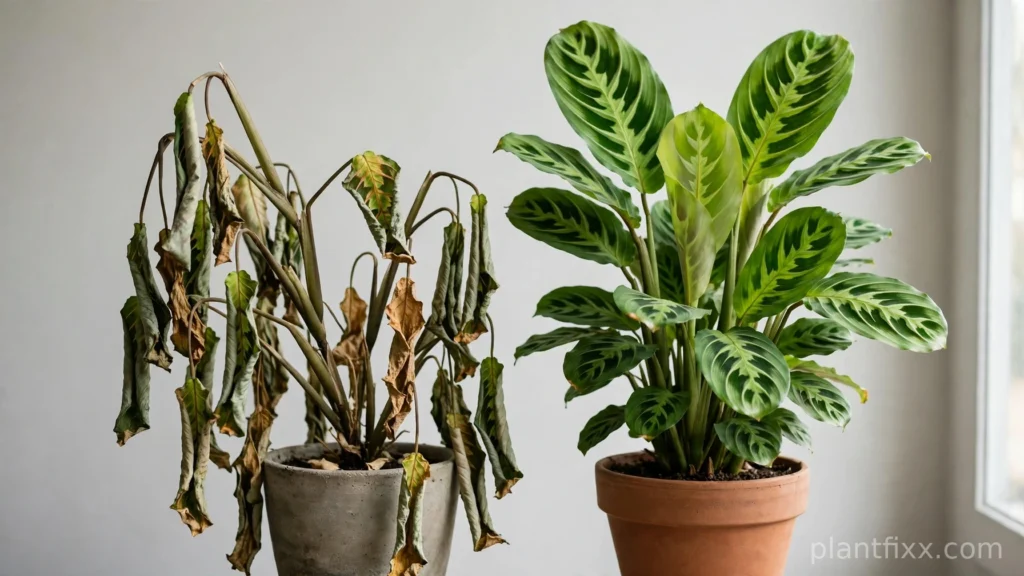
That hang is a pressure story. Stalks hold their angle when water fills their cells, and give way when supply drops or roots stop working.
Maranta shows this fast because its roots are shallow and it stores no water reserve. A droop is an early report, and it deserves a same day soil check.
Drooping With Dry Soil
Dry mix an inch down, a light pot and thin feeling leaves point to simple thirst. Water slowly until liquid leaves the drainage holes, then empty the saucer.
A thirst droop often lifts within hours. If the mix pulled away from the pot edge, pour, wait, and pour again so water reaches the whole root ball.
Drooping With Wet Soil
A droop in heavy wet mix means the opposite fault. Roots in soaked mix lose the fine tips that take up water, so leaves wilt while the pot feels full.
Do not add more water. Empty any standing water and let the top inch dry before you judge the plant again.
If stems feel soft at the base or the mix smells sour, move to the root rot triage below. That pairing brings the root check forward to now.
Leaves Not Folding at Night
A healthy Maranta holds its leaves flat by day and lifts them to an upright prayer position at night. The NC State Extension Gardener Plant Toolbox describes exactly this cycle for Maranta leuconeura, and it runs through the pulvinus, the small joint where the leaf stalk meets the blade.
Less movement on its own is not a diagnosis. The lift is gradual, and its size varies from plant to plant and from leaf to leaf. A plant can move a little every night and still be healthy, which is why one glance on one evening tells you very little.
Judge the movement on mature leaves. NC State notes that new Maranta leaves appear as a rolled tube and open as they grow, so a fresh leaf is not the one to measure the rhythm by.
Watch the plant across several evenings instead. Note the leaf position at the same time each night, and again in the morning. A rhythm that is present but weaker is a different picture from leaves that never move at all.
Then read the fold beside the rest of the plant. If the leaves look healthy and the plant continues growing, reduced movement alone is not enough to diagnose a problem. Keep observing the movement alongside the plant’s overall condition. Flat nights alongside daytime tubes, drooping, yellowing or brown tips are a stress picture, and each of those signs has its own section in this hub or its own guide in this cluster.
When stress signs do show, run the basics in the triage order above. NC State lists what this plant does not tolerate: direct sunlight, low humidity, low temperatures and cold drafts. Soil moisture and the contrast between day and night light belong in the same check, because the fold answers to darkness, so a room that stays bright late into the evening is worth ruling out.
If the plant was moved or repotted recently, note it, keep conditions steady, and keep watching. Record movement across repeated evenings and mornings, and assess new growth separately as a sign of overall plant condition.
Fading Pattern and Leggy Growth
Pattern loss is a slow light report. New leaves open paler than the ones before them, contrast between vein and blade softens, and plain green takes over.
Extension guidance notes that this species loses colour in low light. It makes less pigment where light runs short, because bold pattern pays off only when there is light to gather.
The RHS prayer plant variety page places this plant in bright filtered light with high humidity. That pairing keeps colour without the scorch direct sun leaves behind.
Leggy growth travels with fading. Stems lengthen, the plant leans toward the window, and new leaves open smaller.
Move the plant to bright indirect light, a few feet back from a bright window or behind a sheer curtain. In a dim room it still earns a place among the best low light indoor plants for small spaces, on the brightest shelf available.
Faded old leaves stay pale. Grade the move by the next few leaves, and note the opposite fault: bleached patches facing the glass mean scorch.
Pests Overview: Reading the Undersides
Pests rarely attack this plant, but dry rooms tilt the odds. Extension guidance lists no serious pest trouble for this species, with spider mites and mealybugs as the occasional pair.
Each pest leaves a different mark. Mites give fine speckles on top and faint webbing below.
Mealybugs gather as white cottony clusters at joints. Scale sits as small brown bumps along stems, and fungus gnats rise from mix that stays wet on top.
Start treatment with proof. Tap a marked leaf over white paper and watch for moving specks.
For a small find, rinse both leaf surfaces, pick clusters off, and isolate the plant. Repeat the underside check weekly, because young pests outlast one wipe.
Raise air moisture around a plant that keeps drawing mites, because mites thrive in dry heated air. Treated leaves should dry before pets reach them, and any plant can be checked with our pet safe plant checker for cats and dogs.
Root Rot Emergency Triage: Is It Worth Saving
Root rot is the one fault here that cannot wait a week. It follows mix that stayed wet, where roots sat without air until tissue softened.
The warning set is plain. The plant wilts in wet mix, stems soften at the base, leaves yellow or drop, and the pot may smell sour.
Slide the plant out and read the roots before cutting anything. The share of firm pale root left decides rescue or replacement.
Signs a Plant Can Still Be Saved
Save the plant when a good share of roots feels firm and looks pale. A firm crown, stems that stand alone, and leaves holding green tissue all support the same call.
Trim soft brown roots back to firm tissue and repot in fresh airy mix. Water once lightly, then hold the plant in bright indirect light with no feeding.
Signs the Damage Has Gone Too Far
The outlook turns poor when nearly every root is brown and stringy. It turns poorer when the crown feels mushy and stems come away from the base with a gentle pull.
A plant with no firm root and no firm crown has nothing left to rebuild from. If one firm stem with a node remains, root that piece as a cutting and treat it as a new young plant.
When to Give Up on a Prayer Plant
Honesty saves time here. A plant is ready to replace when the crown has rotted, no firm roots remain, and no stem with a healthy node can be taken as a cutting.
Cost belongs in the call. Months of nursing for a common plant makes sense only when that plant itself matters to you.
Dead tissue never heals, so judge every rescue by new growth, not by hope for old leaves.
Signs Your Fixes Are Working
Recovery shows in order. The droop lifts first, the night fold returns next, and clean new leaves confirm the fix reached the roots.
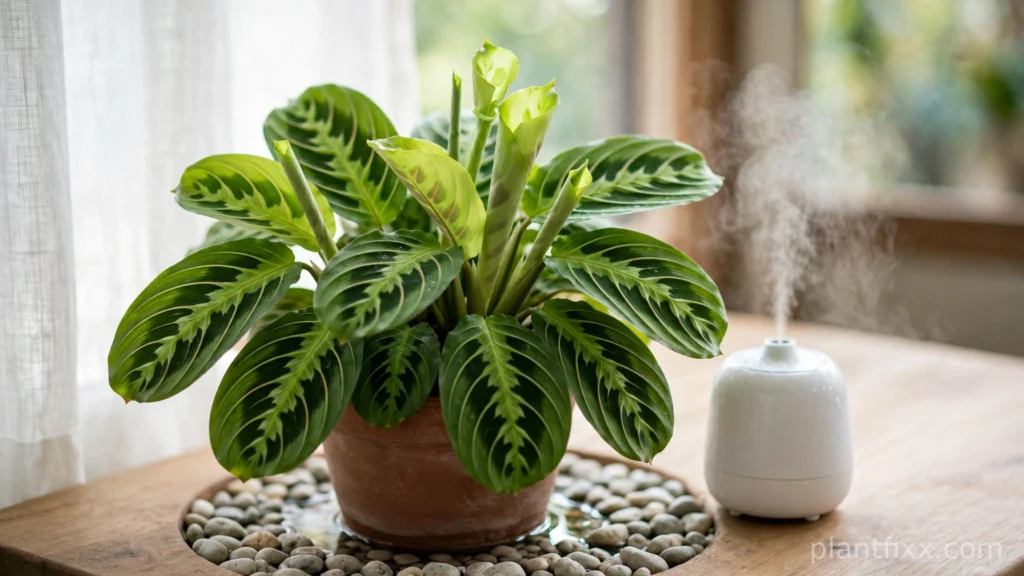
Hold the routine steady once those signs appear. Our complete prayer plant care guide sets it out in full, and the table above is the place to start next time.
Why is my prayer plant drooping even though I watered it?
Water cannot reach leaves through damaged roots. Check whether the mix stayed wet for days, then read the roots before watering again.
Why does my prayer plant stay flat at night now?
The fold weakens when water, warmth or darkness drifts off. Bright room lights late at night can also blur the cycle.
Can a prayer plant recover from root rot?
It can when firm pale roots and a firm crown remain. Trim back to firm tissue, repot in fresh mix, and judge by new leaves.
How do I know if my prayer plant needs water or has too much?
Feel an inch down and lift the pot. Dry mix in a light pot calls for water, while heavy wet mix calls for a root check.
Why is my prayer plant pattern fading and getting leggy?
Weeks of low light cause both signs together. Move it to bright indirect light and grade the change on new leaves.
What are the white cottony spots on my prayer plant?
Those clusters are usually mealybugs at leaf joints. Wipe them away, isolate the plant, and check undersides weekly until none appear.
When is a prayer plant too far gone to save?
When the crown feels mushy, no firm roots remain, and no healthy stem can be taken as a cutting. Replacement is then the honest course.
Pingback: Prayer Plant Leaves Curling: Causes and Fixes That Work
Pingback: Prayer Plant Yellow Leaves: Causes by Pattern and Fixes
Pingback: Brown Tips on Prayer Plant: Causes and Fixes That Work