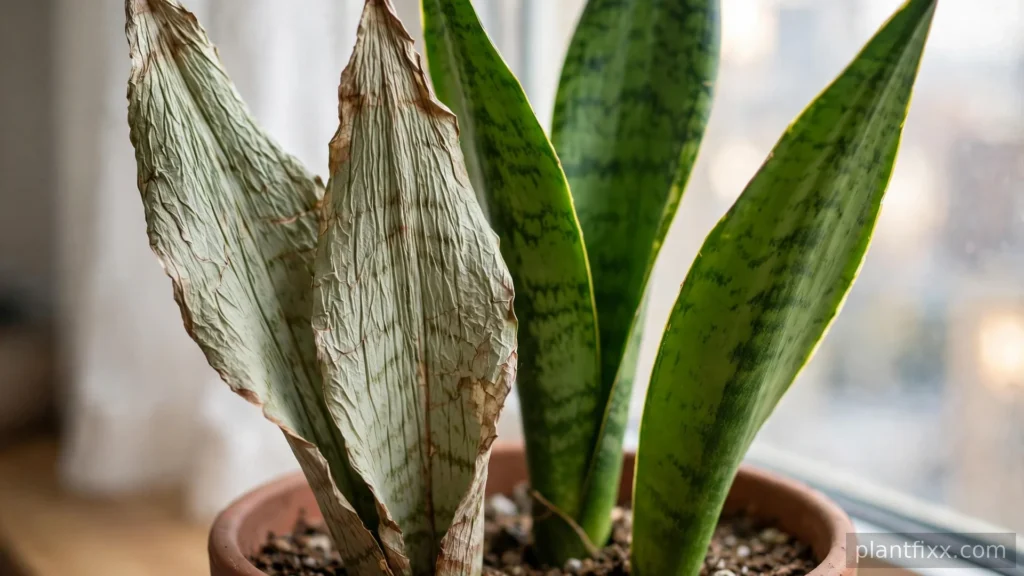
Your snake plant leaves used to feel thick, smooth, and firm. Now they show fine creases, ridges, or a thin, papery feel.
Wrinkles mean the leaves have lost internal water pressure. A thirsty plant has no water to take up, while an overwatered plant has damaged roots that cannot drink even in wet soil.
Quick Answer: Wrinkled snake plant leaves mean the leaves have lost internal water pressure, most often from underwatering or from root rot caused by overwatering. Check the soil at depth and feel the leaf bases. Dry soil with firm bases means thirst, so give one deep soak. Wet soil with a soft base means rot, so stop watering and check the roots.
Quick Take: Do not water first and ask questions later. Half of all wrinkled snake plants are overwatered, and one more soak pushes rot deeper. Feel the leaf bases, test the soil at depth, and look at where the plant sits first. Those three checks point to the right fix almost every time, and they keep a thirsty plant from waiting while a rotting plant gets worse.
Why Snake Plant Leaves Wrinkle in the First Place
A snake plant leaf stays smooth because its thick, water-storing tissue is full of water pressure. When the cells lose water, the tissue shrinks and creases. Heat, cold, pests, and a root-bound pot all work through the same path. They pull water out faster than roots replace it, or they damage the roots. One mistake many people make is reading wrinkles as a single problem with a single fix.
Wrinkled vs Curling: How to Tell Them Apart
Wrinkled leaves show texture changes. The blade stays flat but creases. Curling is a shape change. The edges roll inward, the blade folds, or the whole leaf twists. If your leaves mostly roll inward, curling is the main symptom. Our guide on snake plant leaves curling covers that problem in full.
Quick Diagnosis: Match What You See to the Cause
| What you see | Most likely cause | First action |
|---|---|---|
| Bone-dry soil, firm bases, long creases | Underwatering | One deep soak |
| Soggy soil, soft base, sour smell | Overwatering and root rot | Stop watering, check roots |
| Soil dries in a day, roots circling | Root-bound pot | Repot one size up |
| Water beads on top, runs down sides | Hydrophobic soil | Bottom water 30 minutes |
| Wrinkles facing a heater or sunny window | Heat or harsh sun | Move away, filter sun |
| Soft, translucent patches near glass | Cold damage | Move to a warm spot |
| Patchy puckering, speckles, webbing | Pests | Isolate, wipe, treat weekly |
The 7 Causes of Wrinkled Snake Plant Leaves
1. Underwatering
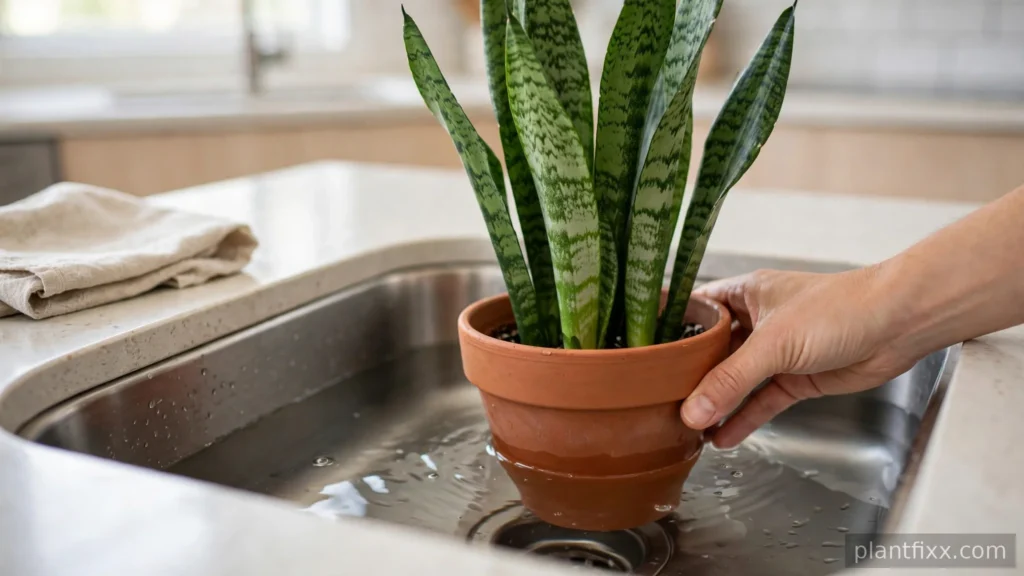
Underwatering is the most common cause. When the plant runs dry, the leaves shrink, crease lengthwise, and feel thin and papery. The fix is one slow, deep soak. Soak the pot in a sink for 20 to 30 minutes, then drain fully.
2. Overwatering and Root Rot
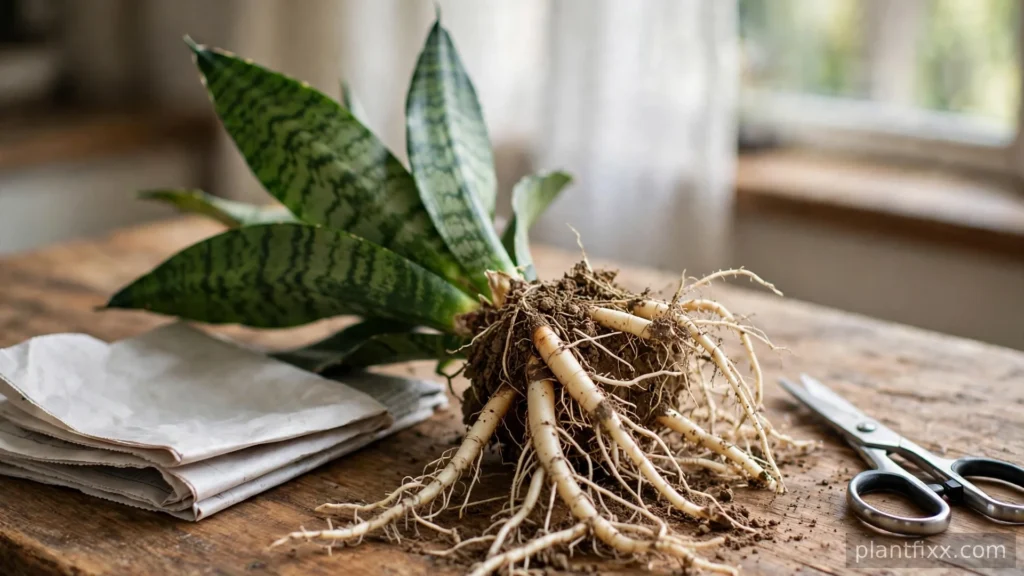
Overwatering wrinkles leaves through the opposite route. Rotted roots cannot carry water up, so the leaves wrinkle from thirst even though the soil is wet. The leaf base feels mushy and may smell sour. Do not water. Unpot the plant and inspect the roots and rhizomes. Cut away every soft root and rhizome section with clean scissors, wiping the blade with rubbing alcohol between cuts. Let cuts dry a day or two, then repot into fresh, dry, gritty mix. Our guide on snake plant root rot covers the full rescue in more detail.
3. A Root-Bound Pot
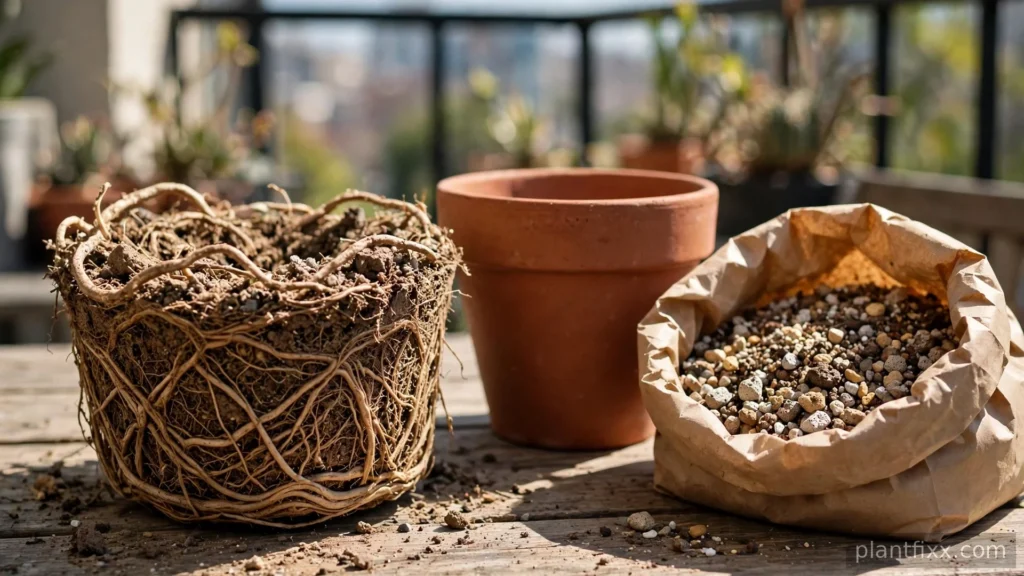
A pot that is too full stops working. With little soil left, the plant dries out within a day or two, and the leaves wrinkle, thin, and lean. Repot one size up in fresh mix, no more. A much larger pot holds extra wet soil and invites rot. Our guide on snake plant pot size covers how to pick the right fit.
4. Wrong Soil, Hydrophobic Soil, or No Drainage
Dense, peat-heavy mix stays soggy and rots roots. Old, compacted mix can turn water-repellent and leave the plant thirsty. Hydrophobic soil has a clear signature. Water beads on the surface instead of soaking the root ball. Bottom watering for 30 minutes usually rewets it. Use a fast-draining, gritty mix. Cactus mix works well, or ordinary potting mix cut with roughly one-third perlite. See our best soil mix for snake plants guide for exact ratios. Fertilizer salt buildup can also wrinkle leaves. If you see white crust, scrape off the top soil, flush the pot, and hold all feed.
5. Heat, Harsh Sun, and Dry Air
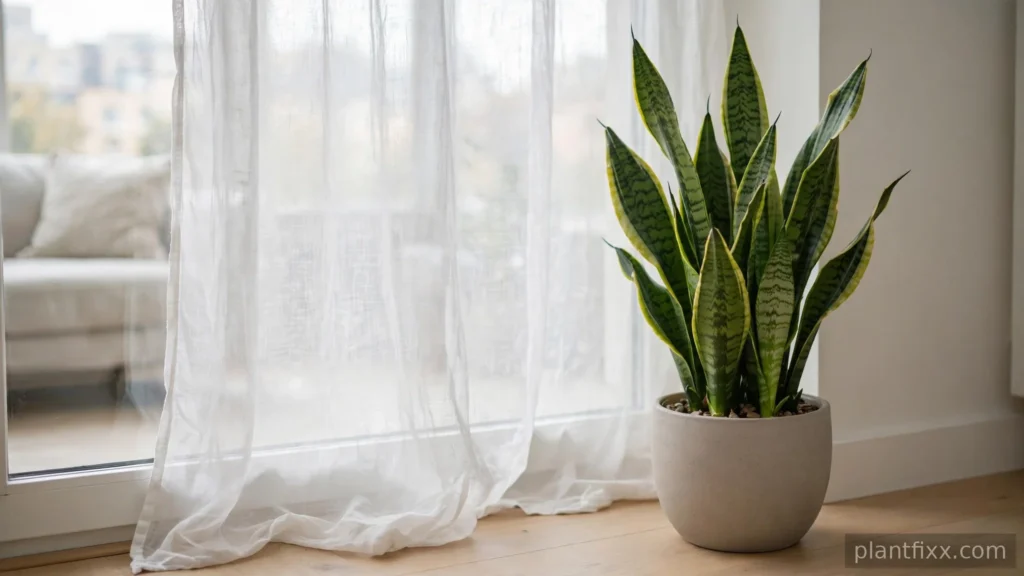
Heat and harsh sun dry leaves faster than roots replace the water, sometimes with bleached or scorched patches on the side facing the heat. Snake plants grow best between about 60 and 85 degrees. Move the plant at least three feet from any heat source. Give it bright, indirect light instead, a few feet back from a south or west window, or in an east window.
6. Cold Drafts and Chilled Leaves
Cold injury appears within days of exposure below about 50 degrees Fahrenheit. Look for wrinkled, mushy spots or dark patches near the glass. Move the plant somewhere warm, away from glass and drafts. Damaged tissue will not recover, so cut off leaves once the soft areas dry or start to rot.
7. Pests Feeding on the Leaves
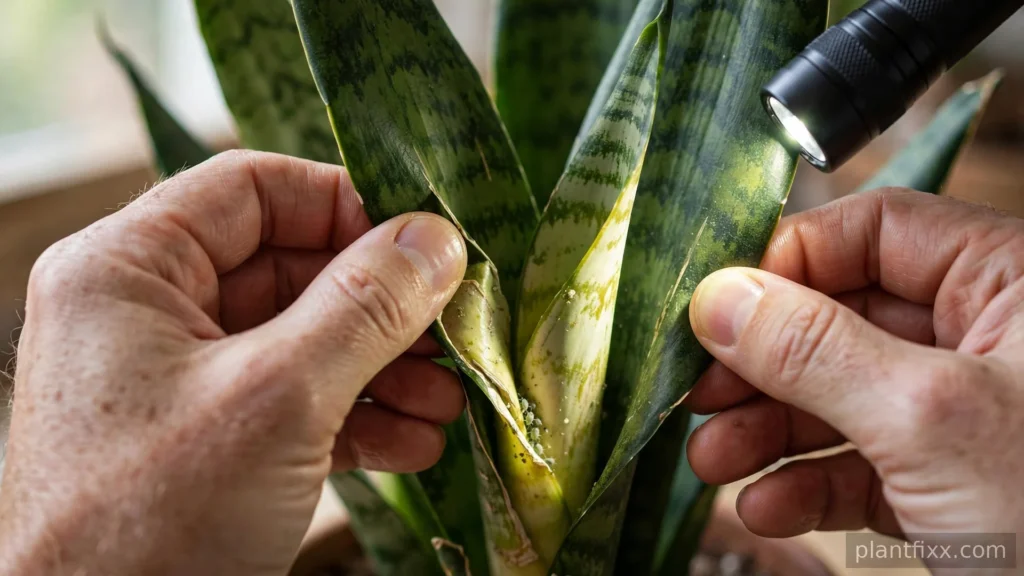
Pest damage looks patchy rather than evenly creased, which separates it from watering problems. Spider mites leave speckles and webbing. Mealybugs look like cottony clusters at the leaf base. Thrips cause silvery streaks. Wipe leaves with a damp cloth, and remove mealybugs and scale with a cotton swab dipped in rubbing alcohol. Follow up with insecticidal soap or neem oil on both sides of every leaf. Repeat every five to seven days for several weeks, since eggs hatch after the first treatment.
What You Need Before You Start
- Wooden skewer for testing soil moisture
- Clean scissors for trimming roots or leaves
- Fresh, gritty potting mix
- Pot with drainage holes
- Insecticidal soap or neem oil, if pests found
How to Fix Wrinkled Snake Plant Leaves, Step by Step
- Test moisture at depth with a skewer. Damp means wait.
- Feel the leaf bases. Firm plus dry means thirst. Soft plus damp means rot.
- Check the pot. Circling roots mean it is root-bound.
- Test for hydrophobic soil. If water beads, bottom water for 30 minutes.
- Inspect for pests. Flip leaves and check bases and creases.
- Soak for thirst, then empty the saucer.
- Unpot, trim, and repot for rot. Cut rotten roots, let cuts dry a day or two, repot into dry mix.
- Repot one size up for a root-bound plant, in fresh mix.
- Fix the spot. Bright, indirect light, away from heat and drafts.
- Leave it alone until new growth shows.
Signs It Is Working
Judge recovery by new growth, not by the old leaves. Within a few days of a deep soak, mild thirst wrinkles often firm up and smooth out. Within two to four weeks, a healthy plant pushes up a new center leaf.
Signs It Failed and What to Do Next
If the wrinkles spread to new leaves, the base softens further, or a sour smell develops, the rot is still active. Unpot again, trim any newly rotted roots, and repot into fresh, dry mix. If the whole root system is gone, the plant is likely past saving.
What to Do If Wrinkles Stay After You Fix the Cause
Wrinkles that stay after the fix are normal. A leaf that was deeply dehydrated or damaged by cold keeps its creases. The creases are scars in tissue that already formed. Leave firm, green, wrinkled leaves in place. Remove only mushy, brown, or collapsing leaves. If new leaves come in smooth and firm, the plant has recovered, even if the old leaves still carry faint lines.
Mistakes That Make Wrinkles Worse
- Watering on a schedule. Water when the soil is dry, not every Saturday.
- Feeding a stressed plant. Hold all feed until the plant is growing again.
- Repotting into a much bigger pot. Extra soil stays wet and restarts rot. Go one size up, no more.
How to Stop Snake Plant Leaves Wrinkling in the Future
Water only when the soil is dry all the way down, and let the pot drain fully. Use a gritty mix in a pot with drainage holes. Give the plant bright, indirect light and steady temperatures above about 55 degrees. Keep it away from heaters and cold drafts.
The Bottom Line on Wrinkled Snake Plant Leaves
Wrinkled leaves are your snake plant asking you to check the roots, not to reach for the watering can on reflex. If your leaves mostly roll inward instead of creasing, read our guide on snake plant leaves curling next.
Will wrinkled snake plant leaves go back to normal?
Sometimes. Mild thirst wrinkles often firm up within a few days of a deep soak. Wrinkles from rot, cold, or deep dehydration usually stay.
How do I tell overwatering from underwatering when leaves wrinkle?
Check soil at depth and feel leaf bases. Soggy soil with a soft base means rot. Bone-dry soil with firm leaves means thirst.
Why are my snake plant leaves wrinkled and thin?
Thirst is the most common reason. The plant draws on water stored in its leaves.
Should I cut off wrinkled snake plant leaves?
Only badly damaged ones. Cut a mushy, brown, or collapsing leaf at the soil line. Leave firm, green, wrinkled leaves in place.
Do wrinkled leaves mean root rot?
Not always. Rot comes with wet soil, a soft base, and often a sour smell.
How often should I water to stop the leaves wrinkling?
Only when the soil is dry all the way down, then soak and drain.
Pingback: Snake Plant Leaves Curling? 7 Causes and How to Fix Them
Pingback: Snake Plant Yellow Leaves: 10 Causes & Fixes (2026)
Pingback: Snake Plant Brown Tips: 9 Hidden Causes & Easy Fixes (2026)