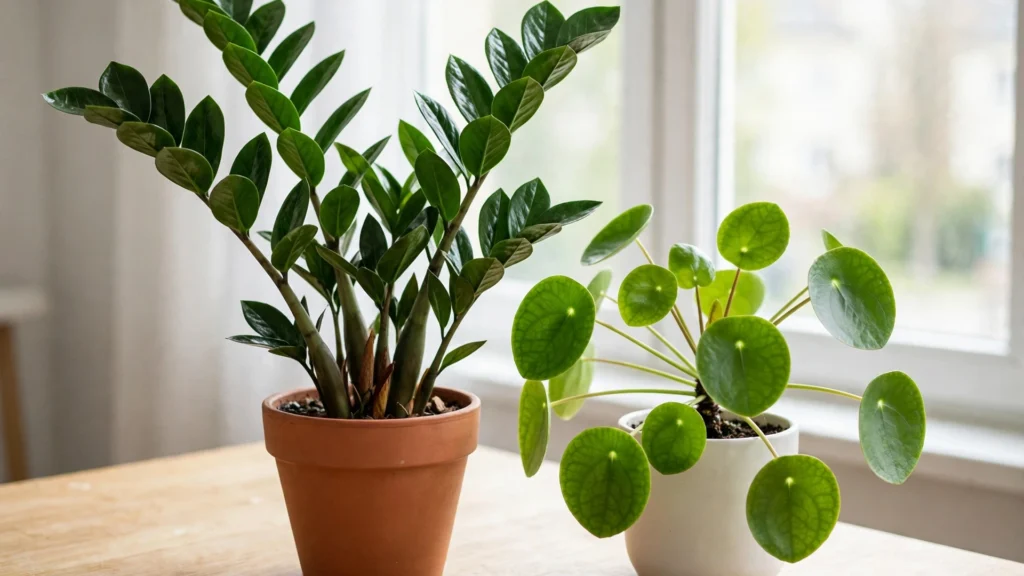
Two plants sit on the same nursery shelf, both labeled easy. The ZZ plant stands tall with glossy, dark green leaves. The money plant charms with round, coin-shaped leaves on thin stems. They look like they belong in the same care category, but they do not.
Pick the wrong one for your light, schedule, or pets, and you will spend months fighting yellow leaves and drooping stems. This guide compares the ZZ plant vs money plant across light, watering, growth, and pet safety.
Quick Answer
Choose the ZZ plant for low light and rare watering. Choose the money plant for bright light, faster growth, and pet safety. The ZZ plant stores water in underground rhizomes and tolerates neglect. The money plant needs steadier watering and brighter light, but it is non-toxic to cats and dogs, while the ZZ plant is toxic if eaten.
Quick Take
The two plants suit opposite lifestyles. The ZZ plant fits busy people, travelers, and dim rooms: water it every few weeks and it stays glossy. The money plant fits hands-on owners with a bright windowsill: it grows faster, makes baby plants to share, and stays safe around pets. If pet safety decides it, the money plant wins. If low light and low effort decide it, the ZZ plant wins.
Which Plant Is the Money Plant?
Three plants share the name “money plant.” The Chinese money plant (Pilea peperomioides) is the one this article compares with the ZZ plant. It has round, flat, coin-shaped leaves on long, thin stems and comes from Yunnan province in China. Nurseries also call it the pancake plant or the pass-it-on plant, because it produces baby plants, called pups, you can separate and give away.
The money tree (Pachira aquatica) is a different plant, with a woody, often braided trunk. In South Asia, “money plant” usually means pothos (Epipremnum aureum), a trailing vine. If that is the plant you meant, read our ZZ plant vs pothos plant comparison instead.
ZZ Plant vs Money Plant at a Glance
| Feature | ZZ Plant | Money Plant (Pilea) |
|---|---|---|
| Scientific name | Zamioculcas zamiifolia | Pilea peperomioides |
| Light | Low to bright indirect light | Bright indirect light |
| Watering | Every 3 to 4 weeks, soil fully dry | Every 1 to 2 weeks, top inch dry |
| Growth rate | Slow | Moderate to fast |
| Typical indoor height | 2 to 3 feet | About 12 inches |
| Pet safety | Toxic if eaten | Non-toxic to cats and dogs |
| Propagation | Division, cuttings (slow) | Pups (easy and fast) |
| Best for | Low light, busy owners, offices | Bright rooms, pet homes, hands-on owners |
Why These Two Plants Behave So Differently
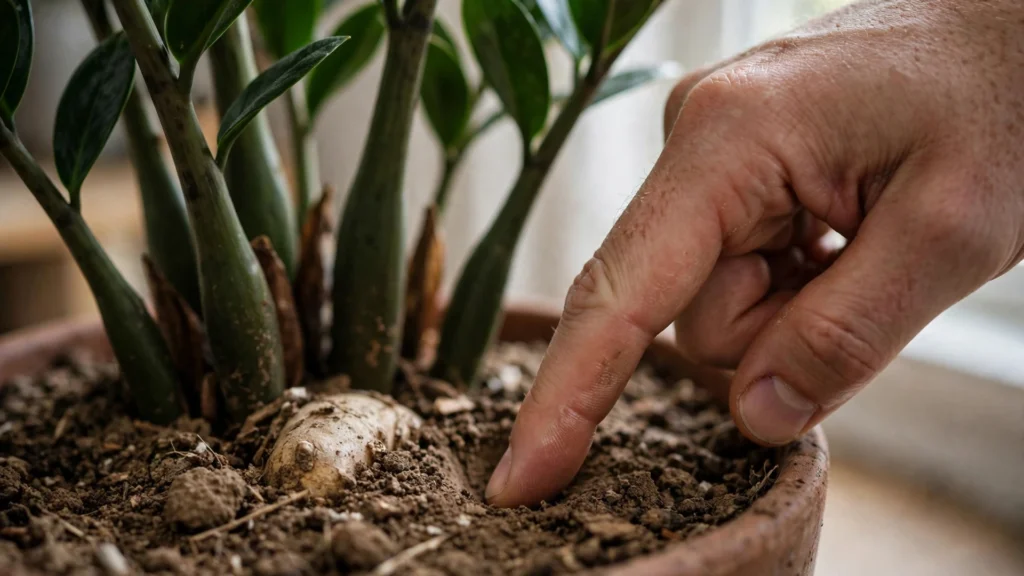
The care gap comes from how each plant stores water. The ZZ plant evolved in the dry regions of Eastern Africa. It grows thick, potato-like rhizomes under the soil that hold water. That storage is why it survives missed waterings and dim corners.
The money plant has no such storage. Its thin stems and flat leaves lose moisture faster, and it comes from cool, bright, sheltered mountain slopes in China. It needs a steadier supply of water and light. That is the whole care difference: the ZZ plant punishes overwatering, while the money plant punishes neglect.
Light: Where Each Plant Thrives
Light is the first filter in this decision. The ZZ plant is one of the most shade-tolerant indoor plants you can buy. It grows in north-facing rooms, dim hallways, and offices with only fluorescent light, and it keeps its glossy leaves in low light. Keep it out of harsh direct sun.
The money plant is pickier. It needs bright, indirect light to stay compact and full. An east-facing window with gentle morning sun works well. In low light, it stretches, leans toward the window, and drops leaves. Rotate the pot weekly so it grows evenly. If your whole home runs dim, see our guide to low-light indoor plants for small spaces.
Watering: The Biggest Care Difference
Watering is where most owners go wrong, because the two plants want opposite routines. For the ZZ plant, the rule is simple: when in doubt, do not water. Wait until the soil is dry all the way through the pot, then water thoroughly. In most homes, that means every 3 to 4 weeks, and even less in winter.
One mistake many people make is treating a ZZ plant like a weekly-watering houseplant. Weekly watering keeps the rhizomes wet, and wet rhizomes rot. The first sign is usually a yellow stalk at the base. Check with your finger before every watering. Our full schedule is in how often to water a ZZ plant.
The money plant wants the opposite rhythm. Water when the top inch of soil feels dry, and water thoroughly until it drains from the bottom. In a typical home, that is roughly every 1 to 2 weeks. It tells you when it is thirsty: its leaves droop and feel soft.
Soil and feeding matter too. Use a pot with a drainage hole for either plant. For the ZZ plant, use a cactus or succulent mix, or add perlite to regular mix. For the money plant, a standard indoor mix with perlite works well. Feed both lightly: half-strength balanced liquid fertilizer, once a month in spring and summer.
Growth, Size, and Looks in a Small Space
The ZZ plant grows upright, with arching stems that reach 2 to 3 feet indoors. Its dark, glossy leaves look sculptural and modern. It is a slow grower, so it changes little from season to season.
The money plant stays small, usually around 12 inches tall, and spreads into a mound of coin-shaped leaves. It grows noticeably faster than the ZZ plant in spring and summer. ZZ plants need repotting every 2 to 3 years. Money plants may need a pot one size up each spring.
Propagation: Pups vs Rhizomes
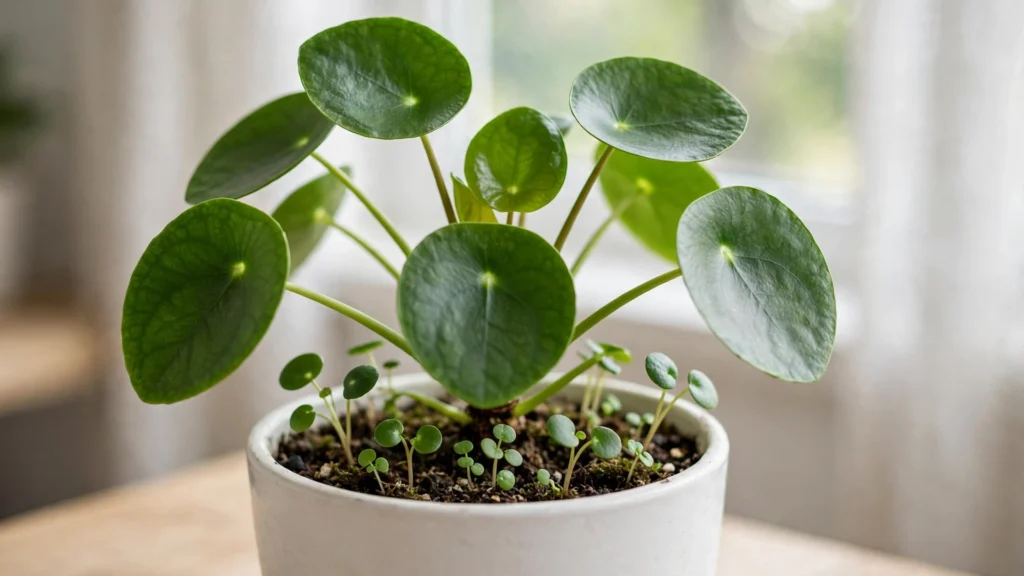
Propagation is where the money plant pulls far ahead. It produces pups, small copies of itself, around the base of the stem and in the soil. When a pup has a few leaves and its own stem, cut it away and place it in water or moist soil. It roots in a few weeks. That is why the money plant earned the nickname “pass-it-on plant.”
ZZ plant propagation works, but it tests your patience. Divide the rhizomes when you repot, or root a single leaf or stem cutting in soil or water. Leaf cuttings can take months to form a rhizome and send up a new stem. Our step-by-step method is in ZZ plant propagation.
Pet Safety and Toxicity
For homes with cats or dogs, this section may settle the whole comparison. The ZZ plant is toxic if eaten. All parts contain calcium oxalate crystals that irritate the mouth and stomach. A pet that chews a leaf can end up drooling, pawing at its mouth, or vomiting. Keep a ZZ plant on a high shelf or in a room pets cannot reach.
The money plant is non-toxic to cats and dogs. That does not mean pets should chew it freely, since any plant material can upset a stomach, but it removes the poisoning risk.
Common Problems and How to Fix Them
ZZ Plant Problems
Yellow stalks at the base almost always mean overwatering. Stop watering at once and let the soil dry fully. If the soil stays wet for more than a week, unpot the plant, trim soft, brown rhizomes, and repot into fresh, dry mix. Brown, crispy leaf tips usually point to direct sun: move the plant back from the window.
Money Plant Problems
Drooping, soft leaves mean thirst. Water thoroughly and it should recover within hours. Leaves that curl inward often signal too much direct sun or dry air: move the plant back from the window and away from heating vents. Small white spots under the leaves are usually harmless mineral deposits the plant pushes out through its pores; wipe them off with a damp cloth.
Which One Should You Pick?
Choose the ZZ plant if your home has low light, you travel or forget to water, and no pets will chew the leaves. It is the closest thing to a set-and-forget indoor plant.
Choose the money plant if you have a bright windowsill, enjoy checking on your plants, want visible growth, or share your home with cats or dogs. It asks for a little more attention, and it pays that back with pups you can share. New to plant care? Our ZZ plant beginner mistakes guide covers the errors that kill most first ZZ plants.
Is a ZZ plant or a money plant better for beginners?
The ZZ plant is easier for most beginners because it tolerates low light and long gaps between waterings. The money plant is also beginner-friendly, but it needs brighter light and more regular watering.
Is a money plant the same as pothos?
Not in most nurseries. In South Asia, “money plant” usually means pothos, but in the United States and Europe it usually means the Chinese money plant, Pilea peperomioides. Check the label’s scientific name.
Are ZZ plants toxic to pets?
Yes. All parts of the ZZ plant contain calcium oxalate crystals that irritate the mouth and stomach if eaten. Keep ZZ plants out of reach of cats, dogs, and small children.
Is a money plant pet friendly?
Yes. The Chinese money plant is non-toxic to cats and dogs. Discourage chewing anyway, since any plant material can upset a stomach.
Which plant grows faster, ZZ plant or money plant?
The money plant grows faster, especially in spring and summer, when it pushes out new coin-shaped leaves every few weeks. The ZZ plant may produce only a few new stems per year.
Final Thoughts
The ZZ plant and the money plant are both easy plants, but easy in different ways. The ZZ plant is easy because it asks for almost nothing. The money plant is easy because it tells you what it needs and recovers fast after a missed watering. Match the plant to your light, schedule, and pets, and either one will earn its spot.
Still deciding between easy plants? Compare the ZZ plant with another popular beginner choice in our ZZ plant vs spider plant guide.