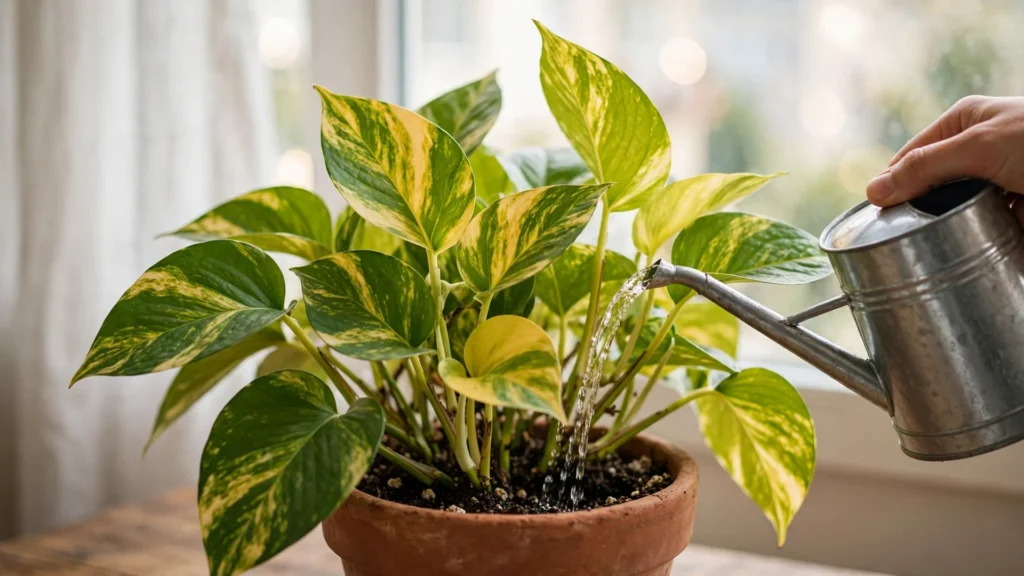
Search for how often to water a pothos plant and you will find a dozen different answers: every week, every ten days, every two weeks. They cannot all be right, because your plant is not growing in their living room.
The honest answer is that your pothos plant sets its own schedule, and your job is to learn how to read it. Below is a simple schedule as a starting point, plus the thirty-second soil test that replaces any calendar. By the end, you will know exactly when to water and, just as important, when to wait.
Quick Answer: Water your pothos plant when the top 1 to 2 inches of soil feel dry, usually every 7 to 14 days. Bright rooms and summer heat pull that toward weekly watering. Dim corners and winter push it past two weeks. Test the soil with your finger before every watering, never by calendar.
Quick Take: Pothos plants hate standing water more than a dry spell. Roots need air between waterings, so the goal is a soak-and-dry rhythm, not a steady drip. University horticulture guidance puts it plainly: soak, then let the soil dry between waterings. This guide turns that principle into a practical routine for real apartments.
Every pothos I have cared for that died died the same way: from too much love. A pothos forgives a late watering in days. It almost never forgives a second soak in a soggy pot. Underwatering is the safer mistake.
Why Your Pothos Plant Does Not Run on a Calendar
Pothos plants store water in their stems and leaves, but their roots cannot sit in wet soil. Roots breathe, and saturated soil pushes the air out and suffocates them. That suffocation is root rot, the mechanism behind the most common pothos problem in homes.
Light is the biggest factor calendars ignore. A pothos in bright indirect light pulls water up quickly and dries its soil sooner. The same plant in a dim hallway barely sips, and its soil stays damp for weeks. Pot size matters too. A small pot dries fast. A big pot holds a reservoir that lasts much longer.
“Water every Sunday” is bad advice even when it accidentally works. It just happens to match the conditions of the person who wrote it. Your apartment has different light, different air, and a different pot. The soil test below accounts for all of it in thirty seconds.
The 30-Second Soil Test That Sets Your Schedule
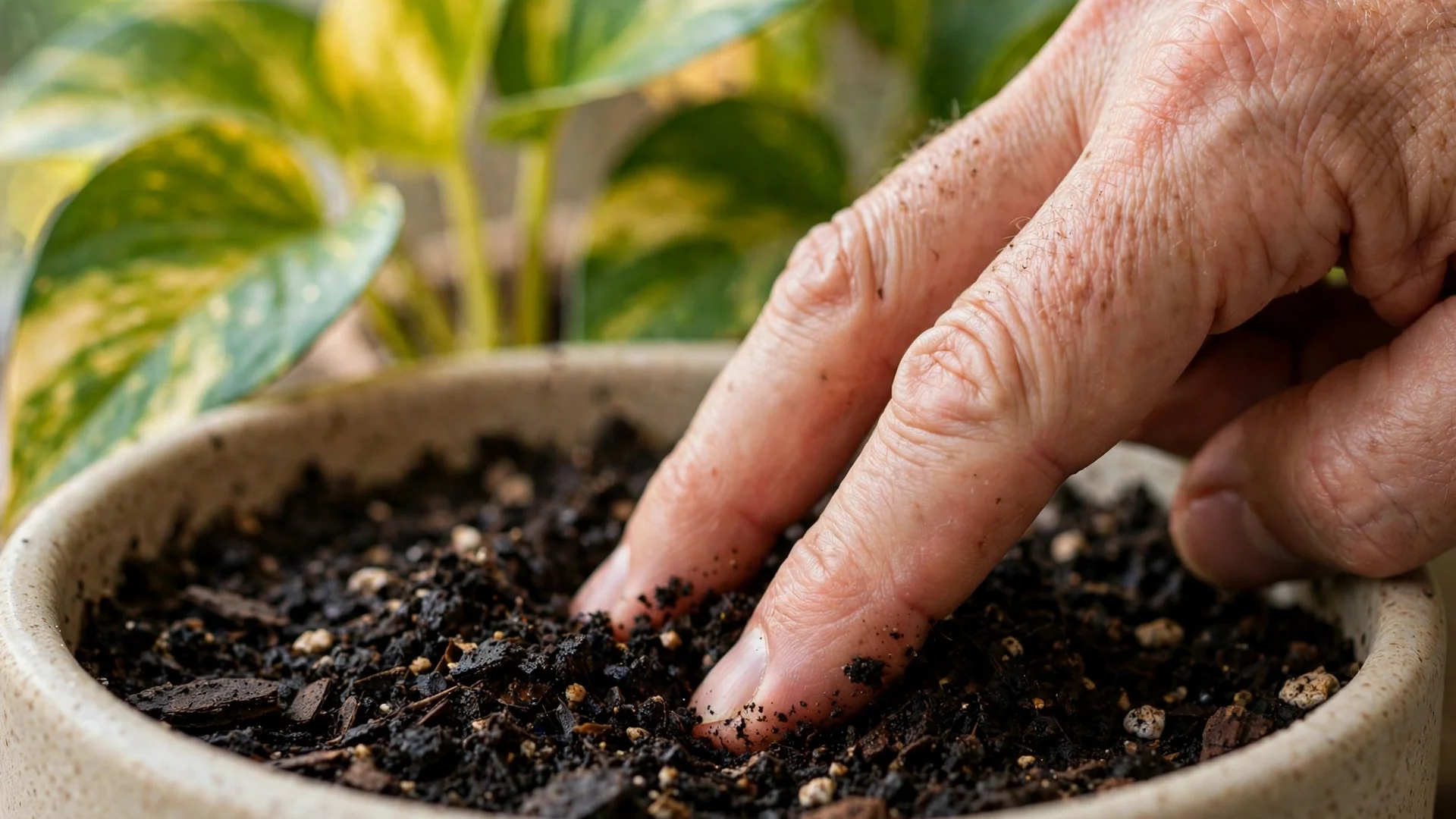
Push your finger into the soil to the second knuckle, about 1 to 2 inches deep. That is the full test.
If the soil feels dry at that depth and nothing clings to your finger, water now. If it feels cool and damp, or soil sticks to your finger, wait two to three days and test again. The surface dries first and lies to you, so ignore it.
A wooden chopstick left in the pot works the same way. A moisture meter counts too; water only when it reads the dry zone, not the middle of “moist.”
Do not water just because the leaves droop. Drooping is a late signal, and it can mean the plant is thirsty or that the roots are already damaged from too much water. The soil test tells you which one it is. Droop plus dry soil means water. Droop plus wet soil means stop and let it recover.
What You Need Before You Water
Setup matters more than the schedule. Get these right and watering becomes forgiving.
First, the pot must have drainage holes. Water that cannot escape pools at the bottom and keeps the lowest roots wet. If your decorative pot has no holes, keep the plant in a nursery pot inside it and lift it out to water.
Second, use room-temperature water. Let it sit for an hour before use, since cold water straight from the tap can shock roots in winter. Tap water is fine for pothos. These plants tolerate normal municipal water well, so distilled water is unnecessary unless yours is extremely hard or heavily softened.
Third, grab a long-spout watering can. It gives you control and keeps water off the leaves. That is all you need. A moisture meter is optional but useful for beginners who do not yet trust the finger test.
The Right Way to Water a Pothos Plant
When the soil test says dry, water deeply. Pour slowly and evenly until water flows from the drainage holes. A thorough soak wets the entire root zone. A small splash only wets the top inch and forces you to water again sooner.
Drain the pot in the sink or shower for ten to fifteen minutes, then empty the saucer. Never let it sit in standing water. This draining step is the biggest difference between healthy roots and rot.
Two watering methods both work. Top watering is faster and flushes fertilizer salts out of the soil. Bottom watering takes longer but encourages deep roots and keeps the soil surface dry, which helps against fungus gnats. Either way, the pot must drain fully afterward.
Do not water if the soil is still damp, even if a week has passed. Waiting is never the dangerous choice with this plant.
Your Seasonal Watering Schedule
Use this as a starting range and let the soil test adjust it.
| Season and light | Typical interval | Why |
|---|---|---|
| Spring and summer, bright indirect light | Every 7 to 10 days | Active growth and warmth dry soil faster |
| Spring and summer, low light | Every 10 to 14 days | Slower growth uses less water |
| Fall and winter, bright spot | Every 10 to 14 days | Shorter days slow everything down |
| Fall and winter, low light | Every 14 to 21 days | Cool, dim conditions dry soil very slowly |
Winter is where most overwatering happens. The plant is barely growing and daylight is short, so let the winter gap stretch.
Apartment Microclimates That Change the Math
AC dries the air but cools it, which partly offsets faster evaporation. Check a day earlier than usual, since moving air speeds water loss through the leaves.
A radiator or heater vent is the harshest spot. Warm, dry air pulls moisture from soil and leaves fast. A pothos near a radiator can need water every five to seven days in winter. Move the plant a few feet away from the heat if you can.
Hanging baskets dry faster than floor pots, so check them every four to five days. Bathrooms do the opposite: shower steam keeps soil damp, and a bathroom pothos may go two to three weeks between waterings.
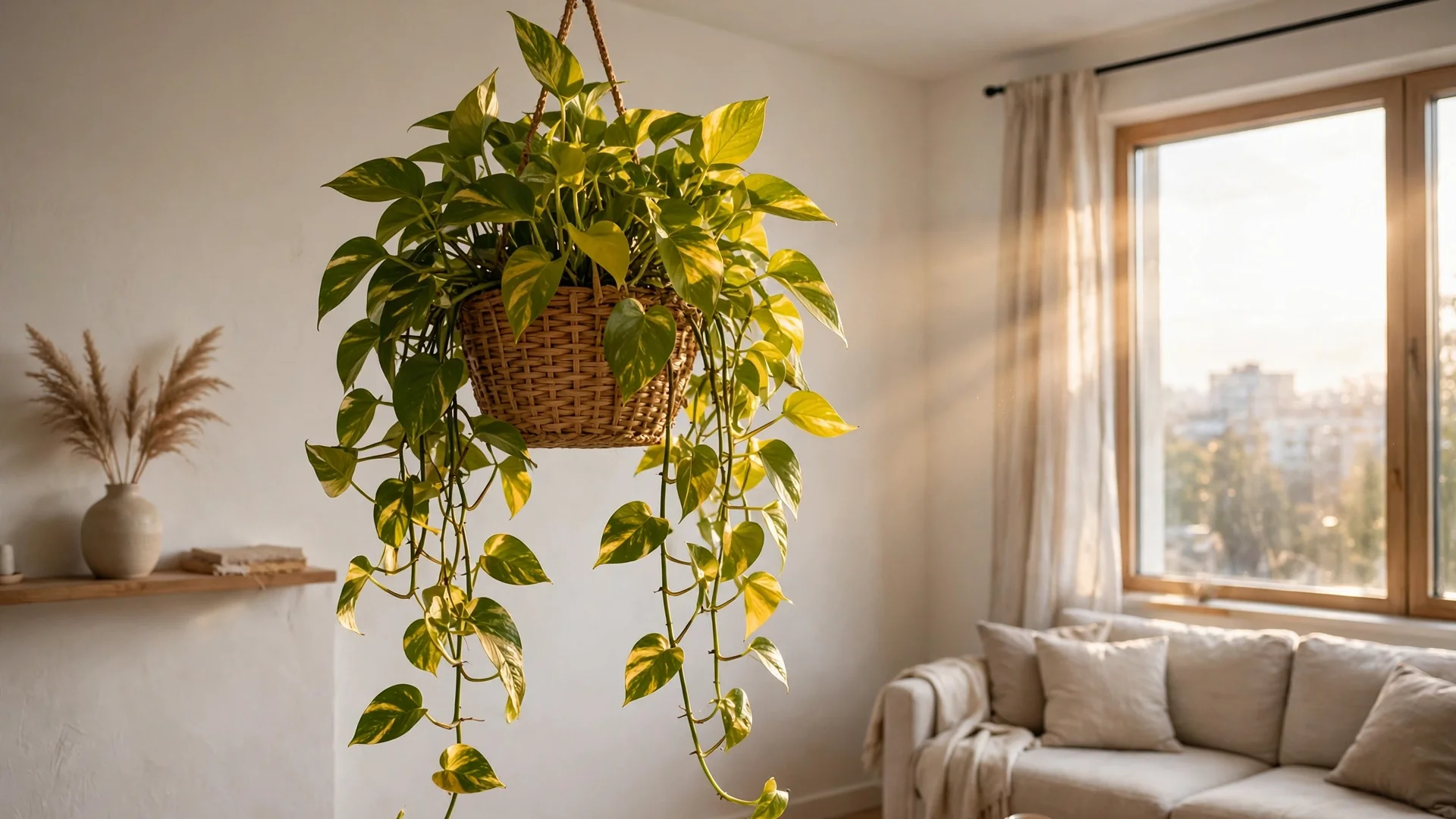
A pothos in a dim corner barely grows and uses little water. Dim plants also stretch into leggy vines, covered in our guide on why pothos plants turn leggy.
Signs Your Watering Is Working
A well-watered pothos stays firm and flat with a slight sheen. New leaves unfurl regularly in spring and summer, roughly one every two to three weeks on a healthy vine. The soil pulling slightly away from the pot edge becomes a useful visual cue once you learn it.
The plant also stays quiet: no sudden yellowing, no spreading brown edges, no fungus gnats over the soil. Boring is the goal. If your pothos does nothing dramatic for months, your rhythm is right.
Signs You Got It Wrong
The table below tells the two problems apart.
| Symptom | Overwatering | Underwatering |
|---|---|---|
| Yellow leaves | Yes, especially lower leaves | Sometimes, but leaves also feel dry |
| Leaf texture | Soft, limp, mushy | Crispy, thin, curled edges |
| Soil | Stays wet days after watering | Bone dry and shrunken from pot |
| Smell | Sour or musty from the soil | None |
Overwatering is the common one. Yellow leaves that feel soft usually mean the roots have been wet too long, and our full guide on pothos plant leaves turning yellow walks through each cause with its fix. Underwatering looks alarming but recovers fast. Curling or drooping leaves usually perk up within hours of a deep soak.
What to Do If You Overwatered
Stop watering. That is the entire first step. Then take the plant out of its pot and look at the roots. Healthy roots are white and firm. Rotted roots are brown or black and mushy. Trim the mushy ones with clean scissors.
Repot into fresh, well-draining soil in a pot with drainage holes. A standard indoor potting mix with some perlite works well. Hold off watering for three to five days after repotting, so root wounds callus and rot cannot restart. Then return to the soil-test routine.
If the root ball is mostly gone, take cuttings from the healthiest vines and root them in water instead.
Conclusion
Watering is only one part of a healthy pothos. Once your schedule is steady, the rest is simple and covered in our complete pothos plant care guide. Set the rhythm once and the plant takes care of itself.
How often should I water my pothos plant in winter?
Every 10 to 21 days depending on light. Growth slows sharply in winter, so the soil test matters most then. When in doubt, wait.
How do I know if I overwatered my pothos plant?
Soft yellow lower leaves, limp stems, and soil that stays wet for days. Sour-smelling soil means root rot may have started. Stop watering and check the roots.
Can a pothos plant survive three weeks without water?
A healthy, established pothos in low light can often go three weeks in winter. It will droop when it wants a drink and usually recovers after one deep soak, but do not make this a habit in summer.
Should I mist my pothos plant leaves?
Misting raises humidity for about ten minutes and then it is gone, so it does almost nothing. Pothos adapts to normal household humidity fine. For very dry air, group plants together or run a humidifier instead.
Does the type of pot change how often I should water?
Yes. Terracotta breathes and wicks moisture through its walls, so soil dries one to three days faster than in glazed ceramic or plastic. A pothos in terracotta may need water a few days sooner.
Pingback: How to water indoor plants properly: 8 Easy Tips
Pingback: ZZ Plant vs Pothos Plant: Which Is Better for Your Home?