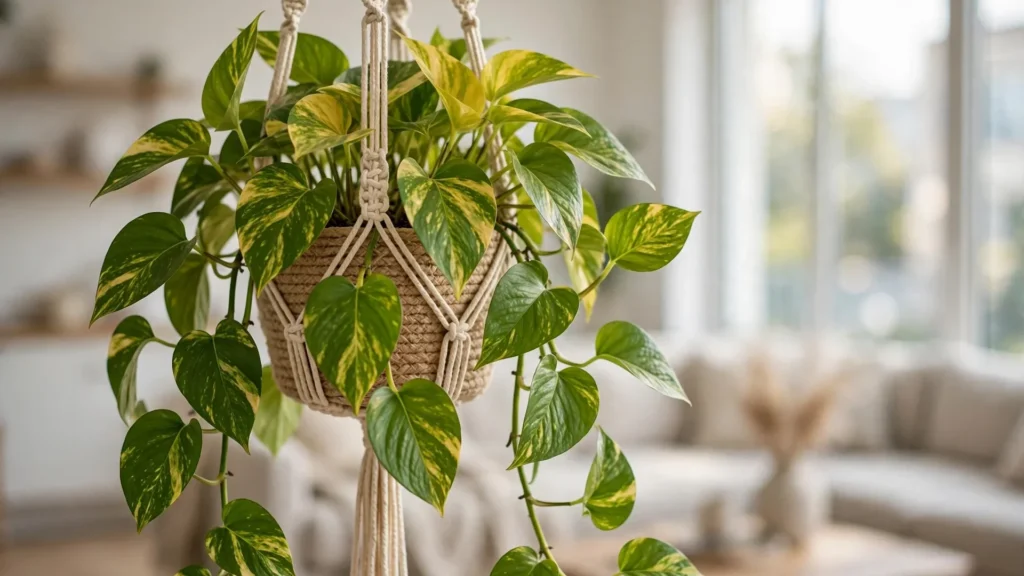
Pothos plants sit on more shelves than almost any other houseplant, and many of those shelves are in pet-owning homes. If that sounds like your home, you need a straight answer before anything goes wrong. Is a pothos plant toxic to cats and dogs? Yes, it is.
The plant carries insoluble calcium oxalate crystals in every leaf and stem. When a pet chews the tissue, those microscopic needles pierce the soft lining of the mouth, tongue, and throat, and pain starts within minutes.
Most cases are painful but manageable, and a calm ten-minute response makes all the difference. This guide covers what happens, what to do right away, what not to do, and how to keep the plant and your pets in the same home.
Quick Answer
Yes, pothos plants are toxic to cats and dogs. All parts of the plant carry insoluble calcium oxalate crystals, and chewing releases them into the mouth, tongue, and throat, causing burning, drooling, and vomiting within minutes. Most cases resolve with supportive care and fatalities are rare, but swelling that affects breathing is an emergency.
Quick Take
One detail changes how you should react: pothos is a local irritant, not a systemic poison. The crystals injure only the tissue they touch, which is why the reaction starts in minutes and most animals recover quickly once the chewing stops. True lilies can shut down a cat’s kidneys from a tiny nibble, while pothos typically causes a painful mouth that heals. The real danger is rare airway swelling, the one situation that needs an emergency vet.
Why a Bite Hurts Before Anything Is Swallowed
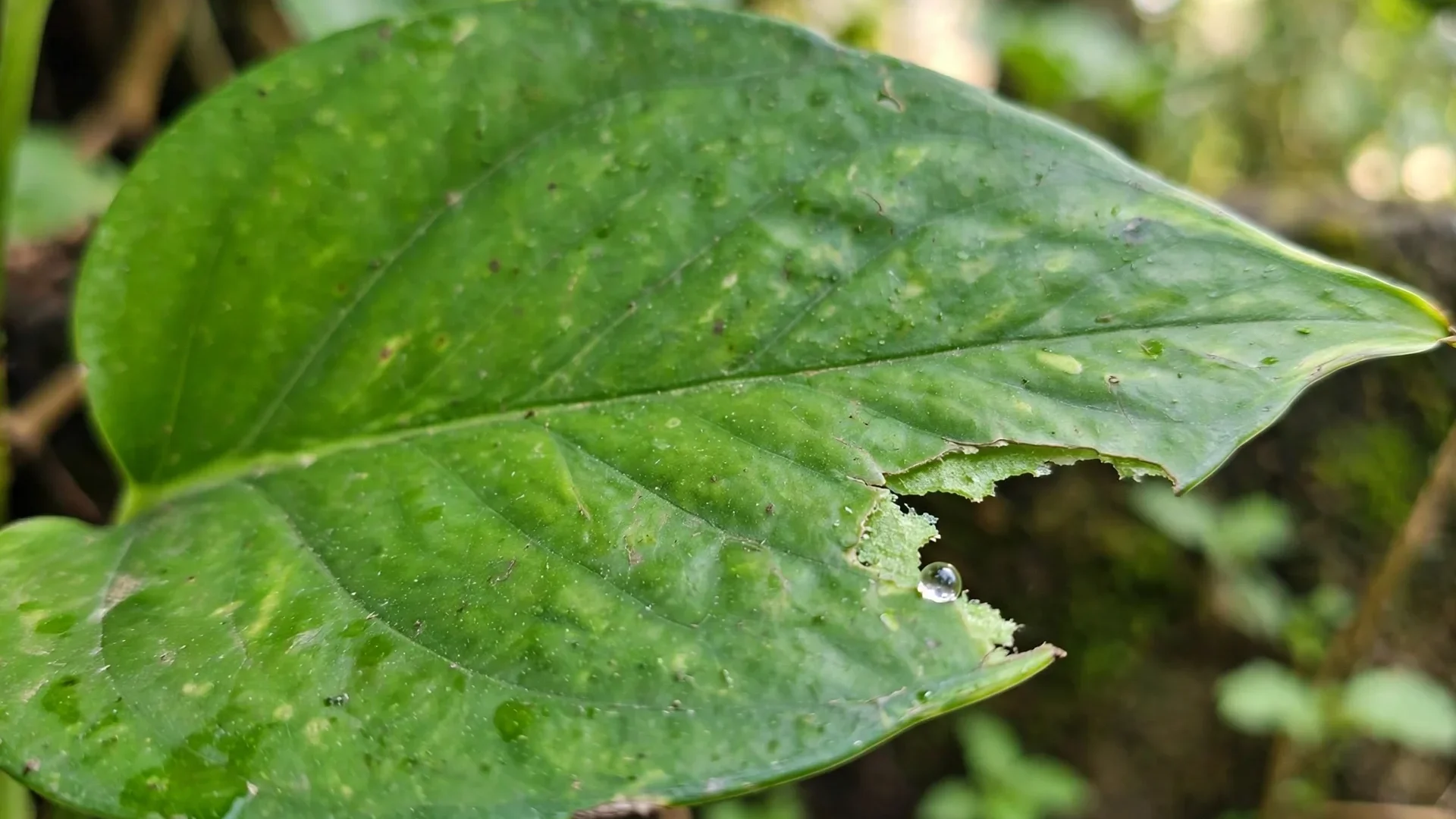
Pothos leaves and stems hold microscopic needle-shaped crystals called raphides, bundled inside specialized storage cells. Chewing crushes those cells and drives the needles into the lips, tongue, and throat. Pain starts on contact, often before a bite is swallowed, which is why most animals recoil and spit the mouthful out at once. That reflex usually limits the dose, and it is why most cases stay mild.
The word insoluble does real work here. These crystals do not dissolve or enter the bloodstream, so pothos acts as a local tissue irritant, not a systemic poison. The injury stays where the plant touched. It does not cause kidney stones, delayed poisoning, or organ damage. True lilies are the opposite case: a tiny nibble can cause acute kidney failure in cats, a far more dangerous risk.
One mistake many people make is treating height as safety. A pothos hanging six feet up looks untouchable, yet cats launch from the bookshelf beside it. The measurement that matters is the gap from the lowest leaf to the nearest launch surface, not to the floor. Measure from the furniture and you will place the plant very differently.
What Pothos Poisoning Looks Like in Cats
Signs appear within minutes of chewing: drooling, pawing at the mouth or face, visible mouth irritation, sometimes swelling of the lips or tongue. Vomiting or gagging usually follows within one to two hours. A cat that ate pothos more than three hours ago and shows nothing most likely swallowed little, though watching it for another half day is sensible. Cats mask pain, so a cat that goes quiet or refuses food after a chew is telling you something even without loud symptoms.
What Pothos Poisoning Looks Like in Dogs
The mechanism is identical in dogs, with one clinical-sign set from the ASPCA covering both species: intense mouth burning, drooling, vomiting, and difficulty swallowing. Where dogs differ is dose: a large dog can swallow far more leaf than a cat, so the reaction scales with how much went in. One nibble usually means drooling and a single vomit, while a chewer that strips a vine needs a vet call much sooner. Dogs also show distress more loudly: whining, panting, and frantic pawing at the face.
Cats vs Dogs: the Differences in One Table
| Cats | Dogs | |
|---|---|---|
| Toxic? | Yes | Yes |
| First signs | Drooling, pawing at mouth, within minutes | Drooling, pawing, whining, within minutes |
| Vomiting | Within 1-2 hours | Within 1-2 hours |
| Typical amount | Small: pain stops most cats fast | Larger: big dogs swallow more leaf |
| Main risk | Cats hide pain, so behavior is the tell | Amount eaten matters most |
For both species, call your vet, the ASPCA Animal Poison Control Center at (888) 426-4435, or the Pet Poison Helpline at (855) 764-7661.
The First Ten Minutes After a Chew
Save these in your phone now: your vet, ASPCA Animal Poison Control (888-426-4435), and the Pet Poison Helpline (855-764-7661). Both may charge a fee. Also keep the plant’s name ready: pothos, Epipremnum aureum.
- Move the plant out of reach so your pet cannot go back for more.
- Gently remove any visible plant pieces from the mouth. Never reach deep into the throat.
- Offer water or wipe the mouth with a damp cloth. Offer, never force.
- Watch for 30 to 60 minutes: drooling, pawing, repeated vomiting, swelling, noisy breathing. A quick drool and one vomit that settles within the hour is usually fine to monitor at home.
- Call now if anything escalates: vomiting more than once, heavy drooling that does not slow after 30 to 45 minutes, facial or throat swelling, or any change in breathing. Noisy breathing or a swollen tongue is an emergency.
- Call your vet or a poison-control line and describe what happened.
At the clinic there is no antidote, so treatment is supportive: mouth washing, medication for vomiting, and IV fluids if needed. Mild cases usually resolve within 24 hours, moderate cases within 48 to 72 hours.
What NOT to Do, and Why Each One Backfires
Do not induce vomiting. Forcing vomit pushes the sharp crystals back up through the already injured throat, which can worsen the irritation. This is the mistake most owners never hear about.
Do not force water into the mouth. An animal in mouth pain can inhale the liquid by accident, which adds a lung problem to a mouth problem.
Do not give human medicines. Antihistamines, antacids, and pain relievers need a vet’s direction first. Some guides suggest milk to soothe the burn, but the reliable move at home is water and a phone call.
Are All Pothos Varieties Equally Toxic?
Effectively, yes. Golden, Marble Queen, Neon, Jade, and N’Joy pothos are all Epipremnum aureum cultivars and carry the same crystals. The leaf pattern changes. The risk does not. Two naming traps: satin pothos is usually Scindapsus pictus and Cebu Blue is Epipremnum pinnatum, and both carry the same crystals too. Our guide to pothos plant varieties shows how to tell the popular types apart
Can You Keep a Pothos Plant With Cats or Dogs?
Yes, if you place it instead of trusting the animal. Separation beats deterrence every time.
Measure the gap from the lowest leaf to the nearest launch surface, not to the floor.
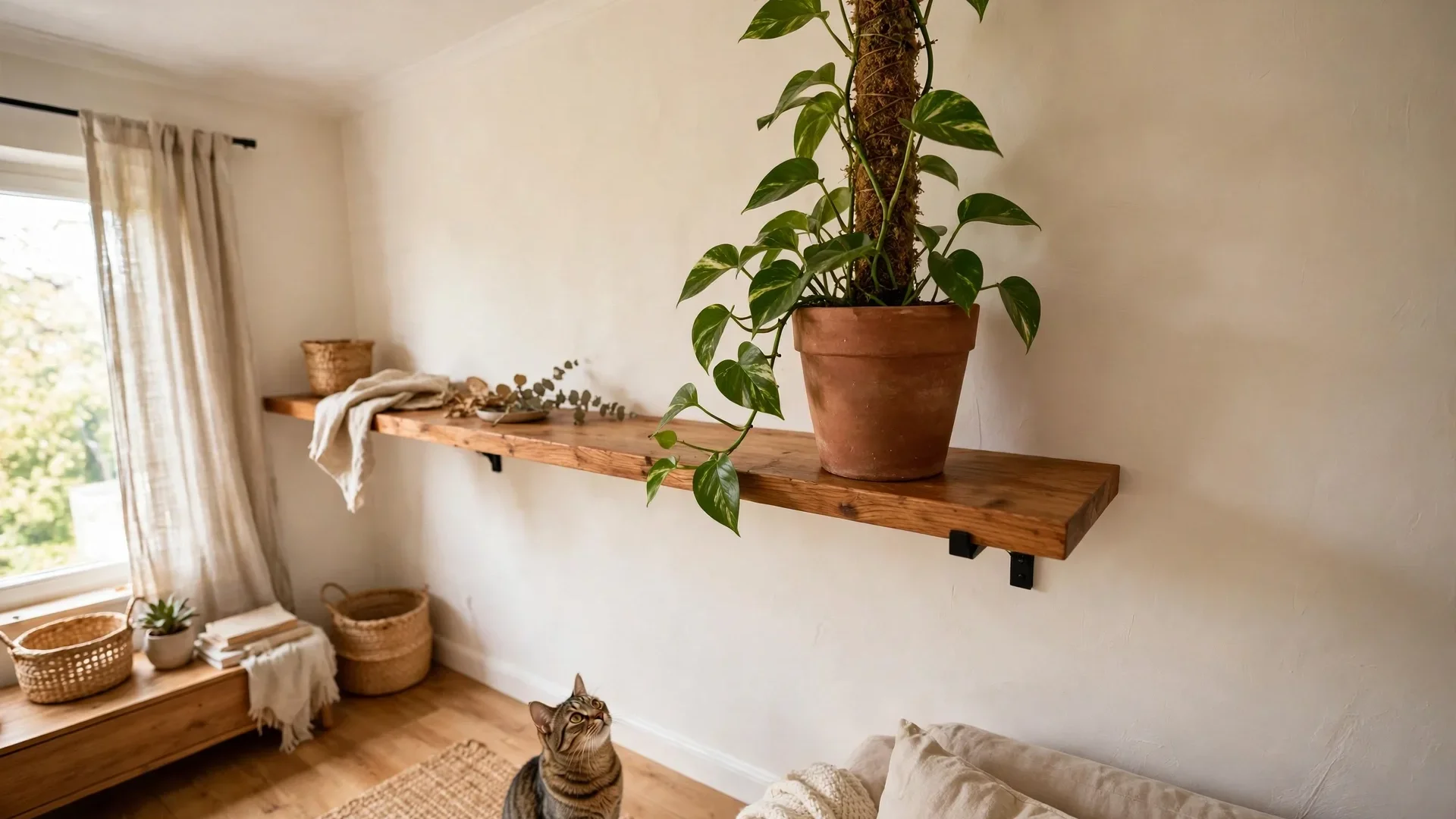
Train vines up a moss pole so growth climbs instead of dangling, and trim trailing stems regularly. Indoor vines can run six to eight feet long and reach into a cat’s world within weeks.
Spread stone top-dressing over the soil to discourage digging, and pick up fallen leaves promptly. Keep propagation cuttings far out of reach: trimmed leaves in a glass of water on a low shelf are often easier for a cat to grab than the mother plant. Our step-by-step guide shows the full process
Give cats a pot of cat grass to redirect the chewing habit, and for dogs treat the plant like you would for a toddler: baby gates, closed doors, high shelves or hanging planters, and supervision for known chewers.
Pet-Safe Swaps With the Same Trailing Look
If you would rather remove the risk entirely, the spider plant is the closest swap. It trails the same way, grows just as easily, and the ASPCA lists it as non-toxic to cats and dogs. Start with our complete care guide Other safe picks include the Boston fern, the Areca palm, and Calathea. One honest note: pet-safe does not mean eat-without-limits. A cat that eats a large amount of any plant can still end up with ordinary stomach upset.
Conclusion
A pothos plant and a pet can share a home, but only with placement that respects what the plant is. It is not a killer hiding on your shelf, and it is not harmless either. Know the signs, keep the numbers saved in your phone, and give the vines nowhere to dangle within reach. If the worry outweighs the look, a spider plant gives you the same trailing green with none of the risk. For everything on the care side, see our complete pothos plant care guide
Is pothos toxic to cats?
Yes. Every part of the plant carries insoluble calcium oxalate crystals that burn the mouth on contact, with signs starting within minutes of chewing.
Is pothos toxic to dogs?
Yes, through the same mechanism as in cats: drooling, oral pain, and vomiting starting within minutes, scaled to how much was eaten.
Can pothos kill a cat or dog?
Very unlikely. Poisoning is usually painful but self-limiting, and the genuine emergency is rare swelling that affects breathing.
How much pothos does a cat need to eat to get sick?
There is no safe amount. Even a small bite can trigger symptoms because the crystals injure tissue on contact.
Is golden pothos more toxic than other pothos varieties?
No. All common Epipremnum aureum cultivars carry the same crystals, and leaf color does not change toxicity.
Is it safe to just touch a pothos plant?
Handling intact leaves is low risk. Irritation comes from sap released by cut or torn tissue, so wash your hands after pruning.