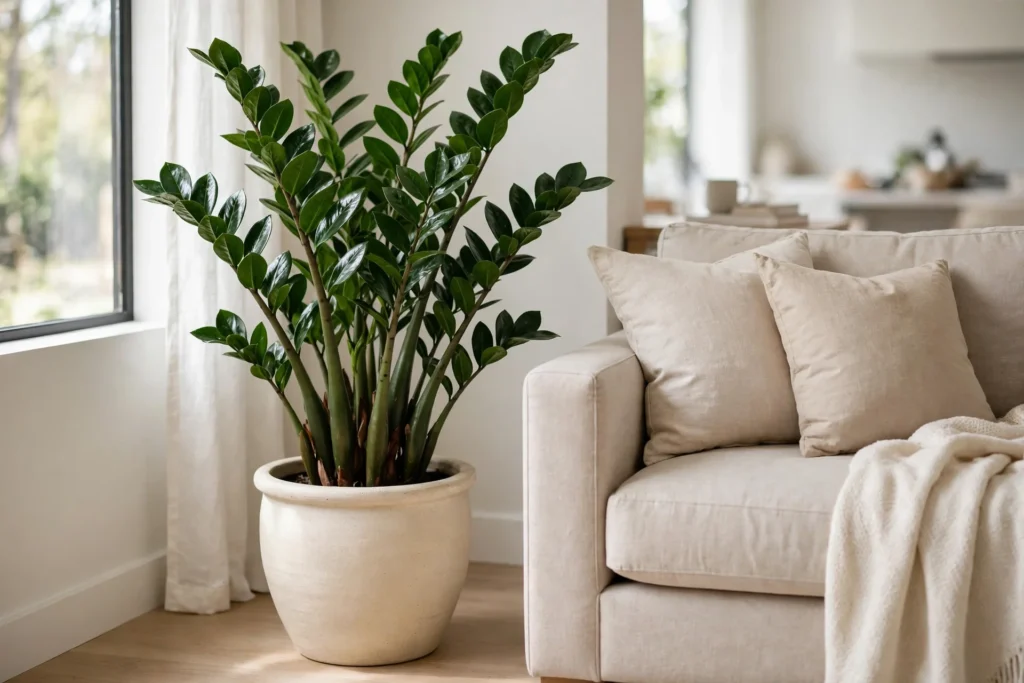
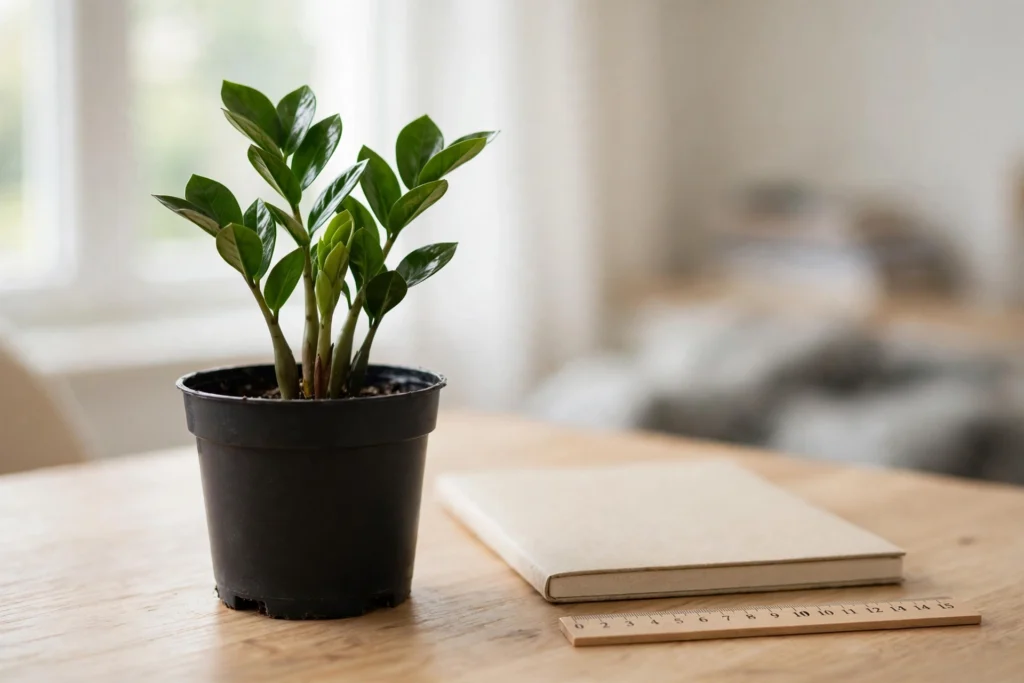
You bring home a ZZ plant in a 4-inch pot. It looks neat on your desk. Then a question creeps in. Will this thing stay small, or will it take over the corner in two years?
It is a fair question, because ZZ plants are slow and quiet about their plans. They do not warn you with a growth spurt. They just keep pushing up thick green stems, year after year.
This guide gives you the real numbers. Mature height and width indoors, how fast a ZZ plant actually grows, what makes one plant reach 3 feet while another stalls at 18 inches, and how to keep yours the size you want.
A ZZ plant reaches 2 to 3 feet tall and wide indoors when mature. Most plants need 3 to 5 years to get there, growing roughly 6 to 12 inches per year in good light. In low light, expect a smaller plant, often under 2 feet, and a much slower climb.
ZZ plants grow from underground rhizomes, thick stems that store water and push up new leafy stalks a few at a time. That storage system is why they tolerate neglect, and it is also why they grow slowly. Indoors, the practical ceiling is about 3 feet, occasionally 4 in bright warm conditions. Pot size is your main size dial. A snug pot keeps the plant compact. A roomy pot lets it fill out. Either way, a ZZ plant almost never outgrows an apartment.
I have repotted ZZ plants that sat at the same size for over a year and owners assumed they were done growing. They were not done. They were waiting. One season of brighter light and a slightly bigger pot, and three new stems appeared in a month. That is the thing to understand about ZZ size. The plant is patient, not finished.
Why ZZ Plants Grow Slowly and Stay Compact
A ZZ plant comes from East Africa, where rainfall arrives in bursts and long dry spells follow. The plant adapted by building rhizomes, underground stems that hoard water and nutrients. Thick waxy leaflets cut water loss. This whole design favors survival over speed.
Each new stem must be funded from those stored reserves. The plant will not gamble on fast floppy growth it cannot support through a drought. So it adds stems one or two at a time, thickens them, then rests. That rhythm continues indoors even when water is always available, because the habit is built into the plant.
Low light slows the cycle further. Less light means less energy stored, which means fewer new stems per year. This is why two ZZ plants bought on the same day can end up very different sizes. The one near a bright window compounds its gains. The one in a dark hallway just holds its ground.
How Big Do ZZ Plants Get Indoors
Here are the numbers that matter for a home grower.
A standard ZZ plant (Zamioculcas zamiifolia) reaches 2 to 3 feet tall and about as wide when mature indoors. That is the range most owners see. With strong indirect light, warmth, and regular feeding during the growing season, some indoor plants push toward 4 feet. Outdoors in tropical climates, 3 to 4 feet is normal, and a few specimens go further.
Spread roughly matches height. Stems start upright and clustered, then arch outward as they lengthen. A mature plant usually forms a vase shape about 2 to 3 feet across. It will not sprawl across your floor like a pothos. It stays in its footprint.
Growth rate runs 6 to 12 inches per year under good conditions. In average home conditions with moderate light, expect the lower end of that. In a dim corner, growth can drop to an inch or two a year, and some years the plant adds nothing visible at all.
Maturity takes 3 to 5 years from a typical nursery plant. From a small cutting or a single leaf propagation, add another year or two. These are not fast plants, and that is exactly why they suit small spaces.
Growth Timeline: What to Expect Year by Year
Starting from a common 4 to 6 inch nursery pot, here is a realistic indoor timeline in average home conditions. Individual plants vary, but the pattern holds.
| Year | Typical height | What is happening |
|---|---|---|
| Year 1 | 8 to 14 inches | Rhizome establishes, 1 to 3 new stems emerge, plant looks fuller rather than taller |
| Year 2 | 14 to 20 inches | Stems lengthen, leaflets multiply, first noticeably taller stalks appear |
| Year 3 | 18 to 26 inches | Growth becomes visible season to season, plant starts to look like a floor plant |
| Year 4 to 5 | 24 to 36 inches | Mature size reached, rhizome fills the pot, new stems replace older ones |
| Beyond year 5 | Stable | Height holds, plant maintains itself, division or repotting refreshes growth |
Growth concentrates in spring and summer. In fall and winter, most indoor ZZ plants pause. If your plant adds nothing from October to March, that is normal, not a problem.
The single biggest accelerator is light. A ZZ plant in bright indirect light can grow twice as fast as the same plant in a dim room. If you want size, light is the lever. If you want to hold size, dimmer placement is the brake. For placement ideas, see the best low light spots for ZZ plants in apartments.
What Affects How Big Your ZZ Plant Gets
Light leads the list. Bright indirect light produces taller stems, more leaflets, and more new stems per year. Low light produces a compact plant that may never pass 2 feet. Both are healthy. They are just different sizes.
Pot size is the second lever. A ZZ plant in a snug pot stays smaller because root space limits top growth. Move it to a pot 2 inches wider and the rhizome expands, then the canopy follows. This is useful. You can hold a plant at desk size for years simply by not upsizing the pot.
Watering matters in a quiet way. Consistent watering during the growing season keeps growth steady. Chronic underwatering slows everything down, and overwatering damages roots, which stalls growth or worse. A plant with rotting roots will not grow at all. If your plant has been the same size for a year and the stems look soft, check the watering routine before blaming the plant. The guide on ZZ plant overwatering and root rot walks through the warning signs.
Fertilizer adds speed but not always quality. A light feeding during spring and summer nudges faster growth. Heavy or frequent feeding pushes soft, pale stems that flop. Feed lightly or skip it. A ZZ plant grows fine without fertilizer, just more slowly.
Warmth helps. ZZ plants grow fastest in the 65 to 80 degree Fahrenheit range typical of lived-in homes. Cold rooms slow them down. Keep the plant away from drafty windows in winter.
How Big Different ZZ Varieties Get
Not all ZZ plants share the same ceiling. The cultivar you own changes the answer.
| Variety | Mature indoor size | Notes |
|---|---|---|
| Standard ZZ (Zamioculcas zamiifolia) | 2 to 3 feet tall and wide | The classic, most common in stores |
| ZZ Raven (‘Dowon’) | 2 to 3 feet tall and wide | Same size and care as standard, new leaves emerge lime green then darken to near black |
| ZZ Zenzi | Noticeably smaller and denser | Compact dwarf-type cultivar with tightly packed leaflets, suited to shelves and desks |
| ZZ Variegata | 2 to 3 feet, slower to get there | Cream-splashed leaves, grows more slowly than the standard form |
Raven is the one most people ask about, because it looks dramatic. Expect the same mature size as a standard ZZ. It just takes the same 3 to 5 years wearing darker foliage.
Zenzi is the genuine space-saver. Its stems stay short and its leaflets crowd together, so it reads as a full plant at half the height. If your shelf has a hard height limit, Zenzi is the cultivar to buy.
How to Keep a ZZ Plant Small
Maybe you love your ZZ exactly as it is. Here is how to hold it there.
Keep it in its current pot. Do not size up unless roots are escaping the drainage holes or the plant is tipping over. A snug pot is the most reliable size brake you have.
Skip the fertilizer, or feed very lightly once in spring. Extra nutrients are extra growth. Without them, the plant maintains itself and adds stems only slowly.
Accept moderate light. A spot a few feet from a window, rather than right beside it, keeps growth gentle. Avoid deep darkness though. A plant with almost no light does not just stay small, it weakens.
Prune for shape. Cut the oldest, tallest stems at soil level with clean shears. This keeps the silhouette compact and lets light reach the younger stems. Do not cut stems halfway. ZZ stems do not branch from a cut, so a half-cut stem just sits there looking stubby.
Remove spent stems entirely rather than trimming tips. Old stems naturally yellow and die after a few years. Taking them out at the base keeps the plant tidy and makes room for new growth.
When Size Means It Is Time to Repot
A ZZ plant tells you when it has outgrown its pot. Watch for these signs.
Roots push through the drainage holes or lift the plant upward in the pot. Water runs straight through and out the bottom within seconds, because roots have replaced most of the soil. The pot bulges or cracks under rhizome pressure. New stems emerge thin and crowded at the edges.
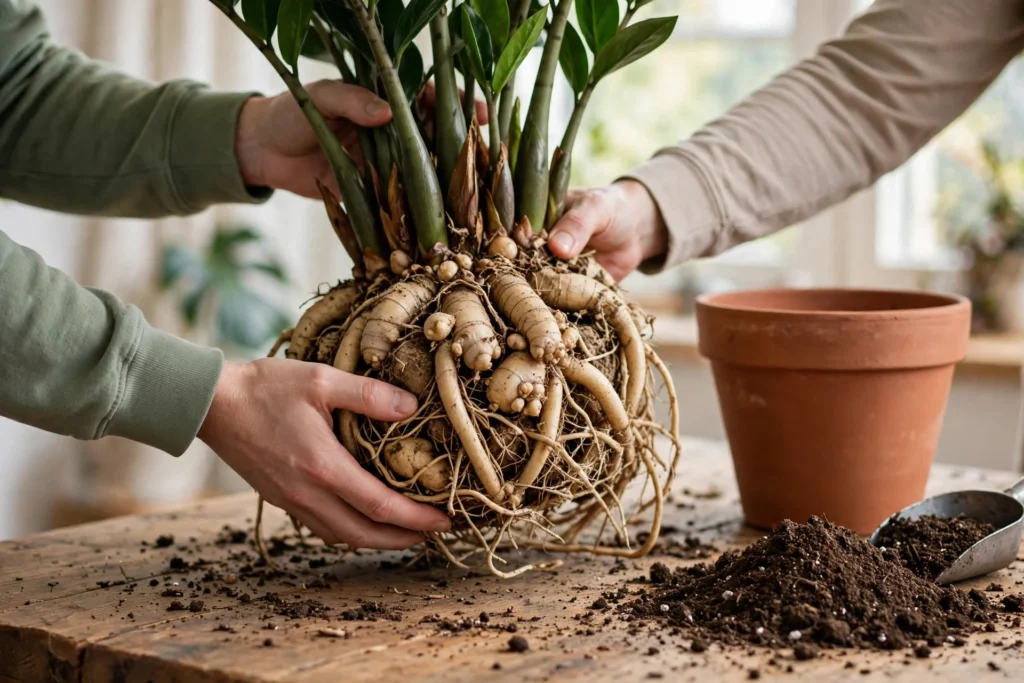
When you see two or more of these, move up one pot size, about 2 inches wider. Bigger jumps invite overwatering, because excess soil stays wet around the rhizomes. Spring is the best time. The plant is entering its growth phase and recovers fastest.
One caution. Do not repot a ZZ plant just because it looks big. Big is the goal. Repot because the roots have run out of room, not because the canopy looks impressive.
Signs Your ZZ Is Growing Well
Healthy growth has a look. Learn it and you will stop worrying.
New stems emerge from the soil bright green and spear-like, then unfurl their leaflets over a few weeks. This is the clearest sign your plant is thriving. Even one new stem per growing season counts.
Existing stems feel firm from base to tip. Leaflets are glossy and hold their color. The plant stands upright without staking. In spring you may notice the rhizome pushing the soil surface up slightly. That is expansion, and it is good news.
Steady, slow change is the signature of a healthy ZZ. Fast change usually means something is wrong, not right.
Signs Growth Has Stalled
A stall looks different from slow growth. Slow growth still produces a stem or two each year. A stall produces nothing.
No new stems for a full growing season is the main flag. Before you panic, check the basics. Has the plant been in the same dark corner for two years? When did you last check the roots? Is the soil staying wet for weeks?
Yellowing lower stems paired with zero new growth often points to root trouble, not a size limit. Mushy stem bases mean rot is active. In that case the plant is not resting, it is declining. The ZZ plant not growing guide covers the full diagnosis, from light and pot issues to root rot recovery.
Do not fertilize a stalled plant hoping to force growth. Fertilizer on stressed roots makes things worse. Fix the underlying issue first, then let the plant resume on its own schedule.
How big do ZZ plants get indoors?
Most reach 2 to 3 feet tall and wide at maturity, which takes 3 to 5 years. Exceptional indoor plants in bright warm spots can approach 4 feet.
How fast do ZZ plants grow?
About 6 to 12 inches per year in good light, slower in average home conditions. In low light, growth can drop to an inch or two per year.
Do ZZ plants like small pots?
Yes. ZZ plants tolerate snug pots well, and a smaller pot naturally keeps the plant compact. Repot only when roots escape the drainage holes or the plant becomes top-heavy.
Can you keep a ZZ plant small?
Yes. Keep it in its current pot, skip fertilizer, give it moderate rather than bright light, and prune the oldest stems at soil level. These four steps hold a ZZ at desk size for years.
How long does it take a ZZ plant to reach full size?
Three to 5 years from a typical nursery plant indoors. Plants grown from cuttings take longer, and low light stretches the timeline further.
Will my ZZ plant outgrow my apartment?
Almost certainly not. The indoor ceiling is around 3 to 4 feet, and the plant stays in a tidy vase shape. If space is tight, the Zenzi cultivar stays genuinely small.
Do ZZ plants spread wide?
Moderately. Spread roughly matches height at 2 to 3 feet on a mature plant, with stems arching outward as they age. They do not trail or sprawl across floors.
Final word
A ZZ plant will not surprise you with sudden size. It grows on a schedule you can read years in advance, and it hands you the controls. Light sets the pace, pot size sets the ceiling, and pruning keeps the shape.
If your plant is still small after a year or two, that is not failure. That is a ZZ plant being a ZZ plant. Give it another season, check the light, and it will get there.
For the full care routine behind healthy steady growth, from watering schedules to soil and placement, read the ZZ plant care guide next.