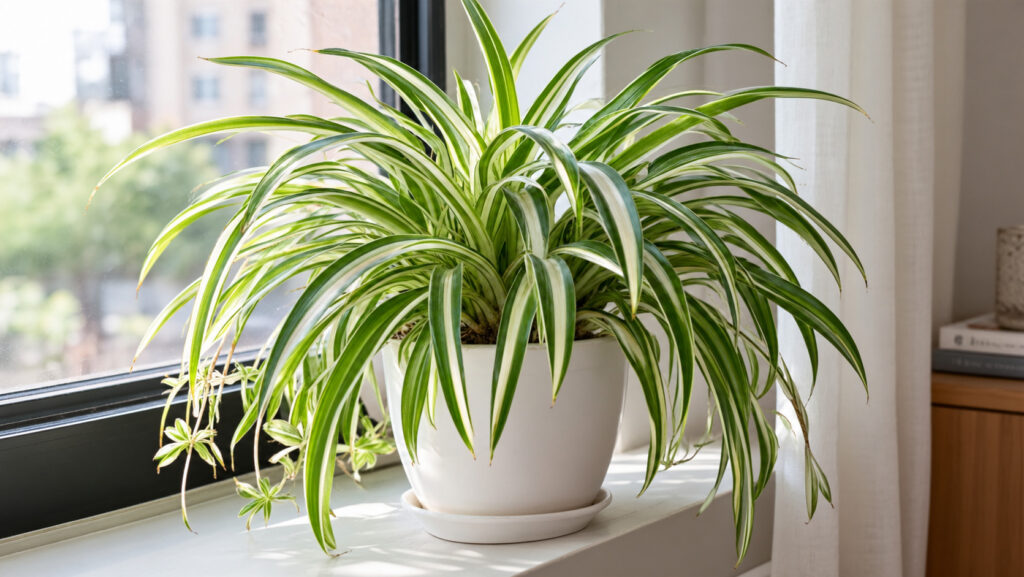
A spider plant for beginners ranks among the easiest houseplants to start with, but a handful of common mistakes still trip up new owners more often than any real difficulty with the plant itself. Chlorophytum comosum forgives quite a bit, so most problems trace back to one of a few repeated habits rather than anything complicated, and knowing these mistakes ahead of time saves a lot of trial and error.
Quick Answer
A spider plant for beginners mostly runs into trouble from overwatering, too much direct sun, tap water sensitivity, oversized pots, skipped feeding, ignoring pups, and misreading brown tips as a serious problem. Avoiding these seven habits keeps a new spider plant healthy with very little effort.
Quick Take
Most beginner mistakes with a spider plant come from applying general houseplant instincts that don’t quite fit this specific plant’s needs. Watering too often, rather than checking the soil first, causes more damage than any other single habit. Placing the plant in harsh direct sun, using an oversized pot from the start, and skipping feeding entirely during the growing season round out the most common issues. A few beginners also worry unnecessarily over brown tips or ignore the pups a mature plant produces, missing an easy chance at free new plants.
In practice, most spider plant mistakes come from treating this plant like a more delicate tropical species rather than the resilient, adaptable plant it actually is. Chlorophytum comosum tolerates far more neglect than most houseplants, so beginners often overcorrect with extra water, extra fertilizer, or extra attention when the plant would do better with a lighter, more consistent touch.
Mistake 1: Watering Too Often
Overwatering causes more spider plant problems for beginners than any other mistake, since the instinct to water on a fixed schedule ignores how much moisture the soil still holds. Checking the top two inches of soil before every watering, rather than watering every few days automatically, prevents the soft, yellowing leaves and root rot that come from consistently wet soil.
Mistake 2: Placing the Plant in Direct Sun
Spider plants prefer bright, indirect light, and hours of direct sun through an unfiltered window scorches the leaves, leaving pale, bleached patches. Beginners sometimes assume more light always helps, but moving the plant a few feet back from a sunny window or adding a sheer curtain protects the leaves while still providing plenty of brightness.
Mistake 3: Using Untreated Tap Water Long Term
Many beginners don’t realize spider plants show sensitivity to fluoride, chlorine, and salts commonly found in tap water, which builds up in the soil over time and causes the well-known brown tip issue. Switching to filtered, distilled, or rainwater, especially once brown tips appear repeatedly, solves this cause without much added effort.
Mistake 4: Choosing a Pot That’s Too Large
Sizing up dramatically, rather than gradually, seems generous but actually works against a spider plant, since the excess soil in an oversized pot holds moisture the roots can’t use yet. This creates the same soggy conditions as overwatering even with careful watering habits. Choosing a pot only one or two inches larger than the current one avoids this trap entirely.
Mistake 5: Skipping Fertilizer Entirely
Believing a low-maintenance plant needs no feeding at all leads to pale, slow growth over time, since even resilient plants eventually run low on nutrients in the same unfed soil. Feeding a diluted, balanced fertilizer every four to six weeks during spring and summer keeps growth steady without much risk, as long as feeding stops during the slower fall and winter months.
Mistake 6: Ignoring or Removing Pups Too Early
New spider plant owners sometimes cut off pups the moment they appear, assuming they’re a problem rather than a bonus. Waiting until a pup shows small root nubs at its base before removing it for propagation gives much better results, and leaving pups in place for a while doesn’t harm the parent plant at all.
Mistake 7: Panicking Over Brown Tips
Brown, crispy leaf tips look concerning to a beginner, but this issue ranks among the least serious spider plant problems, usually tracing back to tap water minerals, low humidity, or fertilizer buildup rather than anything threatening the plant’s health. Trimming the tips and adjusting water quality or humidity solves the cosmetic issue without any need for alarm.
Spider Plant for Beginners: Mistakes at a Glance
| Mistake | Common Result | Fix |
| Watering too often | Yellow, soft leaves | Check soil before watering |
| Direct sun placement | Scorched, bleached leaves | Move to indirect light |
| Untreated tap water | Brown tips | Switch to filtered water |
| Oversized pot | Soggy soil, slow growth | Size up gradually |
| No fertilizer | Pale, slow growth | Feed lightly in growing season |
| Removing pups too early | Slower propagation success | Wait for root nubs |
| Overreacting to brown tips | Unnecessary worry | Trim and adjust water/humidity |
How to Set a New Spider Plant Up for Success
Start with a pot only slightly larger than the current root ball, a well-draining soil mix, and a spot with bright, indirect light. Water only once the top two inches of soil feel dry, and switch to filtered water if brown tips become a recurring issue. Feed lightly during spring and summer, and let pups develop fully before removing them for propagation. These few habits cover nearly everything a spider plant for beginners actually needs.
If you’re new to spider plants, learning the basic care routine first can help you avoid many common mistakes. Start with our Spider Plant Care Guide for Small Homes before troubleshooting individual problems.
Final Takeaway
A spider plant for beginners rarely runs into serious trouble, since nearly every common mistake comes down to overcorrecting rather than genuine neglect. Water less often than instinct suggests, keep the plant out of harsh direct sun, watch tap water quality, size pots up gradually, feed lightly, and don’t panic over brown tips or rush to remove pups. Avoiding these seven habits sets up a thriving, low-maintenance plant from the start.
FAQ
Is a spider plant really good for beginners? Yes, spider plants rank among the most forgiving houseplants, tolerating irregular watering, medium light, and small mistakes without much trouble.
What is the most common mistake beginners make with spider plants? Overwatering ranks as the most common mistake, since checking the soil before watering prevents most yellowing and root rot issues.
Should beginners worry about brown tips on a spider plant? Not much. Brown tips are common and rarely serious, usually tracing back to tap water minerals, low humidity, or fertilizer buildup.
How often should a beginner water a spider plant? Water once the top two inches of soil feel dry, typically every one to two weeks depending on light and temperature.
Do beginners need to fertilize a spider plant? Yes, light feeding every four to six weeks during spring and summer supports steady growth, even though the plant survives without it.
What should a beginner do with spider plant pups? Leave pups attached until they show small root nubs, then snip them off and root them in water or soil for two to three weeks.