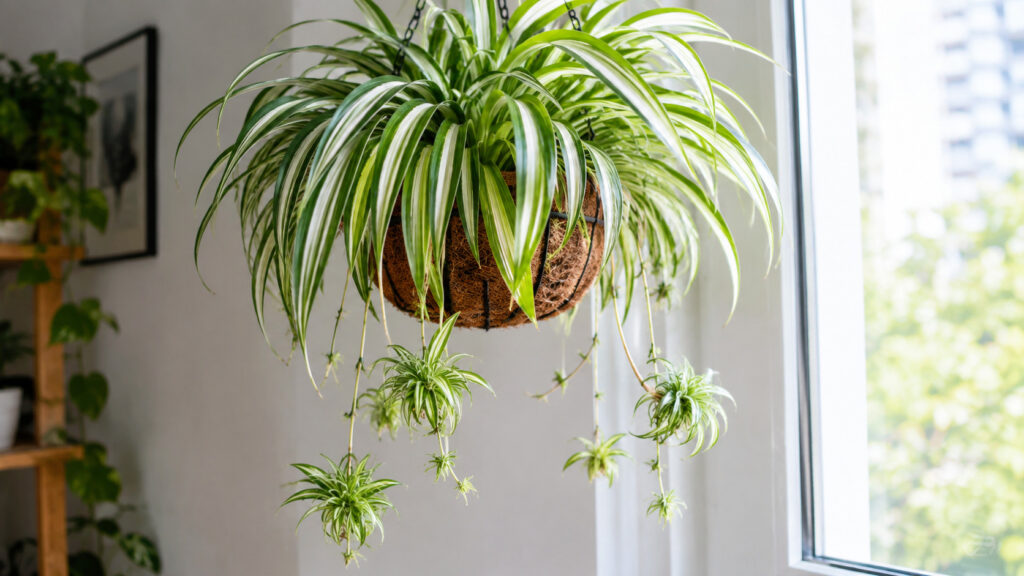
Spider plant pups, also called plantlets or spiderettes, form on long, arching stems once a mature spider plant reaches a certain age and experiences mild stress, like a root-bound pot or shorter daylight hours. These small baby plants root easily and grow into full spider plants of their own within a couple of months, making propagation one of the simplest and most rewarding parts of owning this plant.
Quick Answer
Spider plant pups propagate easily in water or moist soil once they show small root nubs at the base. Snip a pup free from the parent stem, root it for two to three weeks, then pot it once roots reach an inch or two long. Hang the parent plant or new pups somewhere with bright, indirect light for the fullest growth.
Quick Take
A mature spider plant produces pups on long stems, often after small white flowers bloom first. Each pup already carries tiny root nubs at its base, which grow into a full root system once given water or soil contact. Propagating pups works well in water, for watching root growth directly, or in soil, for a slightly faster transition to a permanent pot. Hanging baskets, high shelves, and plant stands all suit spider plants and their trailing pups well, since the arching growth habit looks best when it has room to cascade downward.
In practice, spider plant pups root reliably with almost no special care, making this one of the easiest houseplants to propagate for beginners. Waiting until a pup shows visible root nubs before cutting it free improves success rates significantly compared to cutting too early, since the nubs already contain the growth points needed for new roots to form quickly.
How Spider Plant Pups Form
Spider plants produce pups once they mature, typically after a year or more of steady growth, and often following a period of mild stress like a root-bound pot, slightly reduced watering, or shorter daylight hours in fall. Small white flowers usually appear on long stems first, and pups develop at the same nodes shortly after the flowers fade. A single healthy, mature spider plant produces multiple pups per stem, and several stems per growing season, giving plenty of material for propagation without any special encouragement needed.
When to Remove a Pup for Propagation
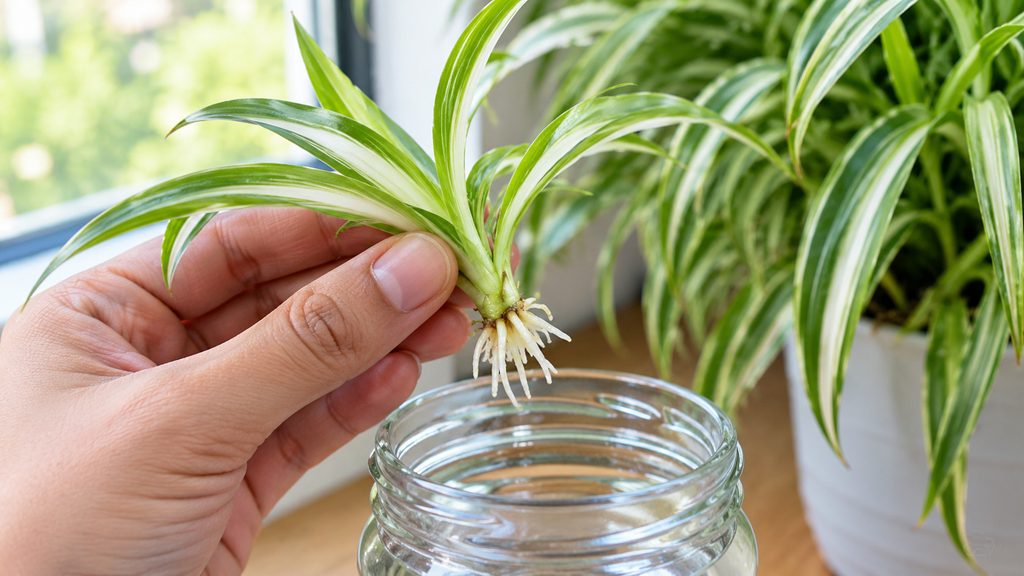
Wait until a pup develops small, visible root nubs at its base before cutting it free from the parent stem, since these nubs form the starting point for the root system and speed up establishment considerably. A pup with a few developed leaves and slightly rounded, nub-like growth at the base has reached the right stage, usually a few weeks after it first forms. Removing a pup too early, before any root nubs appear, still works but takes noticeably longer to establish roots.
Propagating Spider Plant Pups in Water
Snip the pup free from the parent stem using clean scissors, leaving a short stub of stem attached to the pup itself. Place the base of the pup in a small glass or jar of room temperature water, keeping the leaves above the waterline and the root nubs submerged. Change the water every few days to keep it fresh and prevent algae growth, and set the jar somewhere with bright, indirect light. Roots typically grow to an inch or more within two to three weeks, at which point the pup is ready for potting into soil.
Propagating Spider Plant Pups in Soil
Skip the water step entirely by planting a pup with visible root nubs directly into a small pot of moist, well-draining potting mix. Keep the soil consistently damp, though not soaked, for the first two to three weeks while roots establish, then transition to a normal watering routine once new growth appears. Soil propagation sometimes produces a slightly sturdier root system than water propagation, since the roots adapt to soil conditions from the start rather than transitioning later.
Caring for a Newly Potted Pup
A freshly potted spider plant pup needs the same basic care as a mature plant, just on a smaller scale. Bright, indirect light supports steady growth, while direct sun risks scorching the still-tender young leaves. Water once the top inch of soil feels dry, and hold off on feeding for the first month or two while the plant settles into its new pot. Most pups grow into a full, bushy plant within six months to a year under good conditions.
Where to Hang Spider Plant Pups and Parent Plants
Spider plants suit hanging baskets especially well, since their arching leaves and dangling pups look best with room to cascade downward rather than growing upright against a wall or shelf. A spot near an east or west facing window, a few feet back from direct sun, gives the ideal amount of bright, indirect light for a hanging spider plant. Kitchens, bathrooms with a window, and covered porches all work well too, since spider plants tolerate the humidity swings common in these rooms. Avoid hanging a spider plant directly above a heating vent or in a spot with strong, sustained drafts, since both stress the plant and slow pup production over time.
Spider Plant Pup Propagation at a Glance
| Method | Timeframe to Roots | Best For |
| Water | 2 to 3 weeks | Watching root growth, beginners |
| Soil | 2 to 3 weeks | Slightly sturdier root system |
Getting healthy pups starts with keeping the mother plant in good growing conditions. Learn the essentials in our Spider Plant Care Guide before propagating your plant.
Final Takeaway
Spider plant pups make propagation one of the easiest and most rewarding parts of growing this plant, since each mature parent produces plenty of pups ready to root in water or soil with minimal effort. Wait for visible root nubs before cutting a pup free, root it for two to three weeks, then pot it and give it bright, indirect light. Hanging baskets suit both the parent plant and its trailing pups perfectly, letting the arching growth show off fully.
FAQ
How do I know when a spider plant pup is ready to propagate? A pup is ready once it shows small root nubs at its base, usually a few weeks after it first forms on the parent stem.
Should I propagate spider plant pups in water or soil? Both work well. Water lets you watch root growth directly, while soil sometimes produces a slightly sturdier root system from the start.
How long does it take for spider plant pups to grow roots? Most pups grow roots an inch or more long within two to three weeks in either water or moist soil.
Can I leave pups attached to the parent plant instead of propagating them? Yes, pups can stay attached and simply add to the plant’s fullness, or root themselves directly in a nearby pot of soil if left in contact with it.
Where is the best place to hang a spider plant? A spot near an east or west facing window with bright, indirect light works best, allowing the leaves and pups to cascade downward freely.
Why isn’t my mature spider plant producing pups? Pups typically form once a plant matures and experiences mild stress like a root-bound pot or shorter daylight hours, so a young or very comfortable plant may simply need more time.
Pingback: Spider Plant for Beginners? Skip These 7 Common Mistakes
Pingback: ZZ Plant vs Spider Plant: Which Is Better for Your Home?