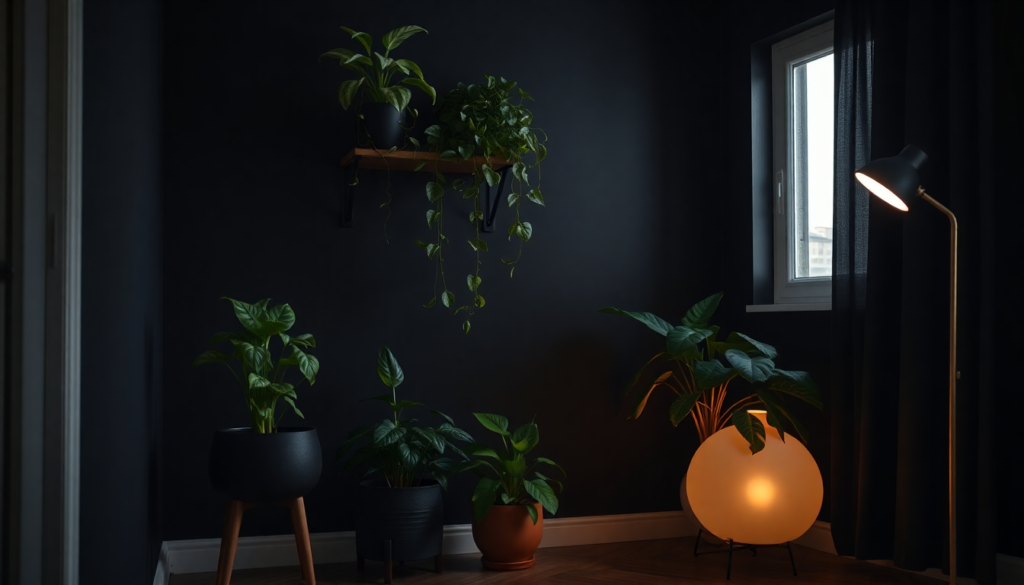
Most “low light plant” lists are misleading. They include plants like fiddle leaf figs and succulents that technically survive in reduced light for a few months before declining. That is not low light tolerance. That is slow death.
This list covers plants that genuinely thrive in low light conditions, meaning they grow new leaves, maintain healthy color, and stay structurally sound without a bright window. Every plant here performs in 50 to 200 foot-candles of indirect light, which is the real-world range of a dim apartment room, an office cubicle, or a hallway with no direct window access.
Quick Answer
The best low light indoor plants for dark rooms are ZZ plant, pothos, cast iron plant, snake plant, peace lily, Chinese evergreen, dracaena, heartleaf philodendron, parlor palm, spider plant, and golden pothos. All survive in 50 to 200 foot-candles and grow without direct sunlight.
Quick Take True low light indoor plants tolerate 50 to 200 foot-candles of ambient light, the equivalent of a room with no direct window or a position more than 8 feet from any window. These plants evolved under forest canopies where direct light rarely reached the ground. They grow slowly in low light but they grow. In very dark rooms with zero natural light, a basic LED grow light on a timer supplements what windows cannot provide. No plant survives in complete darkness permanently.
What “Low Light” Actually Means
The most tolerable low-light plants survive with at least 50 foot-candles of light, with most true low-light plants falling within the 100 to 200 foot-candle range. Understanding this number helps you place plants correctly.
- Bright indirect light: 300 to 1,000 foot-candles. Near a window without direct sun.
- Low light: 100 to 200 foot-candles. A room with a window but positioned 6 to 10 feet away.
- Dim or dark: 25 to 100 foot-candles. You need a light on even during the day. Most plants struggle here.
- No light: Below 25 foot-candles. No plant grows here without artificial supplementation.
In rooms with no windows at all, an LED grow light is necessary. A basic full-spectrum LED on a timer for 10 to 12 hours per day handles this entirely.
One mistake many plant owners make is confusing “survives in low light” with “thrives in low light.” Every plant on this list does both. They produce new growth, maintain color, and stay structurally healthy in genuinely dim conditions.
Low Light Plant Comparison Table
| Plant | Min. Light (Foot-Candles) | Pet Safe | Max Height | Watering Frequency |
| ZZ Plant | 50 | No | 2 to 3 ft | Every 3 to 4 weeks |
| Pothos | 50 | No | Trailing | Every 1 to 2 weeks |
| Cast Iron Plant | 25 | Yes | 2 ft | Every 2 to 3 weeks |
| Snake Plant | 50 | No | Varies | Every 2 to 6 weeks |
| Peace Lily | 100 | No | 1 to 3 ft | Weekly |
| Chinese Evergreen | 100 | No | 1 to 3 ft | Every 1 to 2 weeks |
| Dracaena | 100 | No | 2 to 10 ft | Every 1 to 2 weeks |
| Heartleaf Philodendron | 75 | No | Trailing | Every 1 to 2 weeks |
| Parlor Palm | 100 | Yes | 2 to 6 ft | Every 1 to 2 weeks |
| Spider Plant | 100 | Yes | 12 to 24 in | Every 1 to 2 weeks |
| Golden Pothos | 50 | No | Trailing | Every 1 to 2 weeks |
1. ZZ Plant (Zamioculcas zamiifolia)
Minimum light: 50 foot-candles Pet safe: No Watering: Every 3 to 4 weeks
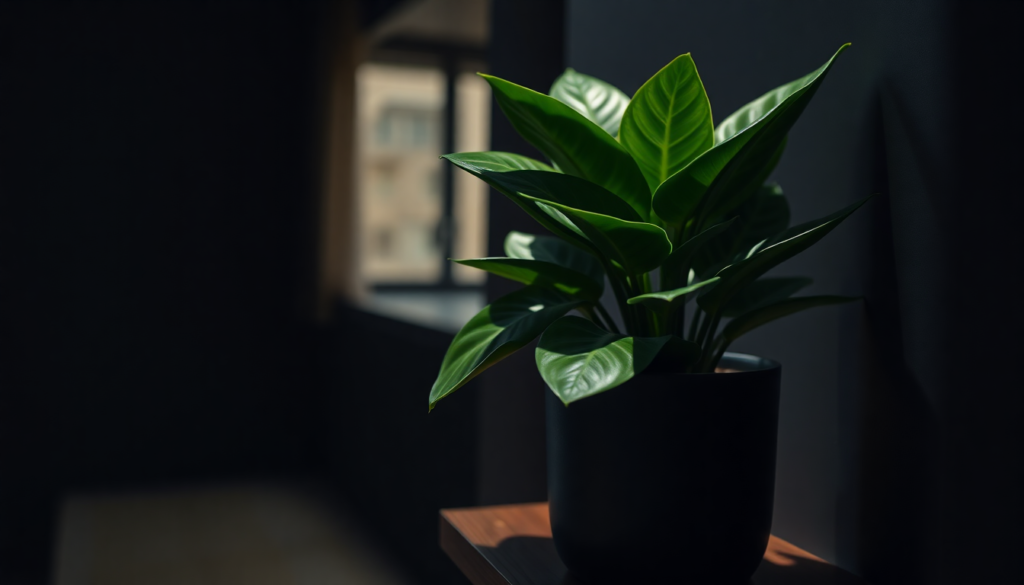
The ZZ plant is the single most low-light tolerant plant on this list. It stores water and energy in thick underground rhizomes and potato-like tubers, which means it runs its own reserves for weeks without photosynthesizing much at all. Its glossy, dark green leaves reflect available light efficiently, which is why it looks so healthy in dim corners where other plants fade.
It grows slowly in low light but it does grow. New stems emerge from the soil regularly even in dim conditions. Water infrequently and never let it sit in standing water. Root rot is the only real threat to a ZZ plant.
2. Pothos (Epipremnum aureum)
Minimum light: 50 foot-candles Pet safe: No Watering: Every 1 to 2 weeks
Pothos is the most forgiving trailing plant available for dark rooms. It adapts its chlorophyll concentration to match available light, which is why it stays green in conditions that bleach most other plants. In very low light it loses some of its golden variegation and reverts toward solid green, but it continues growing and trailing.
It is one of the fastest-growing plants on this list even in dim conditions. Hang it from a shelf or let it trail across a bookcase for maximum visual impact in a dark room without using floor space.
3. Cast Iron Plant (Aspidistra elatior)
Minimum light: 25 foot-candles Pet safe: Yes Watering: Every 2 to 3 weeks
The cast iron plant earns its name. It is almost indestructible in low-light situations and handles the lowest light levels of any plant on this list, down to 25 foot-candles. It is one of the only plants that genuinely grows in hallways and windowless bathrooms without a grow light.
Growth is extremely slow. Expect one or two new leaves per year in very dim conditions. But it never declines, never drops leaves from low light stress, and maintains deep green color indefinitely. It is the best choice for truly dark spots where every other plant has failed.
4. Snake Plant (Dracaena trifasciata)
Minimum light: 50 foot-candles Pet safe: No Watering: Every 2 to 6 weeks
Snake plants survive in low light longer than almost any other succulent. In dim conditions, they stop producing new leaves and slow all visible growth, but they hold their structure and color for months without declining. For dark rooms where you want architectural form without maintenance, snake plants are the standard recommendation.
Compact varieties like Bird’s Nest Hahnii and Futura Robusta work best in small dark apartments since they do not require the floor space that full-sized varieties need. Water far less frequently in low light since the plant uses very little water without active photosynthesis.
5. Peace Lily (Spathiphyllum)
Minimum light: 100 foot-candles Pet safe: No Watering: Weekly
Peace lilies are one of the few flowering plants that genuinely perform in low light. They produce their distinctive white spathes in conditions as dim as 100 foot-candles, making them the best option for anyone who wants blooms in a dark room.
They communicate their water needs clearly. When thirsty, the leaves droop noticeably. Water thoroughly and they recover within hours. This visual feedback system makes them easy to care for even for beginners. Keep them away from cold drafts and direct air conditioning, which causes brown leaf edges.
6. Chinese Evergreen (Aglaonema)
Minimum light: 100 foot-candles Pet safe: No Watering: Every 1 to 2 weeks
Chinese evergreens come in dozens of color varieties, from deep green to silver, red, and pink. The darker green varieties handle the lowest light. Brightly colored varieties like Red Siam and Pink Anyamanee need more light to maintain their color. For dark rooms, stick to the deep green and silver varieties like Aglaonema ‘Silver Bay’ or ‘Maria.’
They tolerate drought reasonably well and adapt to low humidity, both common conditions in heated or air-conditioned apartments.
7. Dracaena (Multiple Species)
Minimum light: 100 foot-candles Pet safe: No Watering: Every 1 to 2 weeks
Dracaena is a large genus with dozens of varieties suited to indoor low-light conditions. Dracaena marginata, fragrans (corn plant), and deremensis all perform well in 100 to 200 foot-candles. They bring vertical interest to dim rooms with their cane-like stems and arching leaf clusters.
Water with filtered water when possible. Dracaena is sensitive to fluoride in tap water, which causes brown leaf tips over time. Let soil dry slightly between waterings and avoid cold windows in winter.
8. Heartleaf Philodendron (Philodendron hederaceum)
Minimum light: 75 foot-candles Pet safe: No Watering: Every 1 to 2 weeks
Heartleaf philodendron is one of the most adaptable trailing plants for dark rooms. Its heart-shaped, deep green leaves photosynthesize efficiently at low light levels, and it produces new growth visibly even in dim conditions. It trails faster than pothos in similarly low light, making it the better choice for covering a dark wall or shelf quickly.
It tolerates inconsistent watering and low humidity well. It signals water stress with slightly drooping leaves before any permanent damage occurs.
9. Parlor Palm (Chamaedorea elegans)
Minimum light: 100 foot-candles Pet safe: Yes Watering: Every 1 to 2 weeks
Parlor palm is one of the best indoor plants for low-light situations and one of the few pet-safe options on this list. It brings a tropical, architectural quality to dark rooms with its arching fronds and bamboo-like stems. It grows slowly but steadily in low light.
Keep soil consistently moist but never waterlogged. Brown leaf tips indicate low humidity or fluoride in water. Misting or a small humidifier nearby reduces this issue in very dry apartments.
10. Spider Plant (Chlorophytum comosum)
Minimum light: 100 foot-candles Pet safe: Yes Watering: Every 1 to 2 weeks
Spider plants are pet-safe, fast-growing, and reliably low-maintenance in dim conditions. They produce cascading babies (spiderettes) on long runners, which makes them ideal for hanging baskets in dim corners. The variegated varieties lose some of their white striping in low light but stay green and healthy.
They adapt to a wide range of humidity levels and tolerate the dry indoor air of heated apartments far better than ferns or tropical varieties.
11. Golden Pothos (Epipremnum aureum ‘Golden’)
Minimum light: 50 foot-candles Pet safe: No Watering: Every 1 to 2 weeks
Golden pothos deserves its own entry separate from standard pothos because of its specific low-light behavior. In dim conditions, the golden and yellow variegation fades toward solid green, which is actually an advantage in very dark rooms since solid green leaves are more efficient at photosynthesis than heavily variegated ones.
This natural adaptation means golden pothos actively adjusts itself to be more efficient in low light rather than simply tolerating the conditions. It is one of the most scientifically interesting low-light plants available for indoor growing.
When to Add a Grow Light
If your room has zero natural light or you consistently notice the following signs across multiple plants, a basic grow light solves the problem:
- New leaves emerging pale, tiny, or widely spaced on long stems (etiolation)
- Variegated plants reverting fully to green
- No new growth across an entire growing season
- Existing leaves yellowing and dropping despite correct watering
A full-spectrum LED grow light on a timer for 10 to 12 hours daily produces results equivalent to a bright window. Position it 12 to 18 inches above the plant for most species.
Frequently Asked Questions
What is the best indoor plant for a dark room? The ZZ plant and cast iron plant tolerate the lowest light levels of any commonly available houseplant. Both grow in 25 to 50 foot-candles, the equivalent of a dim hallway or a room with no window access. For rooms with a distant window, pothos and snake plants also perform well.
Do any plants thrive in rooms with no windows? No plant grows permanently in complete darkness. In rooms with no windows, a full-spectrum LED grow light on a timer for 10 to 12 hours daily provides enough light for ZZ plants, pothos, peace lilies, and Chinese evergreens to grow normally.
What low light indoor plants are safe for cats and dogs? Cast iron plant, parlor palm, and spider plant are pet-safe and low-light tolerant. ZZ plant, pothos, peace lily, snake plant, Chinese evergreen, dracaena, heartleaf philodendron, and golden pothos are all toxic to cats and dogs if ingested.
Why do my low light plants keep dying? The most common cause is overwatering. In low light, plants use water much more slowly than they do near bright windows. The same watering schedule that works in a bright room drowns plants in a dark one. Always check soil moisture before watering and extend your watering intervals significantly in low-light positions.
How do I know if my plant is getting too little light? Watch for etiolation (long, widely-spaced, pale new leaves reaching toward a light source), complete loss of variegation, no new growth during spring or summer, and gradual yellowing of existing leaves without any watering problems. These signals all point to insufficient light.