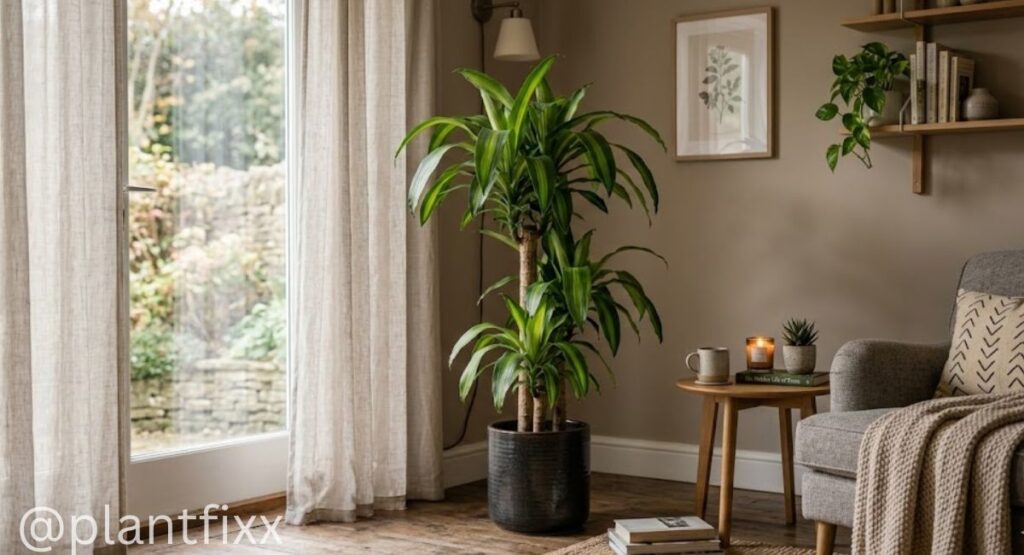
The first Dracaena plant I ever owned almost didn’t survive its first winter.
I placed it in a dark apartment corner because someone told me it was a “low light indoor plant” that could handle anything. For two weeks, I ignored it. Then I overwatered it out of guilt. The leaves drooped, tips turned brown, and I genuinely thought I had killed it.
But I didn’t.
Over the past 10+ years of growing tall house plants in small apartments, shaded offices, and north-facing homes, I’ve learned something important: growing a large Dracaena in low light isn’t about luck. It’s about understanding what the plant actually needs, and what beginners usually do wrong.
If you want your dragon tree to grow tall, full, and confident (even in a dim corner), this guide will walk you through it step by step, mistakes included.
Let’s grow it the right way.
Dracaena Plant Care for Low Light Indoor Plant Corners
Before we dive into the 7 real causes that stop growth, let’s simplify something.
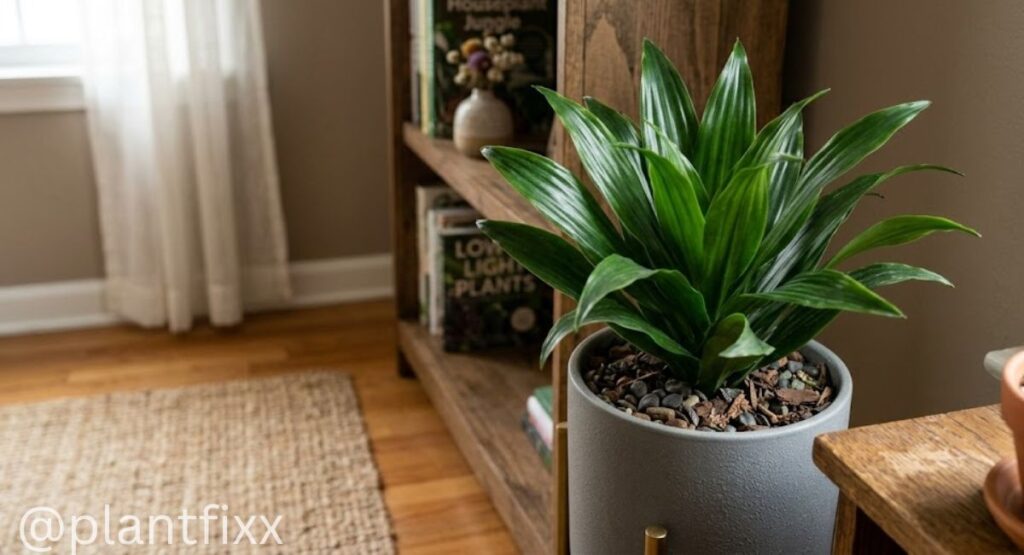
A Dracaena plant (often called dragon tree) is a slow-growing tropical plant that adapts to lower light — but “tolerates” doesn’t mean “thrives.” If you want it to become a large, statement piece, you have to support it intentionally.
Here’s what most beginners misunderstand:
Low light means bright indirect light, not darkness.
Your plant should still see the sky. It just shouldn’t sit in harsh sun.
Now let’s talk about the real reasons your Dracaena isn’t growing big, and how to fix each one.
1. Not Enough Light for Growth
I once kept my Dracaena in a hallway with no windows. It survived… but didn’t grow for 8 months.
Signs to Identify the Issue
- No new leaves
- Thin stems
- Faded green color
- Leaning toward one side
Step-by-Step Fix
- Move it closer to a window (north or east-facing is ideal).
- Keep it within 4–8 feet of natural light.
- Rotate the pot every 2 weeks.
Micro Action Tip
If your corner is truly dark, add a small grow light for 6 hours daily. Even budget ones work.
Low light doesn’t mean no light. That shift changed everything for me.
2. Overwatering the Dracaena Plant
This was my biggest mistake.
I used to water on schedule, every Sunday. The soil stayed wet for days.
Dracaena roots hate soggy soil.
Signs to Identify the Issue
- Yellowing lower leaves
- Mushy stem base
- Soil smells sour
Step-by-Step Fix
- Let the top 2 inches of soil dry before watering.
- Use a pot with drainage holes.
- Remove excess water from saucer.
Micro Action Tip
Stick your finger deep into the soil. If it feels cool and damp, wait.
Underwatering is safer than overwatering for this plant.
3. Poor Soil Mix Slowing Growth
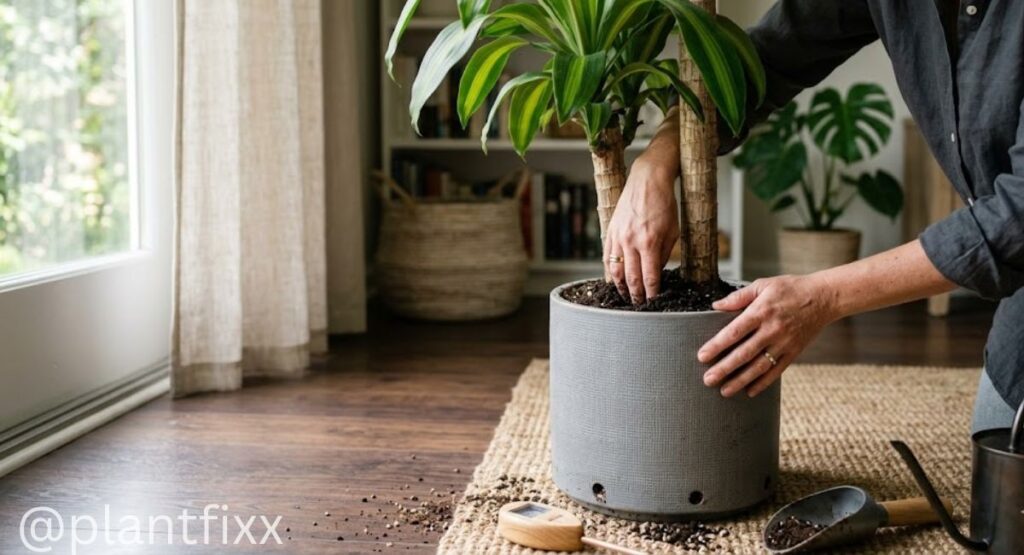
When I first started, I used regular garden soil indoors. Big mistake.
It stayed compact and suffocated roots.
Signs to Identify the Issue
- Water sits on top of soil
- Slow growth despite proper light
- Roots look brown when checked
Step-by-Step Fix
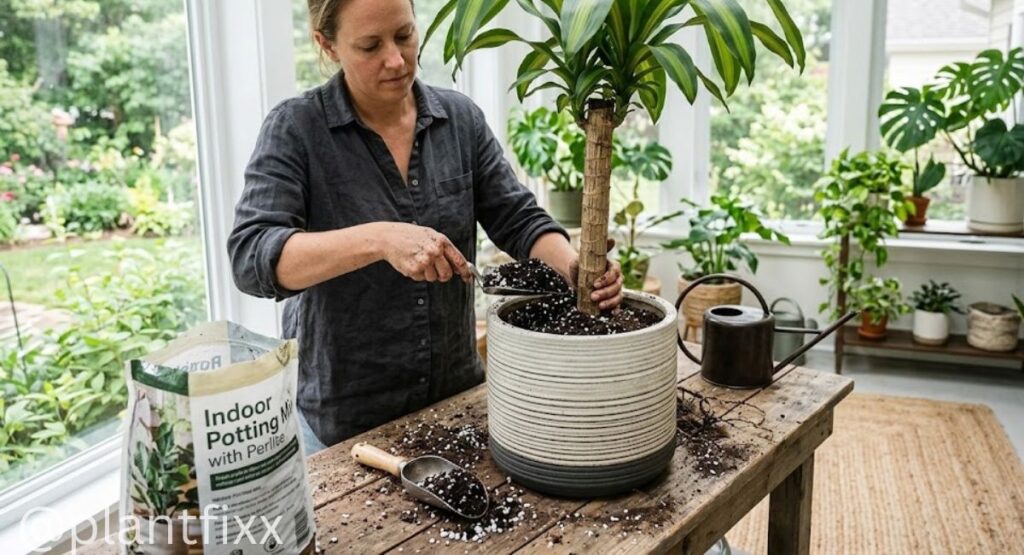
- Use well-draining indoor potting mix.
- Add perlite for aeration.
- Avoid heavy clay soil.
Micro Action Tip
Lift the pot after watering. If it feels heavy for days, your soil is too dense.
Healthy roots = taller plant.
4. Small Pot Restricting Size
A Dracaena plant cannot grow large if roots have nowhere to expand.
I ignored repotting once for 3 years. The plant stayed the same height.
Signs to Identify the Issue
- Roots coming out of drainage holes
- Soil drying too fast
- Plant top-heavy
Step-by-Step Fix
- Repot every 2–3 years.
- Choose a pot 1–2 inches larger.
- Refresh soil during repotting.
Micro Action Tip
Don’t jump to a huge pot. Slight upgrades encourage steady growth.
5. Low Humidity Stress
In winter, heaters dry indoor air.
I noticed brown tips appearing during heating season.
Signs to Identify the Issue
- Crispy leaf edges
- Slow new growth
- Droopy leaves despite moist soil
Step-by-Step Fix
- Group plants together.
- Place a water tray nearby.
- Keep away from direct heater vents.
Micro Action Tip
Mist lightly once a week, but don’t soak leaves.
Even low light indoor plant species appreciate gentle humidity.
6. Lack of Nutrients
I avoided fertilizer for years thinking it was optional.
But large growth requires feeding.
Signs to Identify the Issue
- Pale leaves
- Thin new growth
- No height increase for months
Step-by-Step Fix
- Use balanced liquid fertilizer.
- Feed once every 6 weeks in spring and summer.
- Skip winter feeding.
Micro Action Tip
Dilute fertilizer to half strength for safety.
Gentle feeding works better than aggressive feeding.
7. Comparing It to Faster Plants
I once placed my Dracaena next to a zz plant and expected similar speed.
That was unfair.
Dracaena grows slower than many tall house plants. Patience matters.
Signs to Identify the Issue
- You feel frustrated
- Growth seems “too slow”
- You consider replacing it
Step-by-Step Fix
- Track growth monthly.
- Measure height instead of guessing.
- Focus on leaf quality, not speed.
Micro Action Tip
Take photos every 2 months. Growth becomes visible over time.
Slow growth doesn’t mean unhealthy.
Dracaena vs Sansevieria Plant: Which One to Choose?
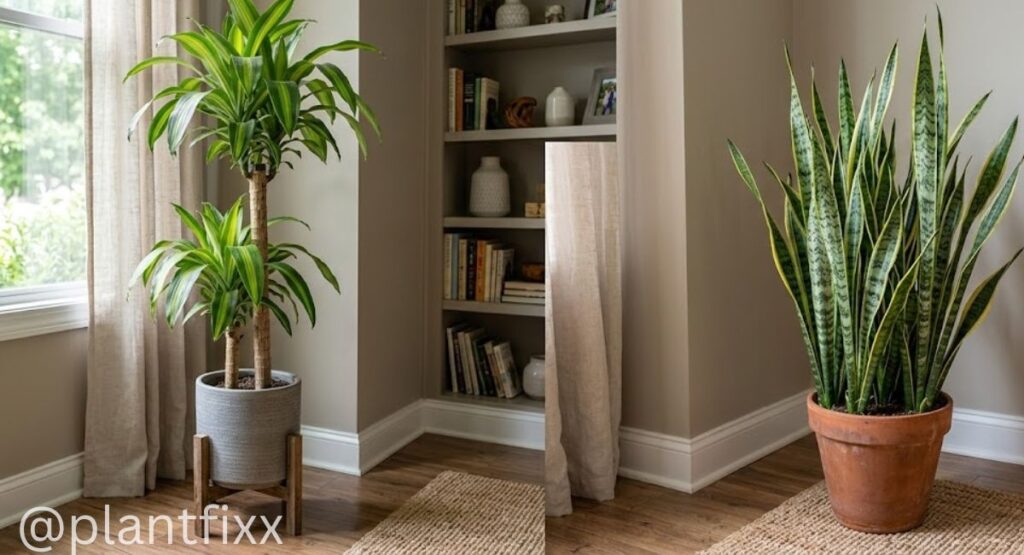
This question comes up constantly.
Both are beginner-friendly. But they behave differently.
A sansevieria plant (also called large snake plant) tolerates darker spaces better than Dracaena. It also needs less water.
If your corner is extremely dim and you forget watering often, choose a large snake plant.
If you want softer, arching leaves and a more tropical feel, go for a Dracaena plant.
Personally, I grow both. My peace lily sits near them too, but it demands more water.
Avoid comparing your plant to a faux snake plant though, artificial plants never complain. Real ones teach patience.
Growing a Large Dracaena as a Tall House Plant
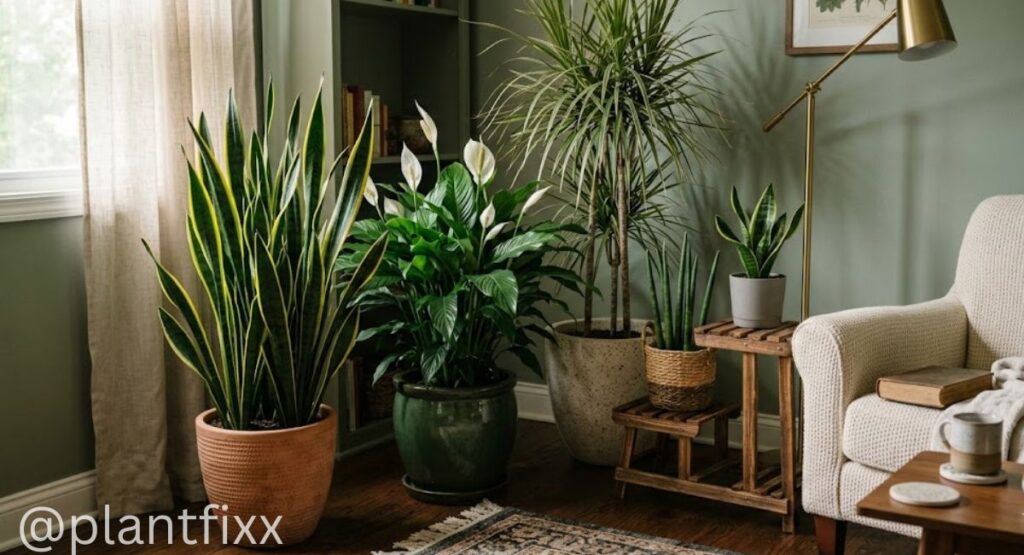
If your goal is height, here’s the practical routine I follow.
Weekly Routine
- Check soil moisture
- Rotate plant
- Inspect leaves
Monthly Routine
- Wipe dust from leaves
- Check for root crowding
- Inspect light direction
Seasonal Routine
- Fertilize in spring/summer
- Reduce watering in winter
- Adjust placement as sun angle changes
Consistency grows size.
Common Beginner Mistakes with Low Light Indoor Plant Care
Let me be honest. I’ve made all of these.
- Watering on schedule instead of checking soil
- Placing plant in total darkness
- Ignoring drainage
- Using decorative pots without holes
- Expecting fast growth
Your plant isn’t dramatic. It’s reacting logically.
Prevention Strategy for Healthy Growth
Here’s the 2026 secret most blogs won’t tell you:
Don’t chase perfection. Build rhythm.
Choose a bright corner.
Use light, airy soil.
Water less than you think.
Repot slowly.
Feed gently.
And observe.
Plants speak quietly. You just have to watch.
FAQs
1. Can a Dracaena survive in very low light?
Yes, but growth slows significantly. For size increase, moderate indirect light is better.
2. How fast does a Dracaena plant grow?
Usually 4–12 inches per year depending on light and care.
3. Is Dracaena better than a large snake plant?
For darker spaces, snake plant wins. For tropical look, Dracaena is better.
4. How tall can a dragon tree grow indoors?
Up to 6–8 feet with proper care.
5. Is it beginner friendly?
Absolutely, if you avoid overwatering.
Final Thoughts: Growing with Confidence
When I look at my now 5-foot tall Dracaena, I don’t see a perfect plant.
I see every mistake I made.
The overwatering.
The wrong corner.
The delayed repotting.
And the learning.
If you treat your Dracaena plant with patience instead of panic, it will reward you with steady, graceful growth, even in low light.
Start small. Stay consistent. Adjust slowly.
That’s how a simple plant becomes a tall, beautiful statement in your home.
Pingback: Best Soil Mix for Snake Plants: 7 Proven Recipes (2026)