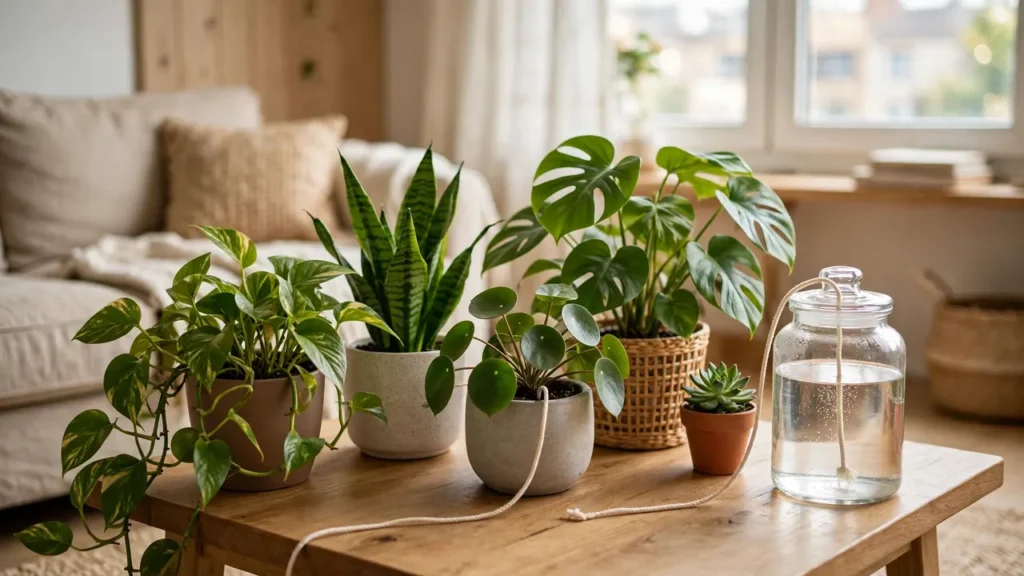
Going away does not have to mean coming home to dry, drooping plants. The plan that works is simple: water thoroughly before you leave, move plants out of strong sun, and match the watering method to your trip length. For a weekend, deep watering is usually enough. For one to two weeks, a self-watering container or a pebble tray adds time. For three to four weeks, a tested wick system fits, and for longer than four weeks, a plant sitter is the dependable choice. Test any setup a few days before you leave, because a method that drains too fast or not at all is only discovered when it is too late.
Pick Your Method by Trip Length
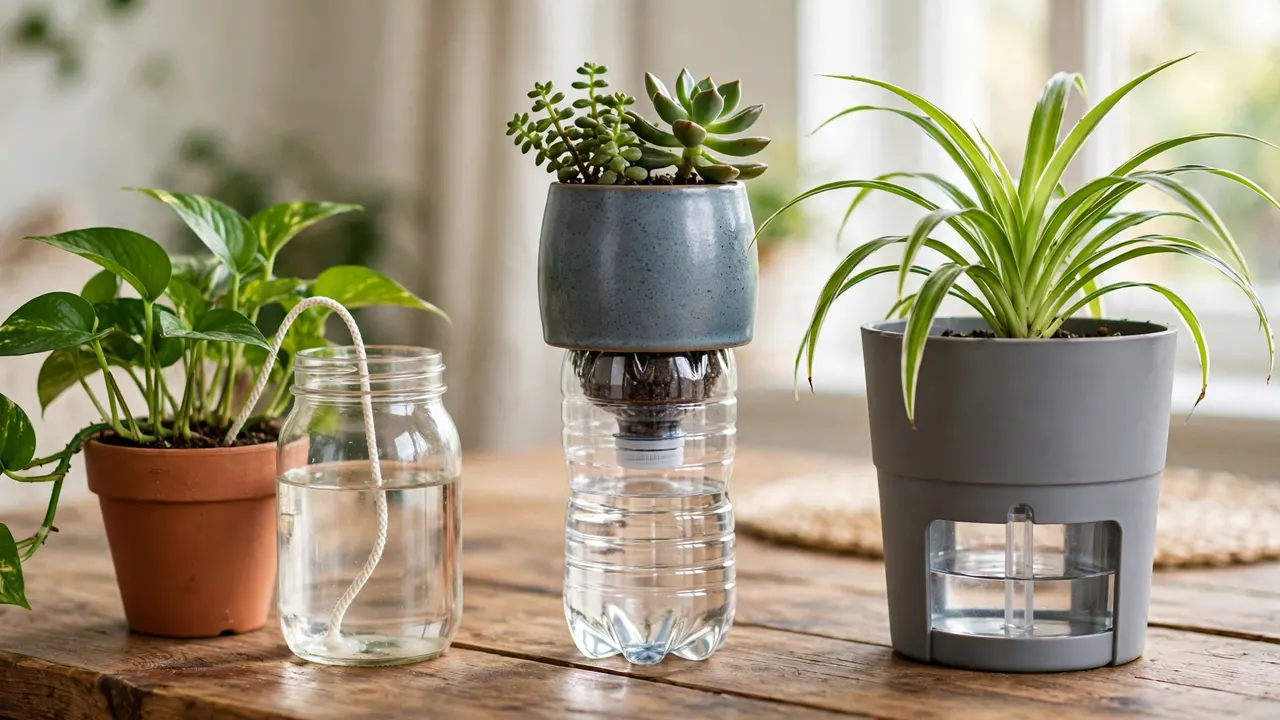
Start with the calendar, not the gadget. A method that covers three days can fail at three weeks, and a method built for three weeks can overwater a plant that only needed a weekend soak. UF/IFAS rates the main methods by trip length, and this table follows those bands.
| Trip length | Method | Best for | Watch out for |
|---|---|---|---|
| Up to 7 days | Deep watering only | Snake plants, ZZ plants, pothos, succulents | Small pots and terracotta dry first |
| 1 to 2 weeks | Self-watering pot, pebble tray, or bathtub group | Plants that like steady moisture | Only use a self-watering pot the plant already lives in |
| 3 to 4 weeks | Wick system from a reservoir | Tropicals, ferns, calatheas | A dry wick may not start, so test it first |
| Longer than 4 weeks | Plant sitter | Valuable plants and mixed collections | Leave clear written instructions for each plant |
If your trip sits on a boundary, pick the method for the longer band. A three week trip with a one week method leaves the last two weeks uncovered, while the longer method only needs a test run to prove it works.
Before You Leave: The Pre-Trip Checklist
Do this work two to three days before departure, not on the morning you leave. First, check every plant for pests, yellow leaves, and dry soil. A stressed plant before a trip rarely improves while you are away, so fix what you can now and leave the rest alone. Water each plant according to its own needs, and let the pot drain fully before you set it in its vacation spot.
Next, move plants a few feet back from hot windows into bright indirect light. Direct sun dries soil fast, and a plant in lower light uses less water. Group plants together so they share humidity, but leave space for air to move between them. A closed, dark room is not the answer, because too little light can cause leaf drop.
Finally, test your chosen method on one or two plants. Set up the wick, bottle, or tray, and watch it for at least a day. If the soil stays dry, the wick is too thin or the reservoir sits too low. If the soil turns soggy, the flow is too fast. Adjust now, while you can still see the result.
Deep Watering Only: Trips Up to a Week
For a short trip, deep watering is the simplest option. Water the day before you leave, not the morning of, so you can see that the pot drains and the saucer is empty. Pour slowly until water runs from the drainage hole, then wait 15 to 30 minutes and empty the saucer. Roots left in standing water start the trip wet, which invites rot.
This method suits plants with a slow drinking pace. A snake plant, a ZZ plant, or a succulent in a medium pot can often go a week on one deep watering in a cool room. A fern or a calathea in a small terracotta pot dries faster, so move it to a cooler spot and group it with other plants. For the full watering basics, read the complete indoor plant watering guide.
Wick Watering: Trips of Three to Four Weeks
A wick moves water from a reservoir into the soil by capillary action. Use absorbent cotton cord or a strip of cotton fabric, and soak it before you set it up so the flow starts at once. Push one end 2 to 3 inches into the root zone, and put the other end in a container of water. UF/IFAS places the reservoir above the plants, on a table or chair, with the wick running down to each pot.
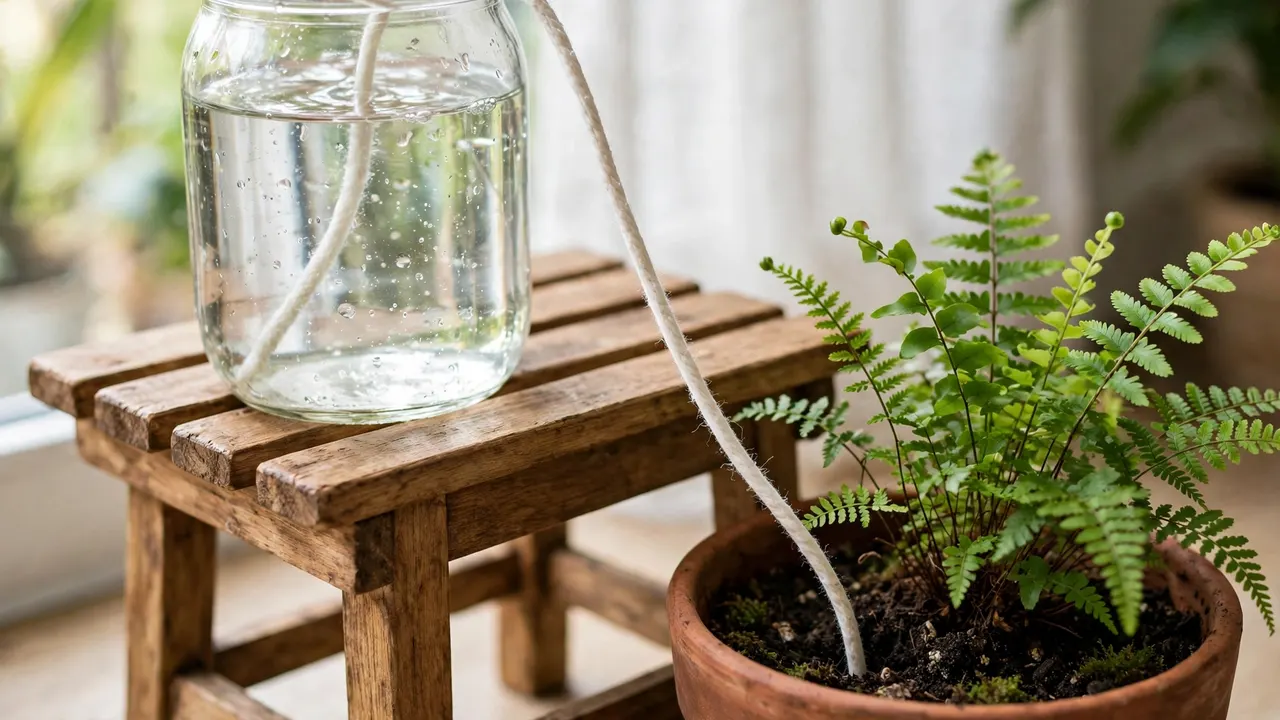
One large jar can feed two or three small pots if each pot gets its own wick. Use a separate wick per plant, because plants with different thirst levels should not share one supply. A fern and a cactus on the same wick is a mismatch: one stays thirsty and the other stays wet. Keep the reservoir out of the light path so it does not shade the plants, and keep it covered if you can, so evaporation and algae stay low.
Self-Watering Pots and Reservoirs
A self-watering pot holds water in a built-in reservoir, and the soil draws from it as it dries. UF/IFAS rates this method for 1 to 2 weeks away. The detail that matters is timing: the rating applies to a plant already living in the pot. A plant repotted into a new reservoir pot the day before a trip has not settled in, and the reservoir may not feed the roots yet.
So do not buy a self-watering pot as a last minute fix. If the plant already lives in one, fill the reservoir fully the day before you leave and check the water level indicator. If the plant lives in a normal pot, use a wick or a sitter instead, and save the repotting for after you return. The same rule applies to capillary mats: set them up days ahead, and confirm the soil actually draws water from the mat.
Bottle Drips and Watering Globes
An upside-down bottle with a small hole in the cap releases water slowly into the soil. It suits a single medium pot for about a week, and it costs almost nothing. Use a clean bottle, make one or two small holes, and push the neck a few inches into the soil. Test it first, because a hole that is too large empties the bottle in a day, and a hole that clogs gives nothing at all.
Watering globes work the same way on a smaller scale. Fill the bulb, push the stake into the soil, and it releases water as the soil dries. They suit small pots and short trips, and they are easy to knock over, so place them where they will not be brushed by a curtain or a pet. Neither bottles nor globes replace a wick for a long trip.
The Bathtub and Pebble Tray Method
For a group of plants, the bathtub works as one large saucer. UF/IFAS describes filling the tub with 2 inches of water, laying old towels in place of pebbles, and setting the plants on top. Leave the bathroom light on, and the plants gain about a week of extra time. Keep pots raised above standing water where you can, so roots are not sitting in it for the whole trip.
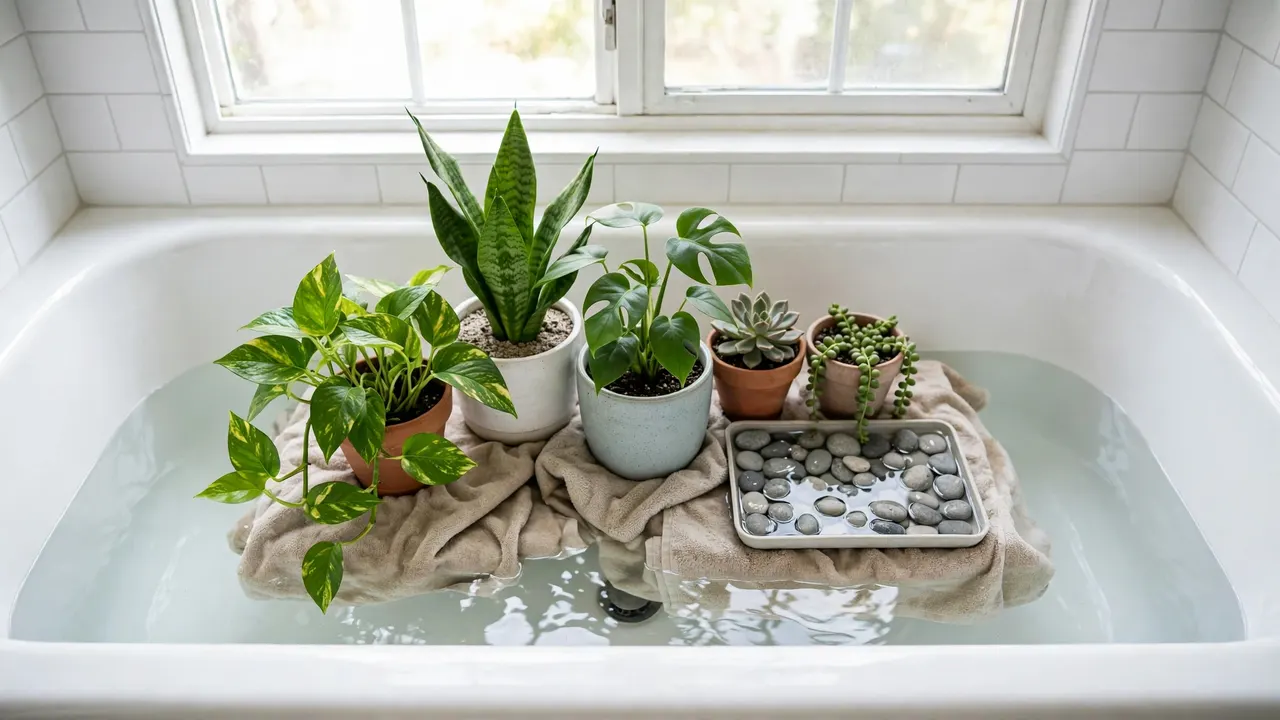
A pebble tray is the small version of the same idea. Fill a deep saucer with pebbles and water, set the pot on top, and water the plant thoroughly before you leave. It suits plants that like humidity, such as ferns and calatheas. Check that the pot has drainage holes, because a pot without drainage can turn a pebble tray into a puddle.
Asking a Sitter: Longer Than Four Weeks
For trips longer than four weeks, UF/IFAS recommends sending plants to a sitter or having the sitter visit at least once a week. A person can do what no gadget can: notice a dry pot, a fallen plant, or a pest problem, and act on it. A sitter is also the safer choice for a valuable plant, a mixed collection, or a home that runs hot while you are away.
Leave written instructions for each plant, not one general note. Write the plant name, where it sits, how often it needs water, and how much. Show the sitter the finger test: if the top inch of soil feels dry, water until it drains, then empty the saucer. Keep the instructions short and plant by plant, so a friend who has never kept plants can follow them without guessing.
Match the Method to the Plant
Plant type changes the answer as much as trip length does. A snake plant and a ZZ plant store water in thick leaves and rhizomes, so they need the least help. Deep watering before a week away, plus a move out of direct sun, covers them in most homes. Read the snake plant watering guide and the guide on how often to water a ZZ plant for their exact schedules.
Pothos and philodendron sit in the middle. They like steady moisture but forgive a dry spell, so a wick or a self-watering pot suits a two week trip. Ferns and calatheas drink fast and dislike drying out, so they need a wick, a pebble tray, or a sitter for anything longer than a few days. Succulents and cacti need the least water of all, and a self-watering setup can harm them, so deep watering alone is the right call.
Pot size matters too. Small pots dry first, terracotta dries faster than plastic, and a plant in a bright window dries faster than the same plant in a shaded corner. When in doubt, test the exact pot and the exact spot, not a different plant in a different room.
What to Do When You Come Home
Do not flood every plant the moment you walk in. Check the soil first with your finger. If the top inch feels dry, water slowly until it drains, then empty the saucer. If the soil still feels damp, wait, because a plant that stayed moist does not need a rescue soak.
Move plants back to their normal light gradually over a day or two, and remove any yellow or dead leaves so you can see new growth clearly. If a wick or bottle setup is still in place, take it out, clean it, and store it for the next trip. A plant that lost leaves while you were away often recovers with normal care, so give it a week of steady watering and light before you decide anything is wrong.
How long can houseplants go without water?
It depends on the plant, the pot, and the room. A snake plant or ZZ plant in a cool room can often go a week or two on one deep watering, while a fern in a small pot in a sunny window may need water within a few days. Use the trip length table above, and test your setup before you leave.
Should I water my plants right before I leave?
Yes, water thoroughly the day before you leave, and let the pot drain fully. Watering the morning of departure leaves no time to check that the saucer is empty and the setup works.
Do self-watering pots work for vacation?
They work for 1 to 2 weeks when the plant already lives in the pot, according to UF/IFAS. They are not a last minute fix for a plant repotted the day before a trip, because the reservoir needs time to feed settled roots.
Is the bathtub method safe for plants?
It can add about a week of time for a group of plants, with 2 inches of water and towels under the pots, as UF/IFAS describes. Keep pots raised where you can, leave the light on, and avoid it for succulents and cacti, which dislike constant moisture.
What if no one can check my plants for a month?
For longer than four weeks, a sitter is the dependable option, either by taking the plants to the sitter or by weekly visits. A wick system can cover three to four weeks for thirsty plants, but it cannot notice a problem the way a person can.