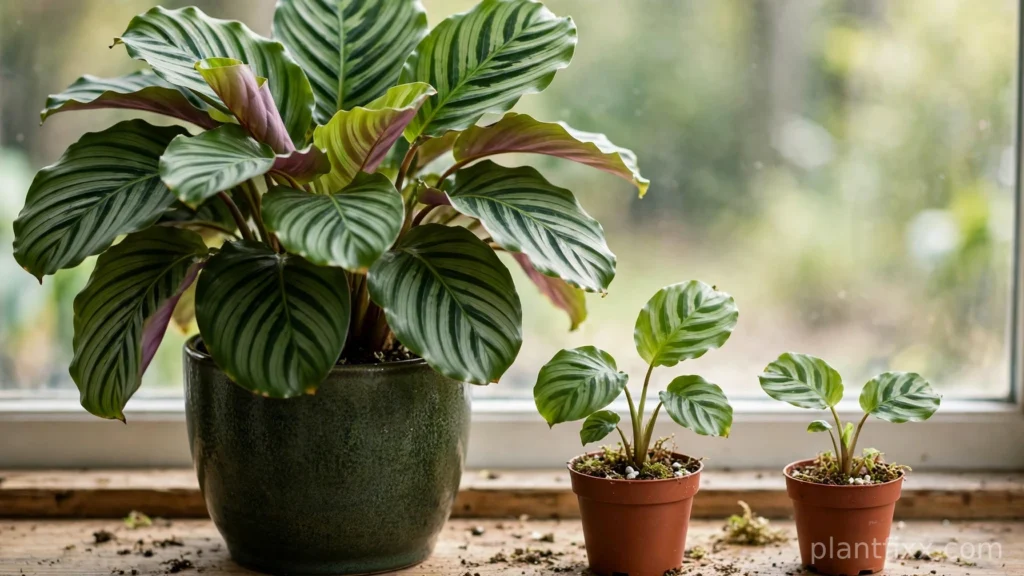
Calathea plant propagation has one reliable home method: division at repotting time in spring. A calathea plant cannot be grown from a leaf or stem cutting, so each new plant must start as a piece of the old clump, with roots, a section of rhizome, and at least one stem attached.
Done well, each division is already a small plant on its first day. It will usually wilt at the start, then recover if you hold the humidity high and keep the mix evenly moist while its reduced roots catch up with its leaves.
This guide covers why cuttings fail, how to judge a ready clump, the division steps, and aftercare for the first weeks.
Why Calathea Plant Propagation Means Division Only: Rhizomes, Crowns and Tubers
A calathea builds a clump from below the soil line. Thick underground stems called rhizomes run sideways, and each one pushes up a crown, the growth point where leaf stalks rise and roots grow down.
Over time a rhizome adds another crown beside the first, which is how one plant becomes a crowded clump. The North Carolina Extension Gardener Plant Toolbox profile of Goeppertia roseopicta gives the method for this group plainly: division of its rhizomatous roots.
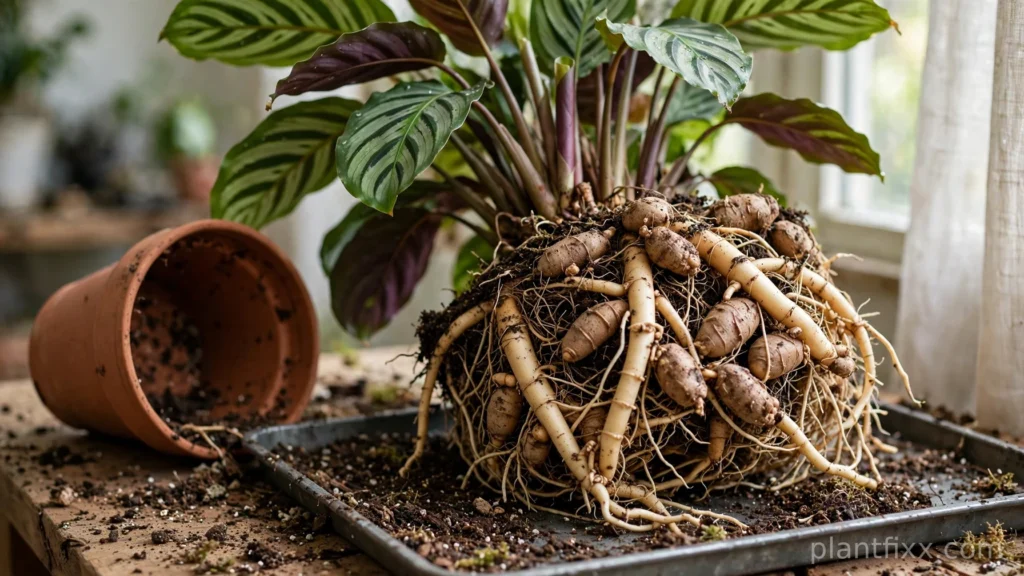
Along the rhizome sit swollen, tuber like roots. These storage organs hold water and food, so a piece that keeps rhizome, tubers and a crown carries its own supplies and can fund new roots before it feeds itself well.
Division is the plant’s own spreading method, done by hand when the root ball is already out for repotting. For the care each new plant needs once settled, see our complete calathea plant care guide.
Why Leaf and Stem Cuttings Fail on a Calathea Plant
Many houseplants root from a cutting because their stems carry nodes. A node holds tissue that can switch to making roots when a stem is cut and placed in water or mix.
A calathea leaf stalk carries no such node. It is a stalk, built to hold one leaf up to the light, and it holds no hidden growth point along its length and no rooting habit.
Put that stalk in a jar and it may stay green for a while, living on stores in the leaf. It cannot build roots or a crown, and in time it softens, yellows or rots.
There is also no plantlet route. This plant makes no babies on leaf edges, no pups on stalks and no surface offsets to detach, so there is nothing small and ready made to lift away.
One contrast line draws the boundary with its closest relative. Maranta, the true prayer plant covered in our prayer plant care guide, trails on jointed stems that can root at a node, and a calathea does not grow that way.
When to Divide a Calathea Plant, and When to Wait
Divide in spring, at repotting, when new growth is starting. The RHS guide to growing calatheas puts division in spring, asks for sections with several leaves each, and says to keep divisions warm, humid and moist until growth resumes.
Early summer still works for a strong plant. In low light months a division rebuilds roots slowly while its mix stays wet, which is where rot starts.
Never divide a stressed or pest infested plant. Spreading yellowing, a soft crown or webbing under the leaves are reasons to stop, fix the cause first, and divide at the next repotting instead.
What You Need Before You Start
- Small pots with drainage holes, one for each planned division
- Fresh potting mix, moisture holding but airy
- A clean sharp knife or scissors, wiped with rubbing alcohol
- Rain, distilled or filtered water at room temperature
- Clear plastic bags or a clear lidded box, for humidity covers
- A tray or old towel, because root ball work is messy
Rooting hormone has no job here. A division already owns roots, and hormone cannot make a stalk cutting root either.
Is Your Plant Ready to Divide: A Short Check
Look first at the surface. A ready clump shows stems rising from several points across the pot, not one central tuft, and roots may show at the drainage holes.
Then check health, leaf by leaf. You want firm crowns, clean leaf undersides with no webbing or sticky patches, and no soft or blackened tissue at the base.
Water the plant a day or two before you divide it. Moist roots flex as you handle them, while dry roots snap, and the plant starts the split fully hydrated.
How to Divide a Calathea Plant, Step by Step
Step 1: Set the Pots Out First
Fill each new pot part way with fresh mix and set pots, water and covers within reach. A bare root ball should not sit in dry room air while you hunt for supplies.
Step 2: Tip the Plant Out and Clear the Root Ball
Lay the pot on its side, support the crowns with one hand, and ease the root ball out. Shake and crumble away loose mix until the rhizomes and tuber like roots show.
Step 3: Map the Clump Before You Separate Anything
Follow each crown down to its rhizome section and root bundle. Decide the split lines first, aiming for two or three strong pieces rather than many small ones.
Step 4: Tease Apart, and Cut Only Thick Joins
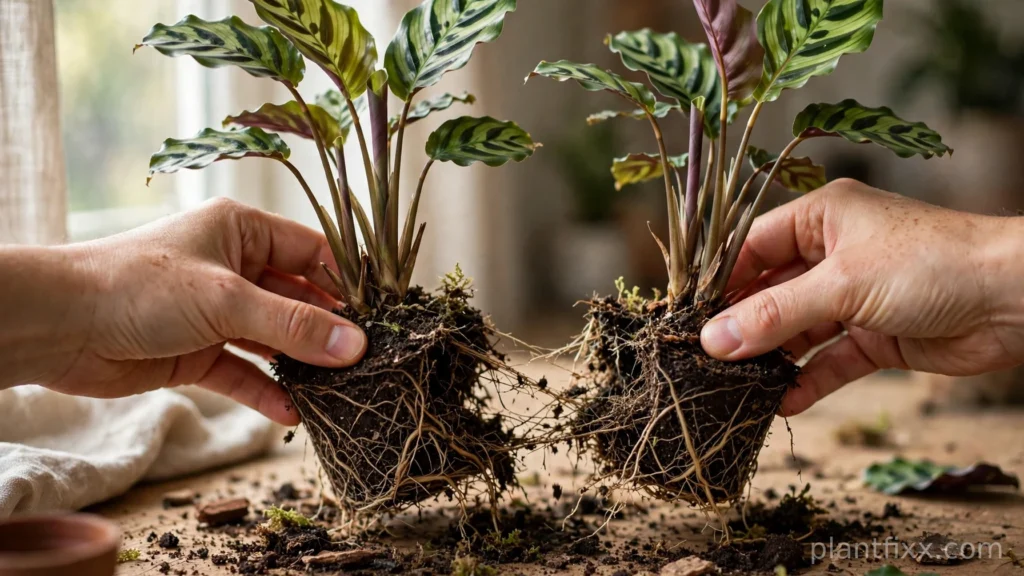
Work the roots apart with your fingers, untangling from the bottom up. Where a thick rhizome holds two crowns together and will not yield, cut it once with the clean blade.
Step 5: Check Every Division Against the Minimum
Each piece needs roots, a firm rhizome section, and at least one stem or crown, with two or three stems better. A piece missing one part goes back against a larger piece.
Step 6: Pot at the Old Depth and Water In
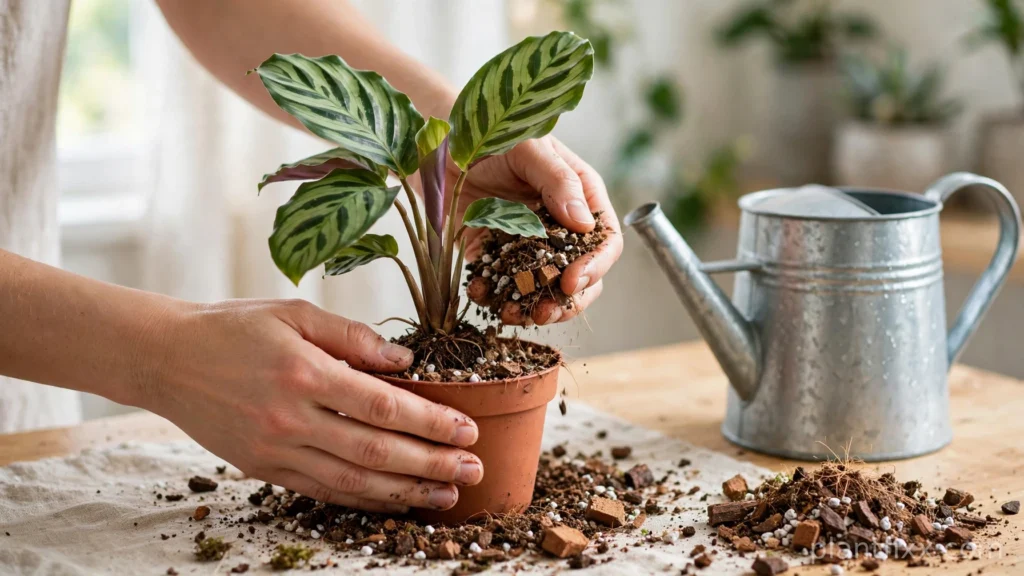
Set each division at the depth it grew at before, crown at the surface and not buried. Fill mix around the roots, firm lightly, then water until it drains and empty what collects below.
What Works and What Does Not: Methods at a Glance
| Method | What it starts with | Outcome |
|---|---|---|
| Division at repotting | Rhizome, roots and a crown | Works. A rooted plant from day one |
| Leaf cutting in water | A leaf and stalk, no growth point | Fails. Stays green, then rots |
| Stem piece in mix | A stalk with no rooting node | Fails. No roots form |
| Plantlets or pups | None produced by this plant | Not available |
| Seed at home | Flowers houseplants rarely produce | Not a home method |
Aftercare for New Divisions: The First Weeks
Place each pot in bright indirect light, out of direct sun, on the brighter end of what this plant tolerates. That is the same placement logic behind our list of the best low light indoor plants for small spaces.
Keep the mix evenly moist, never soggy and never dry through. Check with a finger below the surface, because a small root system leaves the lower mix drying on a different pace than the top.
Cover each pot with a clear bag propped off the leaves, or stand pots in a clear lidded box with the lid ajar. NC State Extension lists humidity above 60 percent for this group, and a cover holds humid air around new divisions.
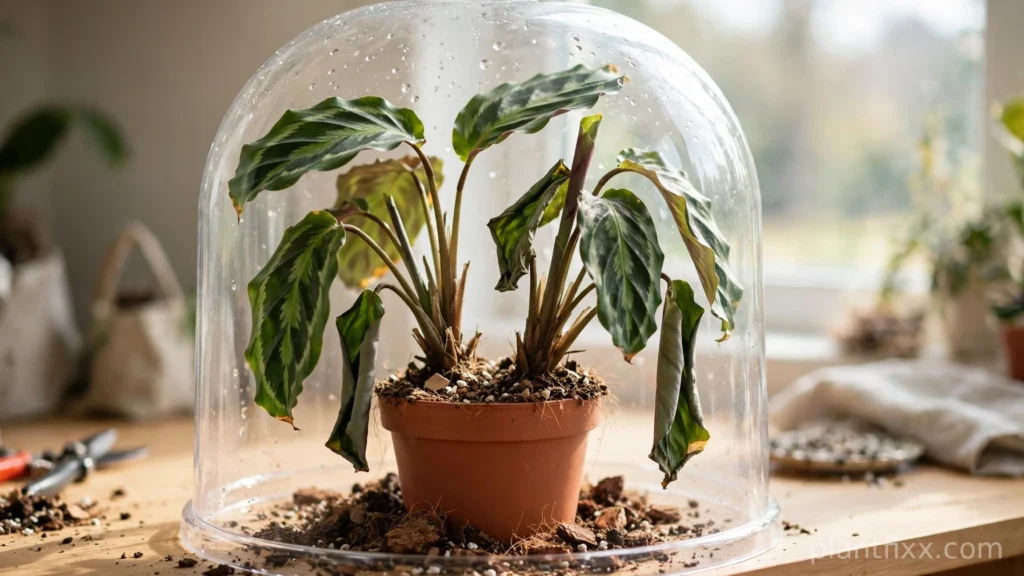
Open the cover daily for fresh air and wipe out heavy condensation, because still saturated air on cut tissue is where mould starts. Hold off feeding for the first month, and remove the cover once the wilt lifts for a full day.
Why Divisions Wilt, and How Recovery Works
Wilting after division is expected, within limits. The split cut or tore roots, so each division now has a smaller root system than the one that fed its leaves the day before.
The leaves did not shrink to match. They keep losing water to room air at close to the old rate, while the reduced roots take up only part of that amount, and leaf water pressure falls.
Storage explains why the plant can close that gap. Water and food in the rhizome and tuber like roots keep the crown alive while it grows replacement roots, so a sound division tolerates root loss better than its drooping leaves suggest.
Humidity is the lever you control. Humid air slows leaf water loss, narrowing the gap from the leaf side while roots rebuild from the other, so judge recovery week by week, not hour by hour.
Signs Your Division Is Working
- The wilt peaks in the first days, then lifts earlier each day
- Leaves begin to rise again at night, the normal folding rhythm returning
- The crown stays firm at the base when touched lightly
- A pale new leaf tube pushes up from the crown
- The mix dries at a steady pace, a sign roots are drinking
Signs It Has Failed, and What Can Still Be Saved
A wilt that deepens every day past the first week is not normal recovery. Check for a soft crown, a sour smell from the mix, or black mushy roots, which point to rot in wet mix.
Rot can often be cut back. Trim black roots and soft rhizome to firm pale tissue with the clean blade, then repot in fresh mix that is barely damp and restart the cover routine.
A too small division fails more quietly, sitting and losing leaves as its stores run out. If its crown is still firm, tuck it back beside a stronger plant in one pot.
Dividing Calathea in a Small Home, and Around Pets
The whole job fits on one tray, and two or three divisions in snug pots take less shelf room than the crowded mother plant did. Grouped pots also share humid air.
Calathea plants are non toxic to cats and dogs, so a division shelf is not a poisoning risk. Before adding a different plant to that shelf, run it through our pet safe plant checker for cats and dogs.
The Routine, in One Place
Wait for a healthy, crowded clump, then divide it in spring at repotting. Give every piece roots, rhizome and a crown, pot it snug at its old depth, and hold it warm, humid and evenly moist under a vented cover.
Expect the wilt, read it as a water balance problem, and judge the plant by new growth. Two or three strong divisions will build your collection without buying another plant.
Can you propagate a calathea plant from a leaf cutting?
No. A leaf and stalk hold no rhizome and no growth point, so the piece cannot make roots or a new crown. It stays green for a while, then rots or dries.
Can you propagate a calathea plant in water?
No. Water rooting needs a stem node that can build roots, and this plant has none on its stalks. Only a division, which already carries roots, works.
When is the best time for calathea propagation?
Spring, at repotting, when growth restarts and a full warm season follows. Early summer works for a strong plant. Avoid the low light months.
How many new plants can one calathea plant give?
As many as the clump has sound crowns, if each piece keeps roots, rhizome and stems. Two or three strong divisions recover far better than five small ones.
Why is my calathea division wilting?
Its leaves are losing water faster than its reduced roots can replace it. Raise humidity with a vented cover, keep the mix evenly moist, and give bright indirect light while roots regrow.
Do calathea divisions need rooting hormone?
No. A division starts with roots already attached, so there is nothing for hormone to trigger. It also cannot make a leaf or stalk cutting root.
Can you grow a calathea plant from seed at home?
Not in practice. Houseplant calatheas rarely flower indoors, so there is usually no seed to collect, and no authority guide lists seed as a home method for this plant.
Pingback: Calathea Plant Care Guide: Light, Water, Humidity and Pet Safety