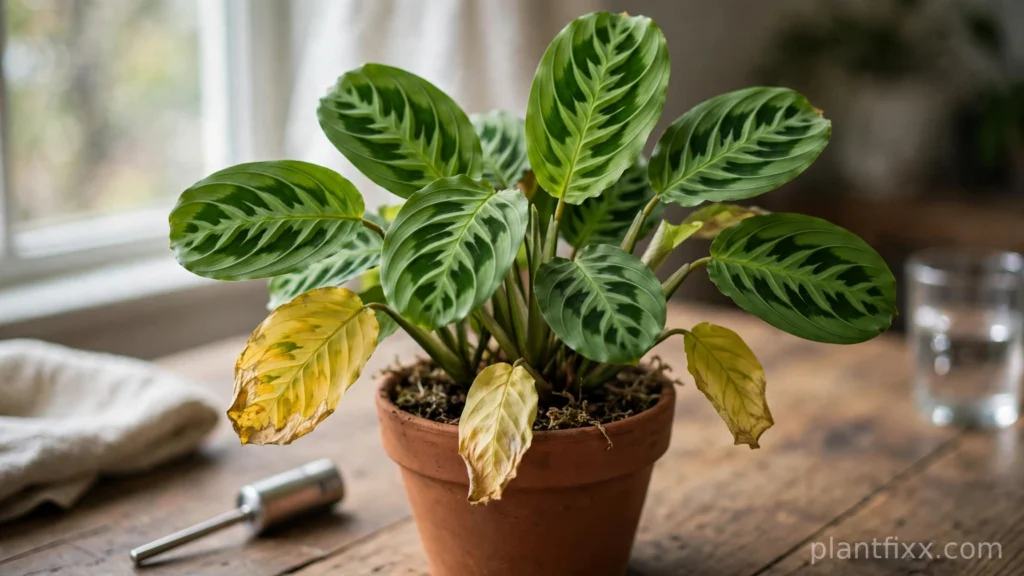
Prayer plant yellow leaves can mean almost nothing, or they can be the first sign the roots are in trouble. One yellow leaf at the base of an otherwise green plant is usually an old leaf finishing its life. Yellow spreading across several leaves is a signal to check roots and light today.
Read the pattern before you change anything. Where the yellow sits, which leaves it takes first, and whether the stems stay firm will point to aging, wet roots, low light, hungry soil or pests far faster than guessing.
This guide works in that order. Match your plant to the pattern table, check the roots if the soil feels wet, then fix only the cause that fits and judge the result by new growth.
For the wider picture, see our full guide to prayer plant problems and how to fix them.
Read the Yellow Pattern First
Count the yellow leaves, note whether they are the oldest or the newest, and feel whether the stems at the base are firm or soft.
| Yellow pattern | Likely cause | First check |
|---|---|---|
| Oldest leaves only, one or two at the base | Normal aging | None. Watch the next new leaf |
| Whole plant pale, pattern faded, growth slow | Too little light, or feeding overdue | Move brighter first, then review feeding |
| Yellow with green veins, worst on new leaves | Iron chlorosis, often poor iron uptake | Check roots and wetness before adding iron |
| Yellow leaves plus mushy stems at the base | Overwatering and root rot | Tip the plant out and read the roots |
| Yellow edges on otherwise green leaves | Water quality or salt build up | Note as one pattern, then check water |
| Yellow speckles across a leaf | Spider mites feeding | Turn the leaf over, look for webbing |
| Pale bleached patches facing the window | Too much direct sun | Move the plant back from the glass |
One contrast prevents a wrong fix. A leaf that stays flat but changes colour belongs here, while a leaf rolled into a daytime tube is answering water loss, not colour loss.
Close relatives behave in a similar way, as our complete calathea plant care guide shows. This guide stays with Maranta, because its patterns decide the fix.
Why a Green Leaf Turns Yellow: Chlorophyll, Roots and Moving Nutrients
A healthy leaf looks green because chlorophyll covers its other pigments. When chlorophyll breaks down and is not replaced, the yellow carotenoid pigments that were there all along show through.
Roots explain the confusing case of a yellow plant in a wet pot. Saturated mix holds water where air spaces should be, root cells suffocate, fine tips die, and rot spreads.
That plant then yellows from shortage while sitting in water. Damaged roots cannot take up enough water or nutrients to keep chlorophyll topped up, however wet the mix feels.
Nitrogen is mobile inside a plant, so a short supply gets moved from the oldest leaves into new growth. The old leaves yellow first while the centre stays green.
Iron does not move that way, so a shortage shows on the youngest leaves first. Tissue between the veins yellows while the veins stay green for longer.
The North Carolina Extension Gardener Plant Toolbox profile of Maranta leuconeura notes that leaves lose colour in low light and low fertility, and that root rot follows poorly drained soil.
What You Need Before You Start
- Clean scissors, wiped before you cut any root or leaf.
- Fresh potting mix with perlite, only if the root check finds rot.
- A spare pot with drainage holes, the same size as the current one.
- Room temperature water, ideally distilled, rain or filtered.
- A white sheet of paper, for the pest check later.
Do not buy feed or iron tonic before the checks. Rotted roots cannot use either, and salts added to damaged roots make the shortage worse.
Check the Roots: The Step That Settles Wet Soil Cases
Run this check when yellowing arrives with wet soil, soft stems or a sour smell. Skip it when one old leaf yellows on a firm plant with green new growth.
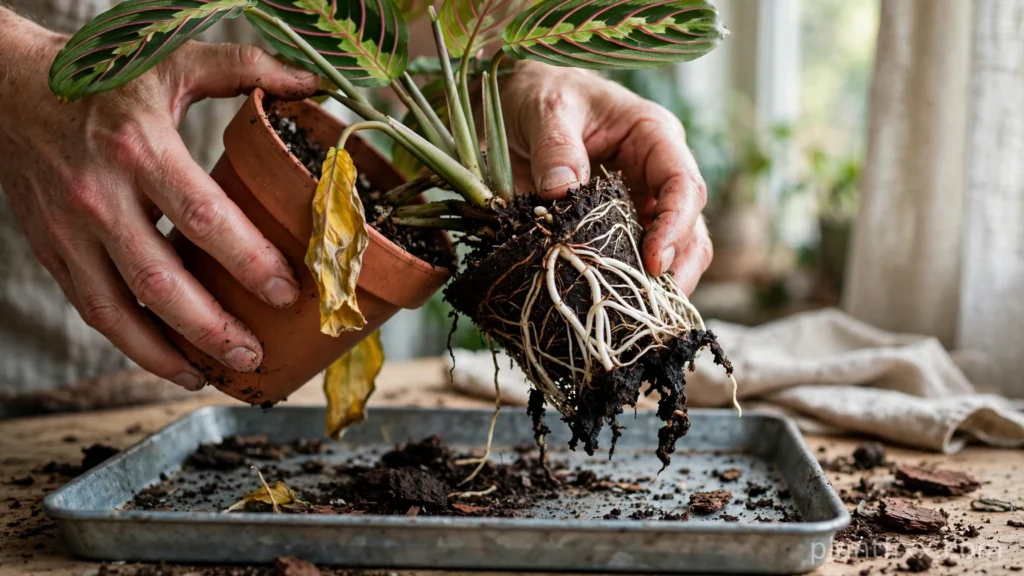
- Slide the plant out over a tray, supporting the stems with one hand.
- Brush loose mix away so the outer roots show clearly.
- Read colour and feel. Healthy roots are pale and firm. Rotting roots are brown, soft and stringy.
- Smell the root ball. Fresh mix smells earthy, while rot often smells sour.
- Feel the stem bases. Firm is a good sign, while mushy confirms the wet pattern.
If most roots are pale and firm, put the plant back and move on to light and feeding. The check still matters, because it rules out the cause that kills fastest.
If the root ball is mostly brown and soft, act the same day. Rot does not pause while a plant sits in the same wet mix.
Fix Overwatering and Root Rot
Trim every soft brown root back to firm pale tissue with clean scissors. Remove stems that are mushy at the base, and keep every firm root and green leaf you can.
Shake off the old wet mix and repot into fresh airy mix, in the same size pot or one smaller if you removed much root. A large pot holds more wet mix than reduced roots can use.
Water once, lightly, to settle the mix. Then hold back until the top inch feels dry, and empty the saucer every time.
Reset the habit after the rescue. Check the soil every few days and drain fully after watering, as our complete prayer plant care guide sets out. Hold off feeding while fresh root tips grow back.
Fix Dry Soil, Cold Water and Drafts
Underwatered yellowing looks different. The soil feels dry below the surface, the pot feels light, and the leaves are dry rather than soft. Lower leaves go first, protecting new growth.
Water slowly until it runs from the drainage holes, then drain. If the mix dried hard, soak the pot in a basin for twenty to thirty minutes, then drain fully.
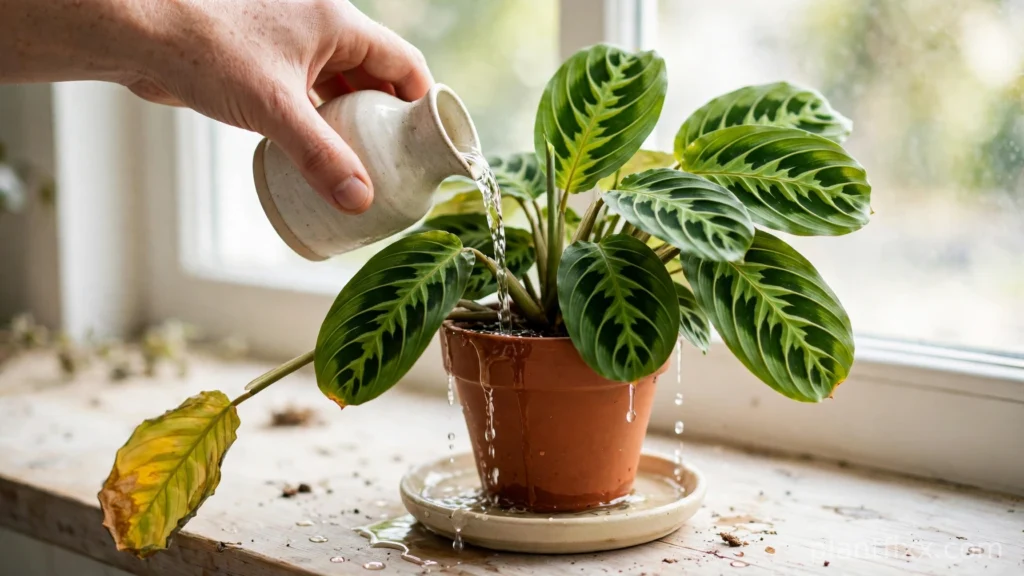
Cold is the stress readers miss. This species is intolerant of low temperatures and cold drafts, so move it to a steady spot near 65 to 80 degrees Fahrenheit, away from cold glass and heater blasts, and use room temperature water.
Fix Light: Too Little, Too Much and Bleached Leaves
Low light yellowing arrives slowly. The plant looks pale, the pattern fades, stems stretch, and new leaves come in smaller, because it makes less chlorophyll than it uses.
Move it to bright indirect light, not direct sun. The RHS prayer plant variety page pairs this plant with bright filtered light, moist but well drained soil and high humidity.
Too much light reads differently. Pale bleached patches on the side facing the glass, sometimes with dry brown centres, mean scorch. Moving the pot back matters more than any watering change.
In a dim room this plant still belongs among the best low light indoor plants for small spaces, but tolerance is not preference. Use the brightest shelf the room offers.
Fix Nutrient Yellowing: Old Leaves, New Leaves and Green Veins
Start here only after roots and light pass their checks. Feeding a plant yellow from rot or darkness adds salts and changes nothing at the source.
Old leaves yellowing evenly, on a plant long in the same mix without feeding, points to a mobile nutrient shortage. Nitrogen is the usual one, moved upward to feed new growth.
New leaves yellowing between green veins points to iron chlorosis. The cause is often uptake, not absence, because wet or damaged roots can lock iron away from the plant.
Fix uptake first. Correct the watering, confirm firm roots, and flush the pot once with plain soft water. Then feed at half strength, once a month in spring and summer only, and judge by the next new leaf.
Check for Pests That Yellow Leaves
Pest yellowing has texture. Spider mites drain single cells, so the leaf shows fine pale speckles that merge into a dull yellow wash, with tiny specks and webbing underneath.
Confirm before treating. Tap a speckled leaf over white paper and watch for moving specks, and look for mealybugs as white cottony clusters in the leaf joints.
Rinse both leaf surfaces and treat clusters with a cotton swab dipped in rubbing alcohol. Isolate the plant while you treat it, and raise the humidity, since mites favour dry air.
Maranta leuconeura is non toxic to cats and dogs, but keep pets off treated leaves until they dry. Confirm any plant with our pet safe plant checker for cats and dogs.
Trimming Yellow Leaves: What to Cut and What to Leave
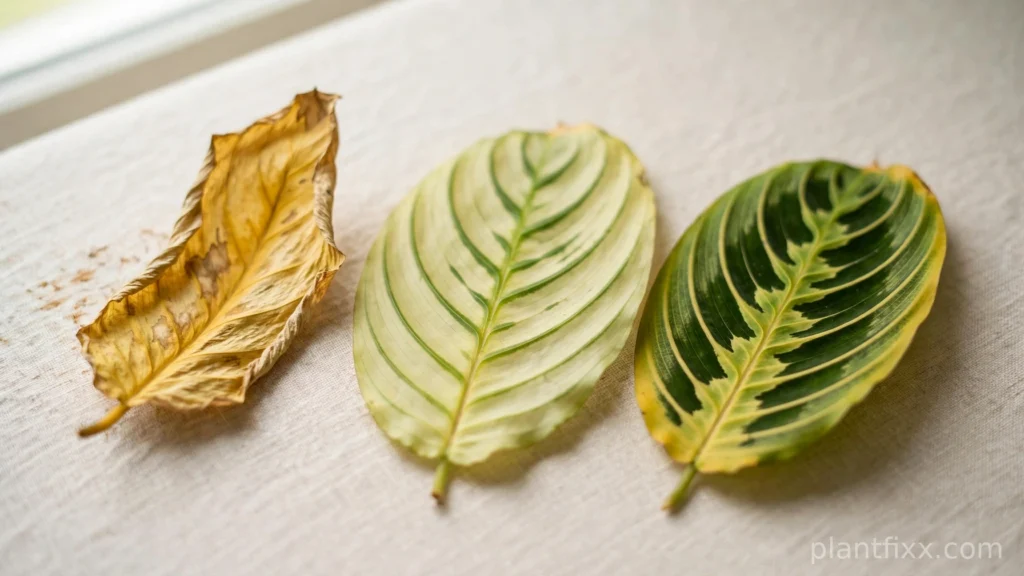
Be honest about recovery first. A fully yellow leaf will not turn green again, because chlorophyll lost across the whole blade does not rebuild, even after the cause is fixed.
Cut fully yellow leaves at the base of the stalk with clean scissors. Do the same for mushy, blackened or fully dry leaves, so new yellowing is easier to spot.
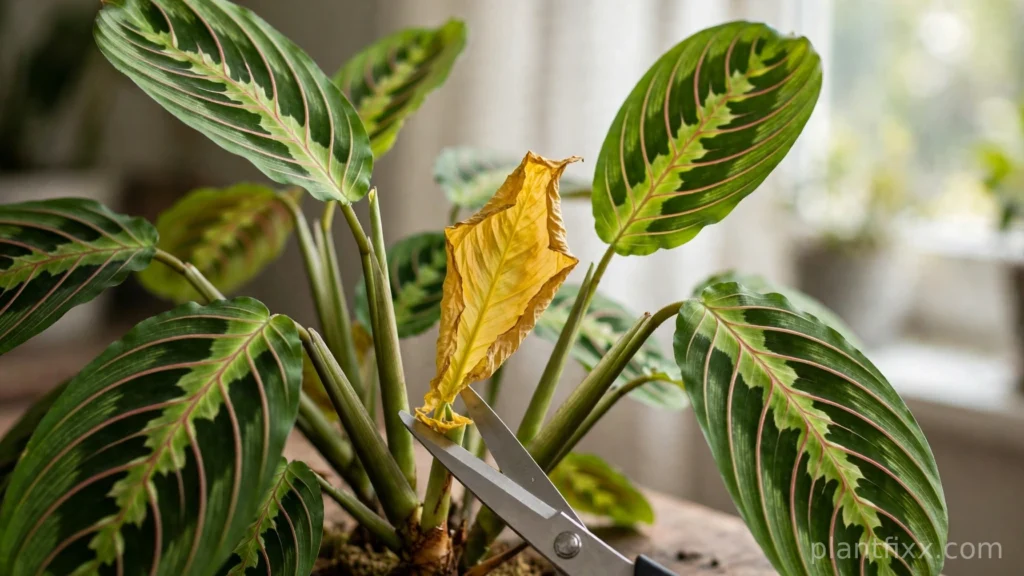
Leave partly yellow leaves with firm green tissue in place during recovery. That green part still feeds the roots, and a recovering plant needs every working leaf it has.
Signs the Fix Is Working, and Signs It Is Not
Working signs are specific. No new leaves yellow for two weeks, stem bases feel firm, and a new leaf opens green with a clear pattern. A quiet fortnight after root trimming is a pass.
Warning signs call for a second look. Yellowing climbing to new leaves, stems softening, or a sour smell returning means the root problem is still active.
Repeat the root check rather than adding feed or water. Most failed rescues fail because wet mix stayed around damaged roots, not because the plant needed a stronger product.
Keep the Next Leaves Green
Yellow leaves are a pattern to read, not a reason to change everything at once. Oldest leaves only usually means aging, yellow with mushy stems means roots, and green veins on new leaves mean uptake.
Match the pattern, run the root check when the soil is wet, and fix one cause at a time. Then let new growth grade your work, and read the next yellow leaf early.
Why is only one leaf on my prayer plant yellow?
One yellow leaf at the base, with firm stems and green new growth, is usually normal aging. Act only if yellowing spreads to several leaves at once.
Will a yellow prayer plant leaf turn green again?
A fully yellow leaf will not turn green again, because lost chlorophyll does not rebuild across the whole blade. Judge every fix by new leaves, not damaged ones.
How do I tell overwatering yellowing from underwatering yellowing?
Overwatered yellowing comes with wet soil, soft leaves and sometimes mushy stems. Underwatered yellowing comes with dry soil deep down, a light pot and dry leaves.
Should I cut yellow leaves off a prayer plant?
Cut fully yellow, mushy or fully dry leaves at the base of the stalk. Leave partly yellow leaves with firm green tissue, because that green part still feeds the plant.
Do yellow leaves always mean root rot?
No. Root rot is the first cause to rule out in wet soil, but aging, low light, nutrient shortage, cold and mites also yellow leaves.
How long does a prayer plant take to recover from yellowing?
Expect weeks, not days. A light or watering fix can stop new yellowing within two weeks, while a plant that lost roots needs longer to rebuild them.
Can tap water turn prayer plant leaves yellow?
Tap water shows first at the edges and tips, where minerals collect, rather than as whole leaf yellowing. Check roots and light first, then switch to soft water.
Pingback: Prayer Plant Problems: Symptom Guide, First Checks and Fixes