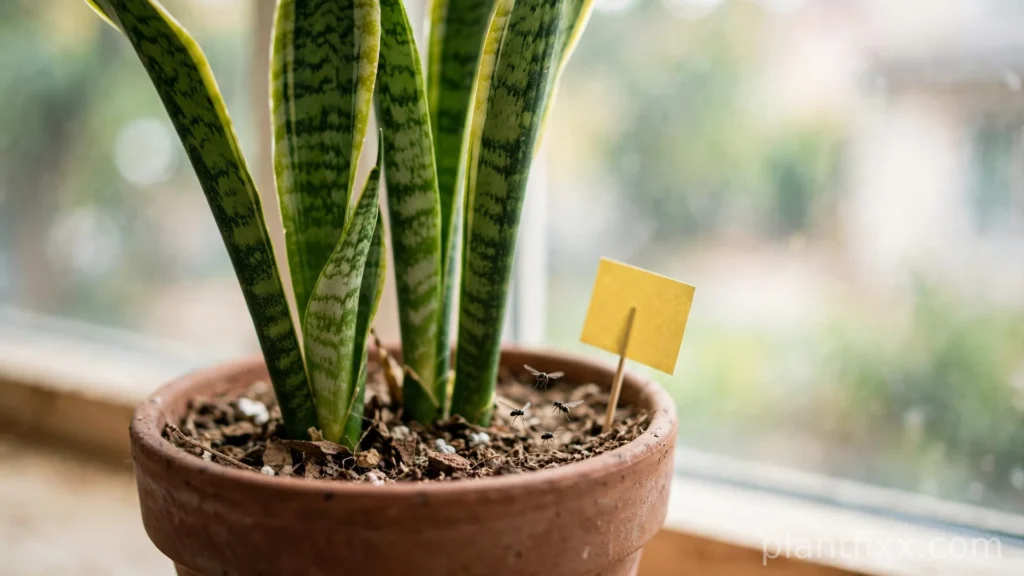
You water your snake plant, and a small cloud of tiny black flies rises from the soil. They settle back within seconds, and by evening they drift around your coffee mug. Those flies are fungus gnats, and they showed up for one reason: the soil stayed wet too long.
Adults do not bite or damage leaves, but their larvae live in the top layer of soil, and a large larval population can chew fine root hairs. Worse, the damp soil that breeds them is the same condition that causes root rot. The good news is that a snake plant is one of the easiest plants to clear of fungus gnats, because the cure is the care it already wants: dry soil.
This guide gives you a 6-step plan that kills the larvae, traps the adults, and resets your watering so the gnats do not come back.
Quick Answer
Stop watering, let the soil dry right through, and treat the larvae while you trap the adults. Set yellow sticky traps at the soil line, apply a Bti drench (Mosquito Bits tea) at the next watering, and add a dry sand top-dress. Most infestations clear in 2 to 3 weeks when the top soil stays dry between waterings.
Quick Take
Fungus gnats are a moisture problem, not a plant problem. Adults live about a week and lay eggs in damp topsoil. Larvae feed in the top inch or two of soil for about two weeks before pupating, so any fix that only kills the flying adults fails. Break the cycle at both ends: dry soil plus Bti kills the larvae, and sticky traps stop adults from laying the next batch of eggs. Check plants with damp soil too, because adults spread.
One mistake many people make is reaching for a spray. Sprays kill the flies you can see and leave the larvae untouched, so the cloud comes back within days. In practice, the plants that clear fastest are the ones where the owner fixes the moisture first and treats the larvae second. Dry soil is not neglect for this plant. It is the normal state it evolved for.
Why fungus gnats show up in snake plant soil
Fungus gnats are small dark flies of the Bradysia group. An adult lays its eggs in damp topsoil. The eggs hatch into larvae, tiny translucent worms with black heads, that feed on fungi, algae, and decaying matter in the top inch or two of soil. They pupate after about two weeks, and adults emerge to start the cycle again.
A snake plant is built to break this cycle on its own. It stores water in its rhizomes and thick leaves, so it wants the soil to dry fully between waterings. When the soil stays damp, that balance flips. Common causes are watering on a schedule instead of checking the soil, a pot with no drainage hole, a dense peat-heavy mix, an oversized pot, and a saucer with standing water. Gnats are a warning light for wet soil. The same dampness that breeds them also starves roots of air and invites root rot.
How to tell fungus gnats from fruit flies and other small flies
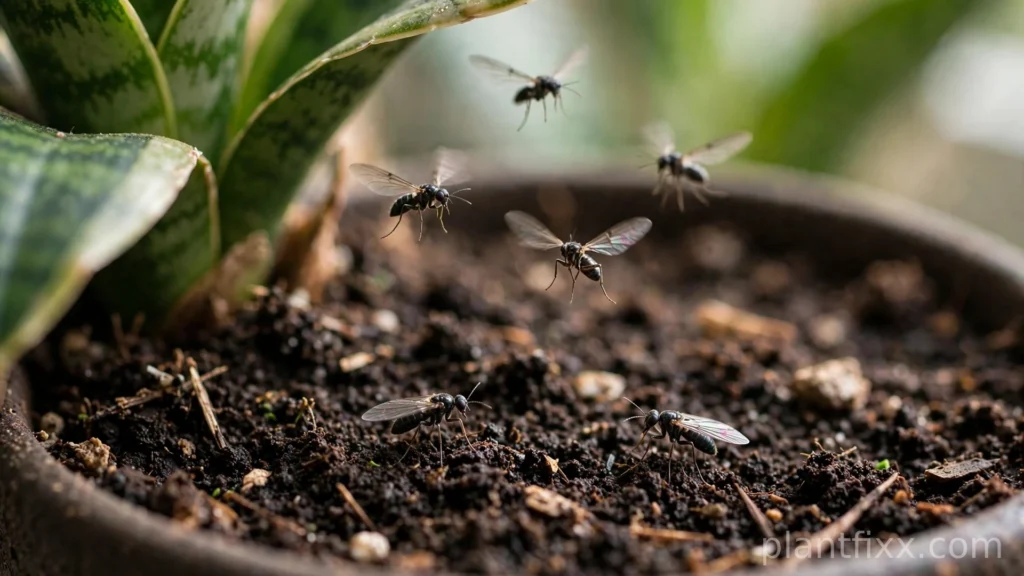
Before you treat, confirm what you have. Vinegar traps, the classic fruit-fly cure, barely catch fungus gnats.
| Fly | What it looks like | Where you see it |
|---|---|---|
| Fungus gnat | Tiny and black, long legs, weak flight | Over pot soil, rises on tapping |
| Fruit fly | Tan or brown, rounder, stronger flight | Near fruit, trash, drains, not soil |
Run two checks. First, tap the pot. Fungus gnats rise from the soil and settle back within seconds. Second, scoop the top inch of soil and look closely. Fungus gnat larvae are translucent worms with shiny black heads. Tiny white insects that jump are springtails, harmless soil cleaners that need no treatment.
What you need before you start
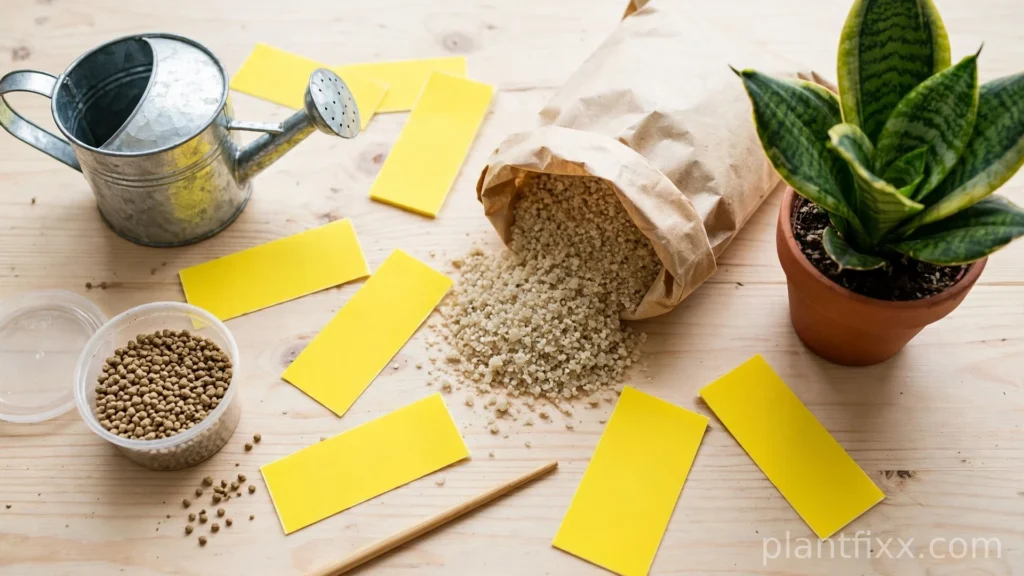
Gather everything first so the treatment runs without gaps. You need yellow sticky traps with stakes, Mosquito Bits (the Bti larvicide), a watering can, a wooden chopstick or a moisture meter, coarse sand or fine gravel for a top-dress, clean scissors, gloves, and paper towels. Keep fresh mix and a clean pot on hand for root trouble. No sprays are needed for this plan.
How to get rid of fungus gnats in your snake plant: the 6-step plan
Work the steps in order. Each one covers a different part of the life cycle.
Step 1: Isolate and inspect
Move the infested plant away from your other pots. Adults fly to any pot with damp soil, so check every nearby plant. Tap each pot and watch for rising flies. Smell the soil. A sour or swampy smell points to decay. Squeeze the base of the outer leaves gently. Firm is good. Soft or mushy means the roots need a check before you treat.
Step 2: Stop watering and let the soil dry
Stop watering at once. Let the soil dry all the way through the pot, not only at the surface. Test with a chopstick pushed to the bottom. Damp soil stuck to it means wait. A clean, dry chopstick means the pot is ready. A snake plant tolerates two to three weeks without water, and this dry spell dehydrates larvae and stops adults from laying.
Step 3: Trap the adults
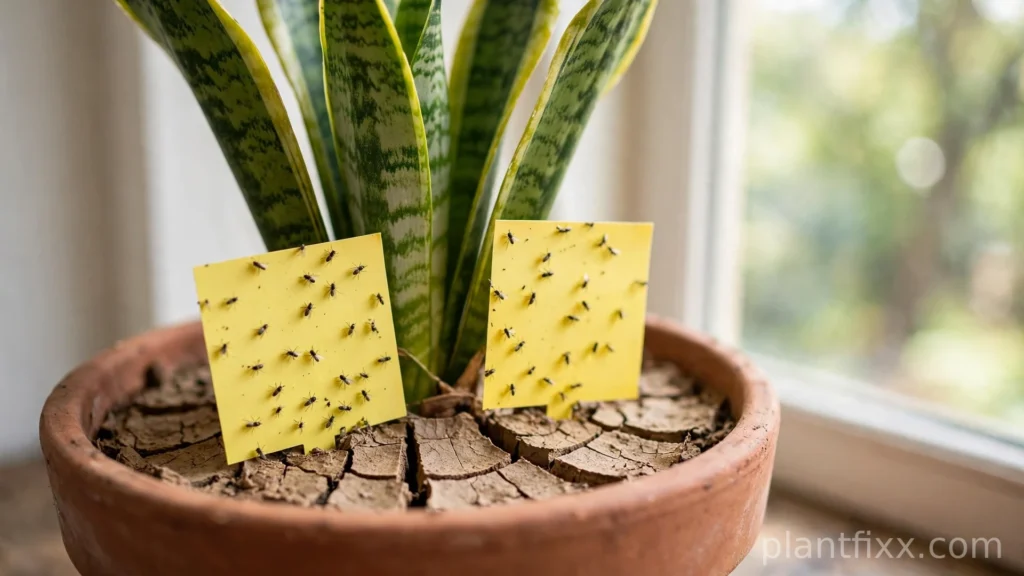
Place one or two yellow sticky cards at the soil line, angled so flying adults hit them on takeoff and landing. Replace a card when it fills up. Traps alone never cure an infestation, because they do not touch the larvae. Their job is to stop adults from laying the next batch of eggs.
Step 4: Kill the larvae with Bti
When the dry pot finally needs water, use Bti tea instead of plain water. Soak one tablespoon of Mosquito Bits in one gallon of water for 30 minutes, strain out the bits, and water the soil with the tea. Bti is a soil bacterium that kills gnat larvae and is safe for the plant, pets, and people. Repeat at each watering for two to three weeks.
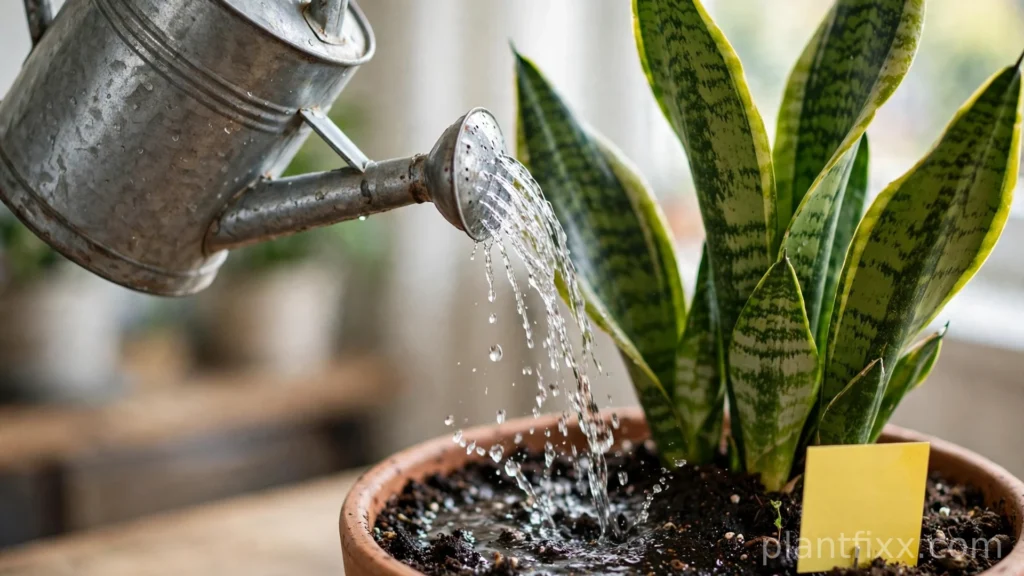
Step 5: Add a dry top-dress
Spread a 1 to 2 cm layer of coarse sand, fine gravel, or pumice over the soil surface. This layer dries fast after watering and gives adults nowhere damp to lay eggs. Skip polished decorative stones. They trap moisture underneath.
Step 6: Clean the pot area
Pick up fallen leaves from the soil surface, since decaying matter feeds larvae. Wipe the pot rim clean. After each watering, wait 15 minutes, then empty the saucer. Never let the pot sit in water.
Signs it is working
Week one: fewer adults on the traps and fewer flies rising on tapping. Week two: only a stray gnat here and there. Week three: traps stay clean, and the plant holds its leaves firm. Keep the traps up for one extra week after the last sighting.
Signs it failed and what to do next
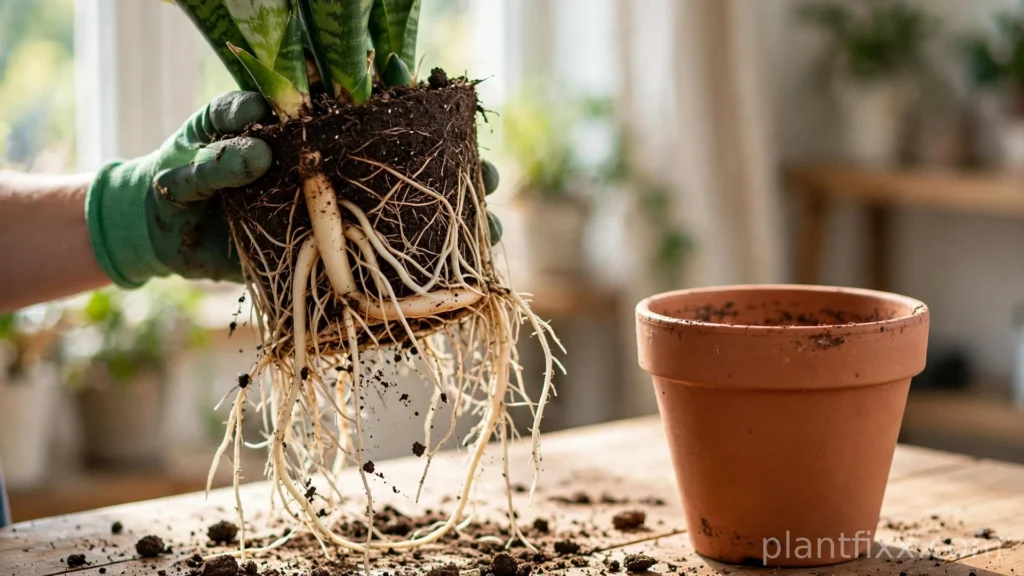
If adults are still numerous after two weeks, the soil is the problem. A pot with no drainage hole, a dense peat mix, or an oversized pot can stay wet at the bottom for weeks while the surface looks dry. Unpot and check the roots. Healthy roots are firm and pale. Black, mushy roots or a soft rhizome mean root rot. Trim dead roots and mushy tissue, let the cuts air-dry for a day, and repot into fresh, dry mix. Wait a week before watering.
If gnats clear and then come back, either watering slipped back to a fixed schedule, or a neighboring plant is the new source. Re-run the plan and check every pot in the room.
Method comparison: what each fix does
| Method | What it does | When to use it | Limitation |
|---|---|---|---|
| Drying out the soil | Kills larvae by drying soil | Always, as the first move | Takes 2 to 3 weeks |
| Yellow sticky traps | Catch adults, stop eggs | Always, alongside drying | Do not touch larvae |
| Bti drench | Kills larvae in the soil | Stubborn cases | Repeat 2 to 3 weeks |
| Sand top-dress | Blocks eggs, dries surface | After treatment, prevention | Alone, will not clear larvae |
| Repotting | Removes infested soil | Rot signs, soil never dries | Stresses plant, last resort |
| Hydrogen peroxide drench | Kills larvae on contact | Once, for fast action | Harms helpful microbes |
How to keep fungus gnats from coming back
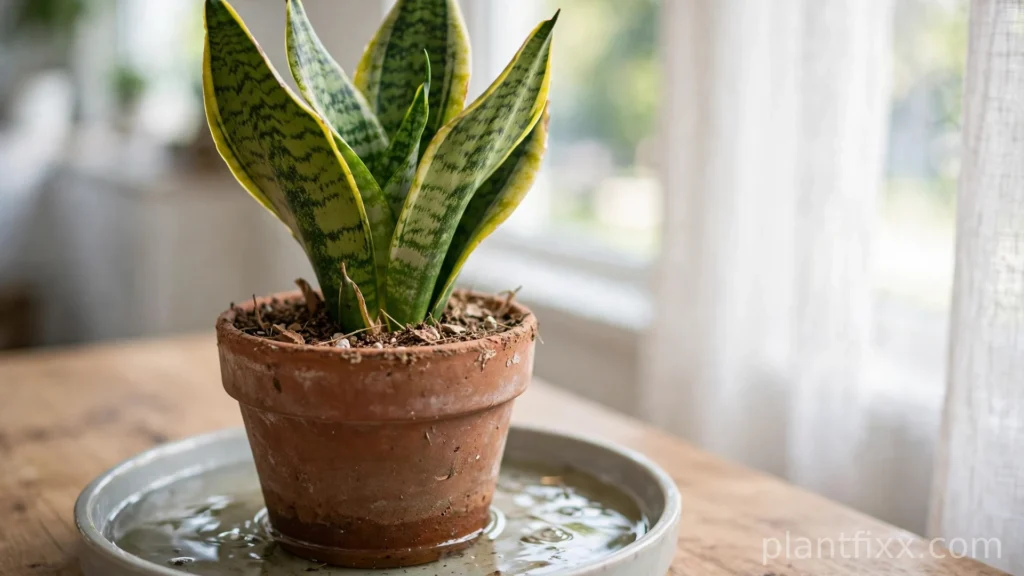
Prevention is a watering reset, not a product. Water only when the soil is dry through the whole pot. Push a chopstick to the bottom. If it comes out clean and dry and the pot feels light, water deeply until water runs from the drainage hole, then empty the saucer.
Bottom watering strengthens the reset. Set the pot in a tray of water for 10 to 15 minutes, then drain. The top layer stays dry, so adults find nowhere to lay eggs. Use a pot with a drainage hole every time. Use an airy mix that drains fast. The Best Soil Mix for Snake Plants guide gives a recipe that dries predictably. Quarantine every new plant for two weeks before it joins your collection.
What not to do
Do not spray the adults and call the job done. Sprays miss the larvae, and the cloud returns within days. Do not lean on vinegar traps. They attract fruit flies, and fungus gnats mostly ignore them. Do not drench with hydrogen peroxide more than once. A single dilute drench kills larvae on contact, but repeated drenches also kill helpful microbes. Cinnamon may slow surface mold, but it does not kill gnat larvae.
How long does it take to get rid of fungus gnats in a snake plant?
Plan on 2 to 3 weeks of steady drying, Bti waterings, and traps. Adults drop in the first week, and the cycle breaks once the larvae die off.
Can fungus gnats kill my snake plant?
Adults cannot harm the plant. A heavy larval population can chew fine root hairs on seedlings or weak plants, but the real danger is the wet soil behind the gnats, which causes root rot.
Will letting the soil dry out kill fungus gnats?
Yes. Larvae cannot survive dry soil, and a snake plant tolerates a full dry-out. Pair drying with sticky traps so the adults cannot lay eggs while the larvae die.
Are fungus gnats harmful to humans or pets?
No. They do not bite, and they do not carry disease. They are a nuisance only.
Can fungus gnats spread to my other houseplants?
Yes. Adults fly to any pot with damp soil. Isolate the infested plant, trap the adults, and check every pot in the room.
Should I repot my snake plant to get rid of fungus gnats?
Only if the soil never dries or you find rot signs. Drying plus Bti clears most cases without repotting.
Do I need to throw away the soil?
No. Treat the soil with drying and Bti. Replace it only if it smells sour, stays wet for weeks, or the roots are rotting.
Clear soil, calm plant
Fungus gnats are a moisture report, not a pest problem. Dry the soil right through, trap the adults, treat the larvae with Bti, and cap the surface with sand. Once traps stay clean for a full week, call it over. If your plant shows other stress signs, check the full routine in the Snake Plant Care Guide.