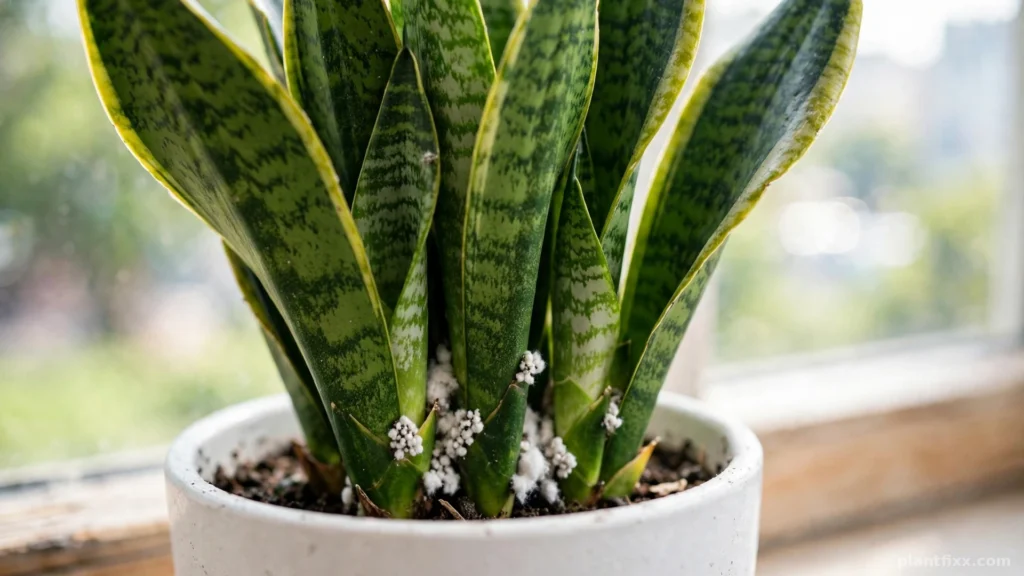
White cottony clumps on a snake plant look like mold at first. They are not mold. They are mealybugs, small sap-feeding insects that hide in the tight joints where leaves meet at the base of the plant.
A light infestation is easy to clear. A hidden one is not. Mealybugs tuck into leaf bases, soil-line cracks, and sometimes the roots, so one quick wipe rarely ends the problem.
This guide covers the day-one clean, the three-week treatment, and the root check.
Quick Answer
Dab each mealybug with a cotton swab dipped in 70% isopropyl alcohol, then repeat every 3 to 4 days for 3 weeks. That schedule catches newly hatched crawlers that the first pass misses. Add one insecticidal soap wash and one neem oil spray in week 1, isolate the plant, and check the leaf bases with a flashlight.
Quick Take
Mealybugs feed on sap and leave sticky honeydew on leaves and nearby surfaces. They spread slowly on their own, but fast between plants that touch. Most snake plant cases clear with alcohol dabbing, insecticidal soap, and neem oil used on a three-week schedule. Skip the schedule and eggs hatch after you stop, so the cottony clumps return. Check the roots when the top growth looks weak, since root mealybugs hide below the soil line and need a repot to clear.
Why Mealybugs Pick Snake Plants
Mealybugs feed on sap. Snake plant leaves store water and sugars in thick tissue, so they offer a steady food source. The plant grows slowly and keeps old leaves for a long time, which gives pests stable hiding places that stay undisturbed for months.
The shape of the plant helps them too. Leaves rise in a tight rosette, and the V-shaped joints at the base stay warm, still, and shaded. Those joints hold humidity and block airflow, which suits mealybugs. Stress makes attack more likely.
What You Need Before You Start
Gather supplies before you touch the plant, so you do not leave it sitting on a shared shelf while you search for cotton swabs.
- 70% isopropyl alcohol, not a stronger blend
- Cotton swabs, soft cloth, gloves, trash bag, flashlight
- Insecticidal soap and neem oil labeled for houseplants
- Fresh succulent mix and a clean pot, only if you plan to repot
Work over a sink or tub, and read the label on any soap or oil product before you use it.
How to Tell Mealybugs From Other White Marks
Not every white mark on a snake plant is a mealybug. The table below separates the common cases so you treat the right problem.
| What you see | What it means |
|---|---|
| Soft white cottony tufts in leaf joints, sticky residue nearby | Mealybugs |
| Flat oval bumps stuck to the leaf, tan or brown, hard shell | Scale insects |
| White crust on the soil or pot rim, dry and powdery | Mineral deposits from hard water |
When white marks appear with sticky leaves, ants nearby, or yellowing from the base upward, mealybugs are the likely cause.
Day 1 Deep Clean
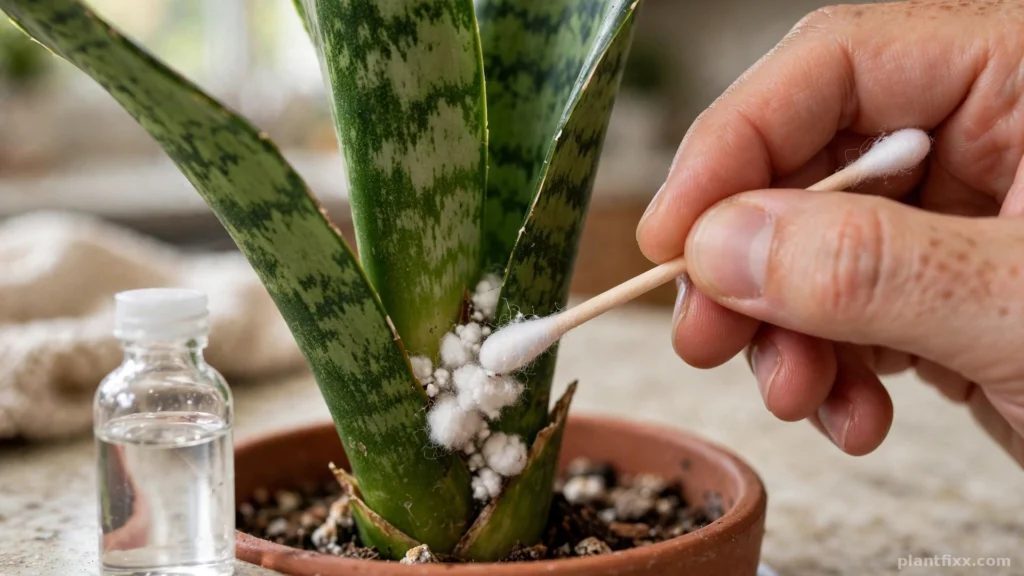
Start with isolation. Move the infested plant away from your other plants, to a spot where no leaves touch. Wipe the shelf, the pot rim, and any tools that touched the plant.
Then dab every visible mealybug. Dip a cotton swab in 70% isopropyl alcohol and press it on each insect and each cottony cluster. Work down into the leaf bases and along the soil line. Do not spray alcohol across the whole plant, since direct spraying can mark leaves.
One mistake many people make is stopping after the leaves look clean. The first clean removes the insects you can see, not the eggs tucked into joints or the crawlers too small to spot. That is why the follow-up schedule below matters more than the first clean. Finish day 1 with a soap wash: wipe the leaves with insecticidal soap per its label, rinse, and let the plant air dry.
The 3-Week Treatment Plan
Eggs resist most contact treatments, so one round never clears a mealybug population. This plan breaks the life cycle by catching each new batch of crawlers.
Week 1: Oil
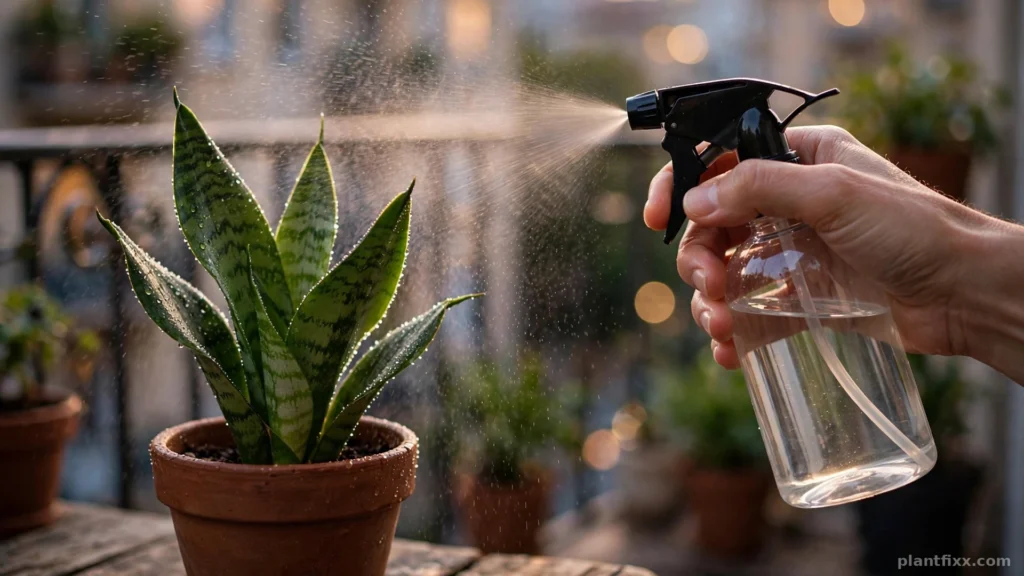
On day 3 or day 4, apply neem oil per its label. Coat the leaf surfaces, edges, bases, and any spot your swab cannot reach. Spray in the evening or out of direct sun. Do not apply oil within 24 hours of a strong soap treatment.
Week 2: Soap again
Repeat a full insecticidal soap wipe or spray. Focus on leaf bases and the tight gaps between leaves. Dab any mealybug you see with an alcohol swab during the same session.
Week 3: Oil again
Apply neem oil a second time. Most failures happen because people stop after one good round. After week 3, keep the plant isolated for two full weeks with no new mealybugs before you move it back.
How to Check the Roots and Soil
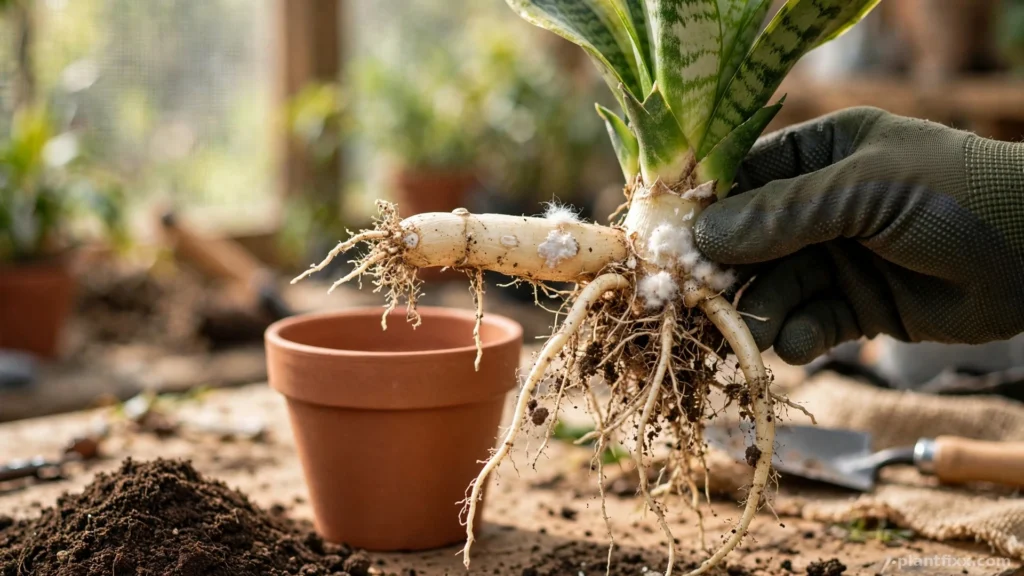
Check below the soil when the top growth looks weak, when leaves yellow from the base upward despite treatment, or when the plant flops for no clear reason. These signs can point to root mealybugs or to root rot. The guide to snake plant root rot helps you separate the two.
Unpot the plant and shake off the old soil. Look for white cottony patches stuck to the rhizome and for small white nodules on roots. Rinse the rhizome and roots under cool water until clean, then wipe any remaining clusters with alcohol on a swab. Trim only tissue that is soft, brown, and mushy. Repot in fresh dry mix in a clean pot, and hold off on watering for 5 to 7 days.
Signs It Is Working, and Signs It Failed
Progress should show by the end of week 1. No fresh cottony tufts appear between treatments. Leaves stop feeling sticky, and ants stop visiting the pot. New leaves emerge clean and firm. Judge progress by new growth and by the absence of fresh clusters.
Failure looks different. Fresh clusters return within days of a treatment. Leaves stay sticky, or sooty black patches grow on honeydew. Ants keep returning after each clean. If you see these signs after three full weeks, unpot and inspect the roots, since a hidden root colony is the most common reason leaf treatments fail.
What to Do If the Infestation Keeps Coming Back
Repeat infestations almost always trace back to one of four causes. First, check the soil and the pot rim. Mealybugs hide in soil crevices, drainage holes, and the gap between the pot and the saucer. Second, check nearby plants. A neighbor plant can carry a quiet colony and reseed your snake plant after each treatment. Third, check your watering. Soil that stays wet for days weakens the plant and keeps the base humid. The guide to snake plant overwatering explains how to reset a wet routine. Fourth, wipe tools after they touch an infested plant.
When to Prune, Separate, or Throw the Plant Out
Prune a leaf when it is covered in colonies and already weak. Cut it at the soil line with clean shears, seal it in a bag, and throw it away. Do not compost it indoors. Separate a pup when it looks clean and the mother plant is heavily infested. Throw the plant out when the rhizome is soft and rotting through, when most leaves have collapsed, or when three full treatment cycles bring no progress.
How to Stop Mealybugs From Coming Back
Prevention is a set of small habits, not a single product. Quarantine every new plant for 10 to 14 days and inspect it twice a week. Space plants so leaves do not touch and air moves between pots. Wipe leaves with a damp cloth once a month, so dust stops hiding early clusters. Water only when the soil has dried, and keep the pot draining freely.
For the full care baseline that keeps a snake plant strong, follow the snake plant care guide. Strong plants resist pests better than stressed ones, and steady care is the simplest long-term control.
Final check before you move the plant back
Mealybugs on a snake plant look worse than they are. The insects are slow, the plant is tough, and a steady three-week routine clears most cases. The work that matters is not the first clean. It is the repeat checks, the root inspection when progress stalls, and the small care fixes that keep the plant strong. Keep the plant isolated until it has stayed clean for two full weeks, then move it back and keep the weekly flashlight check.
Can I use dish soap instead of insecticidal soap on a snake plant?
You can use a mild dish soap mix in a pinch, but insecticidal soap is the safer choice. Dish soap can strip the waxy coating from leaves. If you use dish soap, keep it dilute and rinse after 10 minutes.
Will mealybugs kill my snake plant if I leave them alone?
Yes, over time. Feeding drains sap from leaves and rhizome. Growth slows, leaves yellow from the base, and the plant weakens. A heavy infestation that runs for months can collapse the plant.
Can I propagate from a snake plant that has mealybugs?
Wait until you have seen no mealybugs for 21 straight days. Even one crawler on a cutting can start a new infestation. Sterilize tools between cuts.
Do mealybugs spread to other houseplants?
Yes. Crawlers move between touching leaves and pots, and they ride on hands, cloths, and tools. Isolate the infested plant at once.
Is rubbing alcohol safe for snake plants?
Spot dabbing with 70% isopropyl alcohol is safe for most snake plants. Do not soak the plant or spray alcohol across the leaves. Dab each insect, then wipe or rinse the leaf.
How long should I quarantine a snake plant after treatment?
Keep it isolated until you have seen no mealybugs for two full weeks after the last treatment. That window covers late-hatching crawlers.
Pingback: Snake Plant Leaves Curling? 7 Causes and How to Fix Them