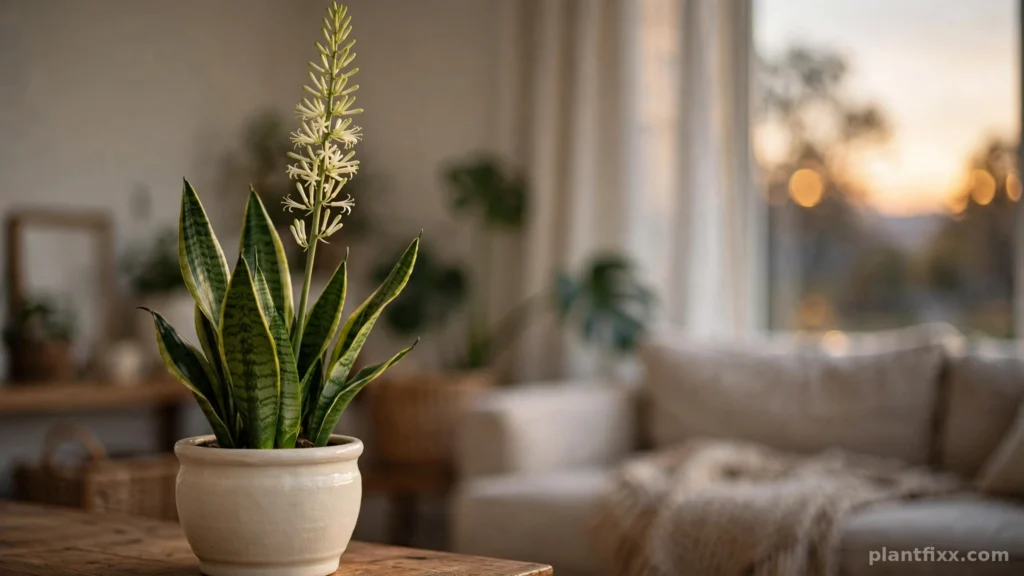
A thin green stalk rising from the center of your snake plant can stop you mid-step. One week the plant looks exactly as it always has, and the next it is pushing up something you never expected.
That stalk is a flower spike. Snake plants do bloom, but they do it rarely indoors, and only when a specific set of conditions lines up. This guide explains why snake plant flowering happens, what the bloom looks and smells like, whether it is good or bad news, and exactly what to do while it lasts and after it fades.
Quick Answer
Your snake plant is flowering because it is mature and mildly stressed, most often by tight roots, bright light, and dry soil cycles. Flowering is a survival response. The plant shifts energy from leaves to reproduction. It is rarely a sign of danger, and the plant does not die after blooming.
Quick Take
Snake plant blooms appear on mature plants, usually after several years in the same pot. A flower stalk can reach about 3 feet tall, open at night, and release a sweet scent like vanilla or jasmine along with sticky nectar. Blooms last about two to three weeks. Leave the stalk alone while it flowers, skip fertilizer, keep watering light, and cut the stalk at the base once it fades. Do not repot until the plant has had a few weeks to recover.
What Snake Plant Flowers Look Like
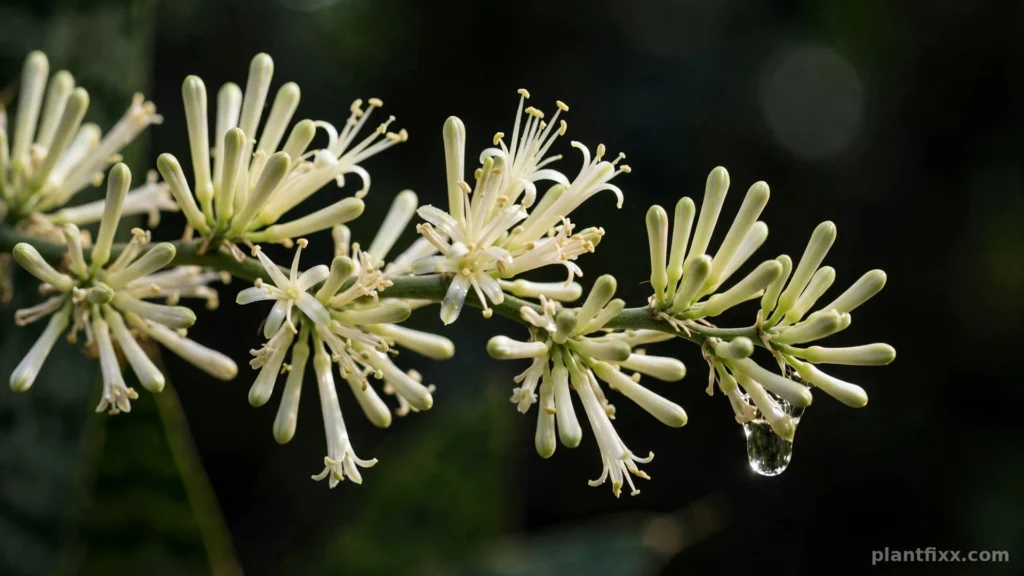
The first sign of a bloom is a thin green spike emerging from the center crown of the plant. The spike grows fast and can reach about 3 feet tall. Small green buds form along the stem, then open into narrow, tubular flowers in creamy white or pale green. Some varieties show hints of yellow, burgundy, or pink.
The flowers open at night, starting at the bottom of the spike and moving upward. As they open, they release a strong, sweet scent that many people compare to vanilla or jasmine. Many blooms also produce sticky nectar that can drip down the stalk onto leaves or nearby surfaces. It looks messy, but it is a normal part of the bloom. Outdoors, the nectar attracts night pollinators such as moths. Indoors, pollination almost never happens on its own, so berries are rare unless you hand-pollinate. Any berries that form are inedible.
Why Snake Plants Flower
Flowering in snake plants is a survival strategy. When a plant senses that its current conditions may not last, it invests energy in reproduction so it can produce seeds. Indoors, this shift is usually triggered by a combination of maturity, mild stress, and enough light to build energy reserves. No single trigger guarantees a bloom.
Maturity comes first
Young snake plants almost never flower. A plant needs several years of steady growth and stored energy in its rhizomes before it can afford to bloom. Published advice disagrees on the exact age. Some guides say two years is enough, while others put the range at four to eight years. Most indoor blooms come from plants at least three years old, and many are far older.
Tight roots send the signal
A root-bound plant is the most common trigger. When roots fill the pot and run out of room to expand, the plant reads the crowding as a limit on future growth. That mild stress pushes it from leaf production toward reproduction.
Bright light builds the energy
Snake plants survive in low light, but they rarely bloom there. A plant needs enough light to build the energy reserves that flowering demands. Bright, indirect light for most of the day is ideal, and a couple of hours of gentle morning sun helps.
Dry cycles and a seasonal cue
Letting the soil dry fully between waterings mimics the dry season of the plant’s native habitat. That dry cycle, paired with warmer temperatures and longer days in spring and early summer, acts as a seasonal cue. Indoors, most blooms appear in spring or early summer after the plant’s slower winter rest.
Is Snake Plant Flowering Good or Bad?
Usually it is neither a triumph nor a warning. It is a milestone. Still, a bloom can hide a real problem, so check the plant before you celebrate. Firm, upright leaves and steady growth mean the bloom is harmless. Soft or collapsing leaves point to trouble underneath.
| What you see | What it means | What to do |
|---|---|---|
| Firm, upright leaves | Healthy plant, normal bloom | Enjoy it, keep care steady |
| One yellowing lower leaf | Normal aging during bloom | Remove the leaf, change nothing else |
| Soft, mushy leaf bases | Possible overwatering or root rot | Check roots, fix watering |
| Sour soil smell | Roots staying too wet | Unpot, trim rot, repot in dry mix |
| No new growth for months | Plant resting or light too low | Move to brighter light after bloom |
A healthy-looking plant with a bloom is good news. If the plant looks sick, treat the sickness first. The bloom itself is not the problem.
Snake Plant Bloom Timeline
Once the spike appears, the bloom follows a fairly predictable pattern. Week 1: a thin green spike rises from the center of the plant and grows quickly, with small buds forming along the upper stem. Week 2: buds swell and the first flowers open at night, starting at the bottom of the spike, and the fragrance appears. Week 3: more flowers open upward, the scent peaks in the evening, and nectar is heaviest. Week 4: flowers fade, dry, and drop, and the stalk turns yellow, then brown. Once it is fully dry, it is time to cut it off. The whole display lasts about two to three weeks of open flowers.
How to Care for a Flowering Snake Plant
A blooming snake plant needs steady care, not special treatment. Keep the light steady. Bright, indirect light supports the bloom, and a sudden move can make buds drop early. Water lightly, and let the soil dry fully between waterings. Never pour water over the flower stalk, and do not let the plant sit in standing water.
Do not fertilize while the plant is blooming. Feeding during bloom can stress the plant and may damage the flowers. Skip bloom booster products entirely, since they can cause salt buildup in the potting mix. Do not repot during bloom either. Even if the plant is root-bound, wait until the bloom has finished and the plant has rested.
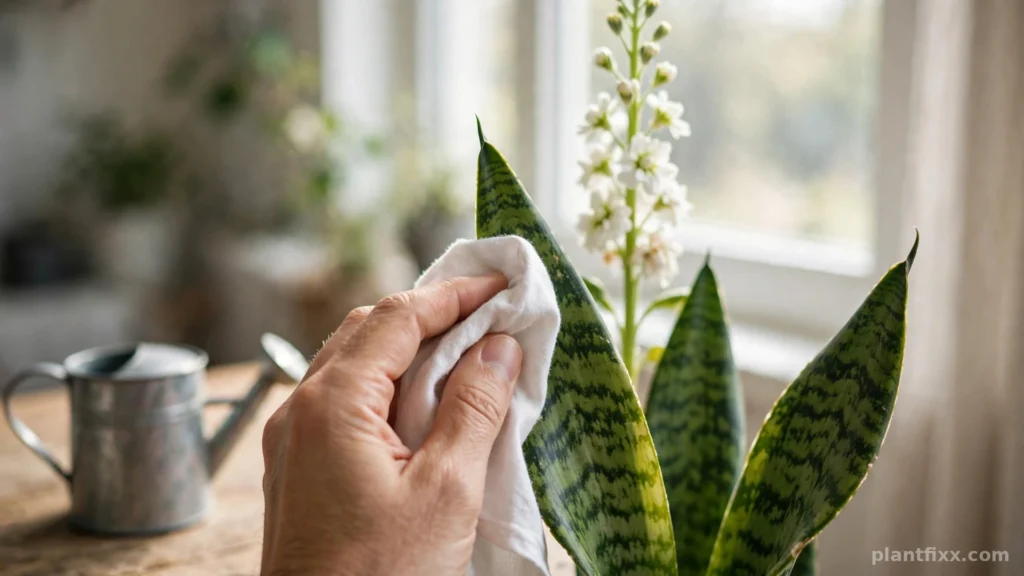
Clean up the nectar. Wipe sticky drips off leaves, the pot, and nearby surfaces with a damp cloth. The sugar can attract fungus gnats or ants if left sitting. If the tall spike leans, tie it loosely to a thin bamboo stake with soft twine. The best care during bloom is restraint.
What to Do After Your Snake Plant Flowers
When the last flowers fade and the stalk turns brown and dry, cut it off at the base with clean scissors. Do not yank or twist the stalk, and do not cut it while it is still green and moist. A clean cut lets the plant redirect energy back to leaf growth. Give the plant a few weeks of quiet recovery. Hold off on fertilizer for at least a month after the bloom ends, and keep watering on your normal dry cycle. Some plants look a little tired after flowering. That is normal.
Repot only if the plant clearly needs it. If roots are pushing out of the drainage holes or the soil dries out within a day, a larger pot may be due. Still, wait a few weeks after the bloom ends so the plant recovers first. If you are unsure about pot size, see the snake plant pot size guide.
Will it bloom again? The same rosette, or cluster of leaves, will not produce a second flower stalk. The plant itself can bloom again, but only from a new rosette, and only after years under the right conditions. Reblooming indoors is rare and unpredictable, so treat each bloom as a bonus rather than something to schedule.
Can You Make a Snake Plant Flower?
You cannot force a snake plant to bloom. Anyone who promises a guaranteed method is overselling. What you can do is create the conditions that make a bloom more likely, and then wait. Start with a mature plant that has lived in the same pot for a few years. Give it bright, indirect light. Let the soil dry fully between waterings. Feed lightly in spring and early summer with a balanced houseplant fertilizer at half strength, and skip feeding entirely in autumn and winter. For a full rundown of everyday care, see the snake plant care guide.
Know the limits. Do not starve the plant, let it wilt for weeks, or cram it into a tiny pot in hopes of forcing a bloom. Severe stress kills plants instead of flowering them. If your plant is young or struggling, focus on healthy growth first. A plant that is not growing will not bloom either. If growth has stalled, the snake plant not growing guide covers the likely causes. If you want detail on feeding products and timing, the best fertilizer for snake plants guide breaks it down.
Signs Your Bloom Is Healthy
Buds open from the bottom of the spike upward. The scent is strongest at night. The stalk stays green and firm through the bloom, and the leaves stay firm and upright. Flowers fade gradually over two to three weeks. If your plant matches this picture, you only need to enjoy it and tidy up the nectar.
Signs Flowering Hides a Problem
Sometimes a bloom appears on a plant that is already in trouble. Leaves feel soft or mushy at the base. The soil smells sour. The stalk collapses before the buds open. Several leaves yellow at once. If you see these signs, unpot the plant and inspect the roots. Healthy roots are firm and pale. Rotted roots are brown, mushy, and smell bad. Cut away the rot with clean scissors, let the cuts dry for a day, and repot in fresh, fast-draining mix. In this situation, cut the flower stalk early to redirect energy toward recovery.
Frequently Asked Questions
Why is my snake plant flowering?
Your snake plant is flowering because it is mature and mildly stressed, usually by tight roots, bright light, and dry soil cycles. Flowering is a survival response that shifts energy from leaves to reproduction.
Is it good or bad if my snake plant flowers?
It is usually fine. A bloom on a plant with firm, upright leaves is a normal milestone. If the leaves are soft or mushy, the plant may have root rot, and the bloom is not the cause.
How long do snake plant flowers last?
Open flowers last about two to three weeks. They open at night, starting at the bottom of the spike, and fade gradually from the bottom up.
Should I cut off the flower stalk?
Wait until the flowers fade and the stalk turns brown and dry, then cut it at the base with clean scissors. Do not cut a green stalk or yank it out.
Do snake plants die after flowering?
No. Snake plants do not die after blooming. Growth may slow briefly while the plant recovers, then normal leaf growth resumes.
Will my snake plant bloom again?
The same rosette will not bloom twice, but the plant can bloom again from a new rosette after several years under the right conditions. Reblooming indoors is rare.
Are snake plant flowers toxic to pets?
Snake plants contain saponins and are mildly toxic to cats and dogs if eaten, and the flowers carry the same caution. Keep pets from chewing the flowers or licking the nectar, and contact a vet if you see vomiting or drooling.
A Rare Bloom Worth Enjoying
A flowering snake plant is one of those small surprises that makes indoor gardening fun. The plant is mature, it had the energy to spare, and it chose reproduction over another leaf. Give it steady light, light water, and a quiet few weeks, then cut the spent stalk and return to normal care. If your plant blooms again one day, you will know exactly what it means and what to do.
Want to keep the rest of your plant in top shape? Read the snake plant care guide for watering, light, and repotting basics, or browse the snake plant varieties guide to see which types are most likely to bloom.
Why is my snake plant flowering?
Your snake plant is flowering because it is mature and mildly stressed, usually by tight roots, bright light, and dry soil cycles. Flowering is a survival response that shifts energy from leaves to reproduction.
Is it good or bad if my snake plant flowers?
It is usually fine. A bloom on a plant with firm, upright leaves is a normal milestone. If the leaves are soft or mushy, the plant may have root rot, and the bloom is not the cause.
How long do snake plant flowers last?
Open flowers last about two to three weeks. They open at night, starting at the bottom of the spike, and fade gradually from the bottom up.
Should I cut off the flower stalk?
Wait until the flowers fade and the stalk turns brown and dry, then cut it at the base with clean scissors. Do not cut a green stalk or yank it out.
Do snake plants die after flowering?
No. Snake plants do not die after blooming. Growth may slow briefly while the plant recovers, then normal leaf growth resumes.
Will my snake plant bloom again?
The same rosette will not bloom twice, but the plant can bloom again from a new rosette after several years under the right conditions. Reblooming indoors is rare.
Are snake plant flowers toxic to pets?
Snake plants contain saponins and are mildly toxic to cats and dogs if eaten, and the flowers carry the same caution. Keep pets from chewing the flowers or licking the nectar, and contact a vet if you see vomiting or drooling.
Pingback: 9 Snake Plant Varieties for Apartments (2026)
Pingback: Can Snake Plants Live Without Sunlight? Real Answer (2026)