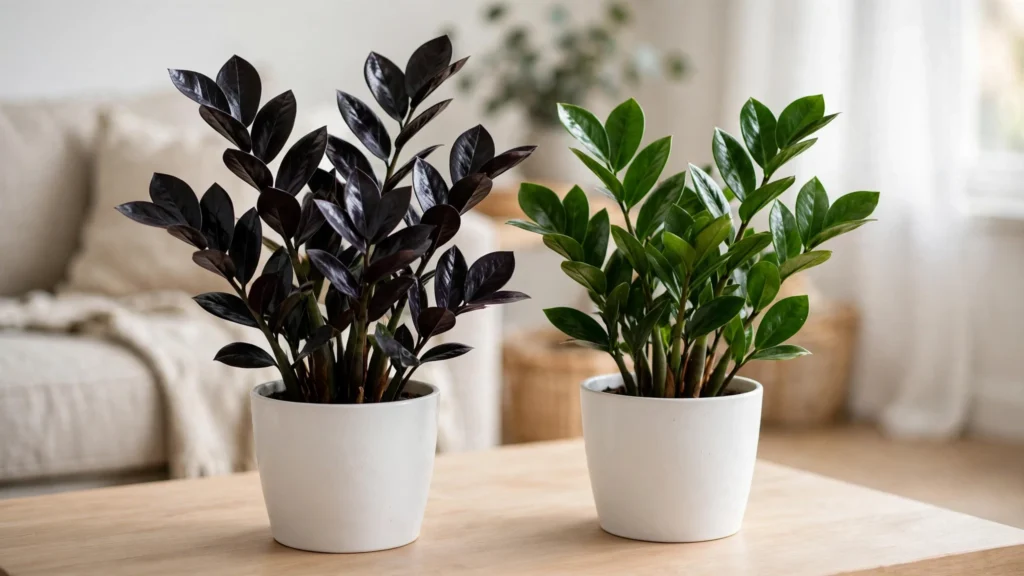
A Raven ZZ plant and a regular ZZ plant look like two different species on a shelf. One is near-black and moody. The other is glossy green. Shoppers often ask whether the dark one needs special care or costs more for a reason.
Both plants are the same species, Zamioculcas zamiifolia. Raven is a cultivar bred for dark leaves. The care routine is the same, but color, growth pace, size, and price differ in ways that matter when you choose.
This guide compares the two side by side, so you can pick the one that fits your light, space, and budget.
Quick Answer: Raven ZZ plant and regular ZZ plant share the same species and the same care routine. The real differences are leaf color, growth pace, mature size, and price. Raven leaves start lime green and darken to near-black over several weeks, grow slower, stay more compact, and cost more. Pick Raven for looks, pick green for low light and value.
Quick Take: If you want the fast answer, here it is. Buy the regular green ZZ plant if your room is dim, you want fast growth, or you want the lowest price. Buy Raven if you have bright indirect light and want a dark statement plant. Both forgive missed waterings, both stay toxic to pets, and both grow from the same rhizome root system. The rest of this guide covers the details, including the one legal detail that catches sellers out.
One mistake many people make is treating Raven like a different species with its own care sheet. In practice, I have seen more Raven plants suffer from extra attention than from neglect. Owners move the plant, repot it, and feed it while chasing a color change that only needs brighter light and time. The fix is simpler: leave the plant alone in good light and wait for the next flush of growth.
Raven ZZ Plant vs Regular ZZ Plant at a Glance
| Feature | Raven ZZ Plant | Regular ZZ Plant |
|---|---|---|
| Botanical name | Zamioculcas zamiifolia ‘Raven’ (‘Dowon’) | Zamioculcas zamiifolia |
| Mature leaf color | Near-black purple | Deep green |
| New growth color | Lime green, darkens over weeks | Light green, deepens slightly |
| Light for best color | Bright indirect light | Tolerates low light, keeps color |
| Growth pace | Slower | Baseline pace |
| Mature indoor height | Around 2 to 2.5 feet | Around 3 to 4 feet |
| Water, soil, feeding | Same as regular ZZ plant | Same as Raven ZZ plant |
| Toxicity | Toxic to pets and people if eaten | Toxic to pets and people if eaten |
| Price and availability | Higher, widely stocked now | Lower, stocked everywhere |
| Propagation for sale | Restricted by plant patent | No restriction |
What Raven ZZ Plant Actually Is
Raven is a cultivar, not a separate species. Its full name is Zamioculcas zamiifolia ‘Raven’, also sold under the cultivar name ‘Dowon’. It is protected by US plant patent PP30035. Costa Farms introduced it in its Trending Tropicals collection in 2019.
Before that launch, most shoppers had never seen a black ZZ plant. Today Raven is widely stocked, so a high price usually reflects pot size or retailer markup, not rarity. If a seller charges collector prices for a small Raven, you can keep walking.
The One Difference That Matters: Color and Light
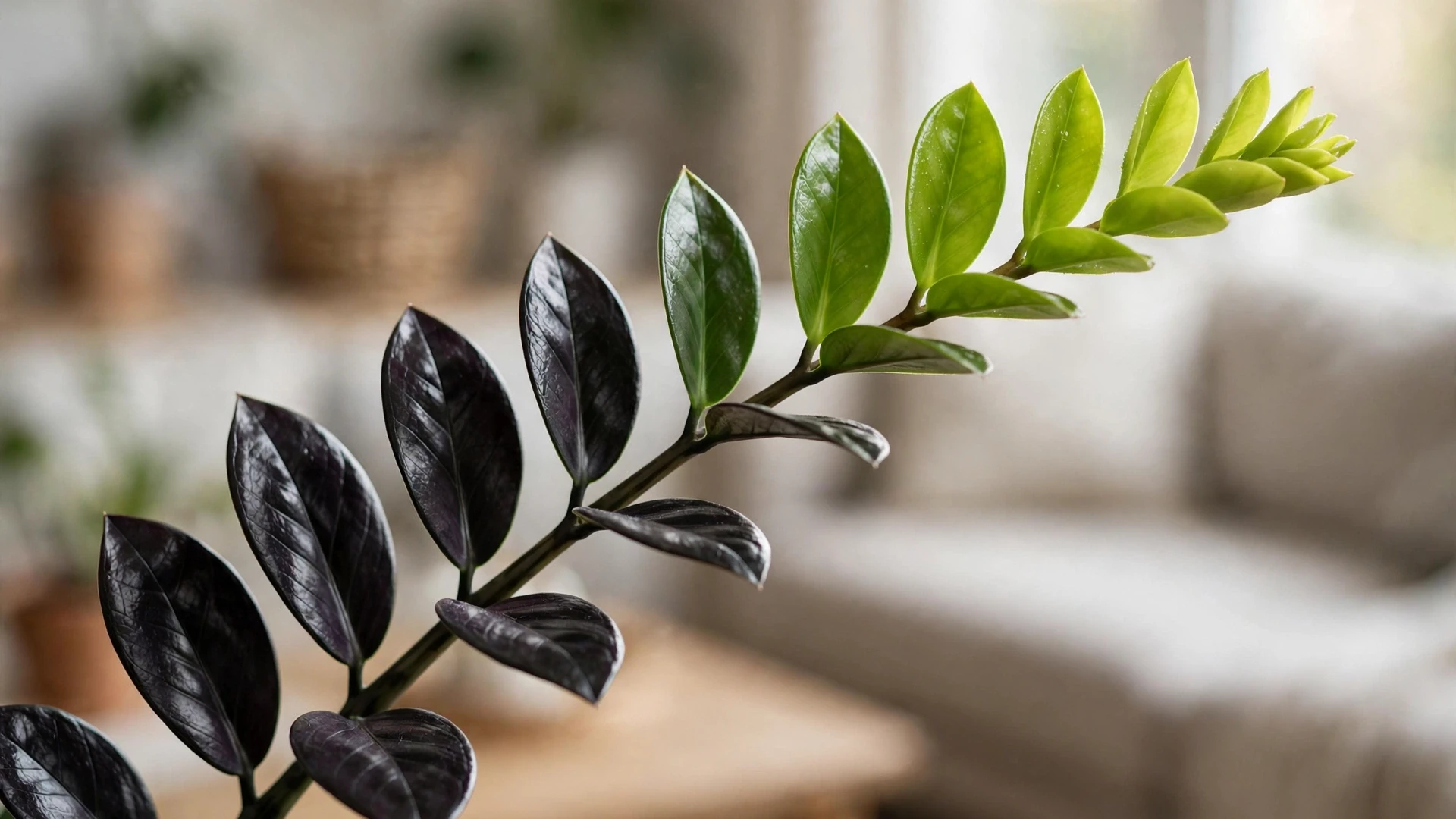
The dark color comes from anthocyanin, a red-purple pigment the plant builds in higher amounts as light rises. New leaves open lime green on both plants. On Raven they darken through olive and burgundy to near-black over about 4 to 8 weeks.
Light is the dial that controls this. A green ZZ keeps its color in low light. A Raven survives in low light but stays olive-green there. For full near-black color, give Raven bright indirect light: a few feet back from an east or west window, or behind a sheer curtain on a south window. Keep harsh direct sun off the leaves.
Two color facts save a lot of worry. First, a leaf that matures green will not darken later. Pigment sets once a leaf hardens, so only new growth shows the change. Second, leaves that are already near-black do not fade back to green. If your Raven looks washed out, the cause is new growth in weak light.
Care Side by Side: The Same Routine
Water both the same way: let the mix dry out almost fully, then water deeply and let the excess drain. In most homes that means every 2 to 4 weeks, less in winter. Never let either sit in a saucer of water. If you want the full watering routine, see how often to water a ZZ plant: https://plantfixx.com/how-often-to-water-zz-plant/
Soil and pot needs match too. Use the same chunky, fast-draining mix for both: two parts potting mix, one part perlite or pumice, and one part orchid bark if you have it. A pot with a drainage hole is required. Terracotta dries faster. Plastic holds moisture longer.
Feeding is light and only in the growing season. Use half-strength balanced liquid fertilizer once a month in spring and summer, and skip feeding in fall and winter. Extra fertilizer will not force a Raven to grow faster in low light.
Dust is the one daily-life difference. Dust shows fast on near-black leaves and blocks light. Wipe Raven leaflets with a damp microfiber cloth every few weeks. Skip leaf-shine sprays, which clog leaf pores and attract more dust.
Growth and Size: Expect a Slower, Smaller Raven
Raven grows a little slower than a green ZZ. The patent filing records the gap: a mature 60 cm plant with fully black foliage took 9 to 12 months to produce, against 3 to 4 months for a green ZZ of the same size. Source: US Plant Patent PP30035 — https://patents.google.com/patent/USPP30035P3/en
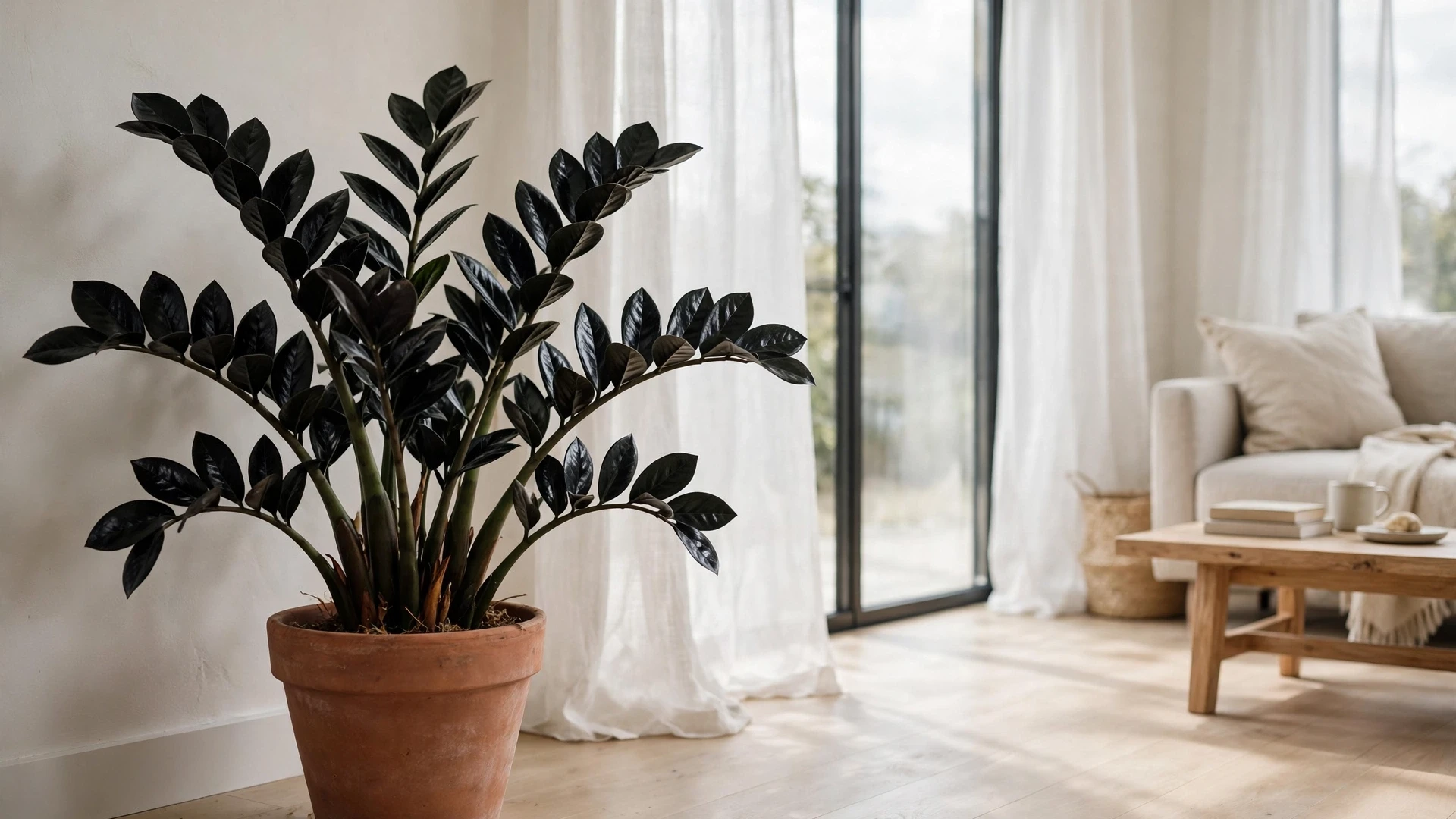
Expect a mature Raven around 2 to 2.5 feet tall indoors, against 3 to 4 feet for a green ZZ. Raven also pushes fewer new stems per season and holds a tidy shape longer. For the full picture on size, see how big ZZ plants get: https://plantfixx.com/how-big-do-zz-plants-get/
Which One Should You Buy?
The right pick depends on your room, not on which plant looks better in a photo.
- Low-light room or office with a small window: regular ZZ plant. It keeps its color and grows better where light is weak.
- Bright room and you want a statement plant: Raven. Its dark leaves stand out against light walls and pale pots.
- First plant or tight budget: regular ZZ plant. Same toughness, lower price, stocked everywhere.
- Pet household: neither has an edge. Both are toxic if eaten.
- Small shelf or desk: Raven. Its compact size suits a shelf longer before it needs a bigger pot.
If you want both, they sit well together. A green ZZ beside a Raven shows the color contrast at its best, and one watering routine covers both pots.
Buying a Raven Without Getting Fooled
- Look for near-black mature leaves on the lower stems. New growth at the tips will be green.
- Watch for mixed pots. A pot can hold both Raven and green stems. Check that every stem shows dark color on its older leaves.
- Check the tag. Real Raven plants carry the ‘Raven’ or ‘Dowon’ name, often with patent info on the label.
- Sanity-check the price. Raven is no longer rare. A small plant at collector prices is a markup.
- Buy the plant in front of you, not the photo. Color varies with the light the plant grew in.
Can You Propagate a Raven ZZ Plant?
Yes. Raven propagates the same way as a green ZZ: by division at repotting or from leaf cuttings in moist mix. Leaf cuttings take months to form small rhizomes, so division is faster.
Selling is where the line sits. Raven is a patented cultivar, so reproducing it for sale without the patent holder’s permission infringes the patent. The green ZZ carries no such restriction. Propagate Raven for your own shelf freely.
Frequently Asked Questions
Can a regular ZZ plant turn black like a Raven ZZ plant?
No. Color is genetic. A green ZZ lacks the pigment that makes Raven dark, so no amount of light will turn it black.
Why is my Raven ZZ plant staying green?
Weak light is the usual cause. New leaves darken only with enough bright indirect light, over 4 to 8 weeks. Move it to a brighter spot and wait for the next flush.
Is Raven ZZ plant harder to care for than a regular ZZ plant?
No. The routine is identical. Raven grows a little slower and needs brighter light to hold its color, but water, soil, feeding, and temperature needs match the green ZZ.
Which grows faster, Raven or regular ZZ plant?
The regular green ZZ grows faster. Patent records show a mature black Raven took 9 to 12 months to produce, against 3 to 4 months for a green ZZ.
Are Raven ZZ plants toxic to pets?
Yes, both types are toxic if eaten. They hold calcium oxalate crystals that irritate the mouth and stomach. Keep both out of reach of cats and dogs.
Can I propagate a Raven ZZ plant and sell it?
You can propagate it for your own home, but selling propagated Raven plants infringes its plant patent. The regular green ZZ has no patent restriction.
Both ask for the same care and forgive the same mistakes. The choice comes down to color, pace, and price. Raven gives you near-black leaves and a compact shape in exchange for brighter light, slower growth, and a higher price. The green ZZ gives you the same toughness with faster growth and a lower price in any light. Pick the one that fits the room you have.
If you want more plants from the one you already own, see how to propagate a ZZ plant step by step:
https://plantfixx.com/zz-plant-propagation/
Can a regular ZZ plant turn black like a Raven ZZ plant?
No. Color is genetic. A green ZZ lacks the pigment that makes Raven dark, so no amount of light will turn it black.
Why is my Raven ZZ plant staying green?
Weak light is the usual cause. New leaves darken only with enough bright indirect light, over 4 to 8 weeks. Move it to a brighter spot and wait for the next flush.
Is Raven ZZ plant harder to care for than a regular ZZ plant?
No. The routine is identical. Raven grows a little slower and needs brighter light to hold its color, but water, soil, feeding, and temperature needs match the green ZZ.
Which grows faster, Raven or regular ZZ plant?
The regular green ZZ grows faster. Patent records show a mature black Raven took 9 to 12 months to produce, against 3 to 4 months for a green ZZ.
Are Raven ZZ plants toxic to pets?
Yes, both types are toxic if eaten. They hold calcium oxalate crystals that irritate the mouth and stomach. Keep both out of reach of cats and dogs.
Can I propagate a Raven ZZ plant and sell it?
You can propagate it for your own home, but selling propagated Raven plants infringes its plant patent. The regular green ZZ has no patent restriction.