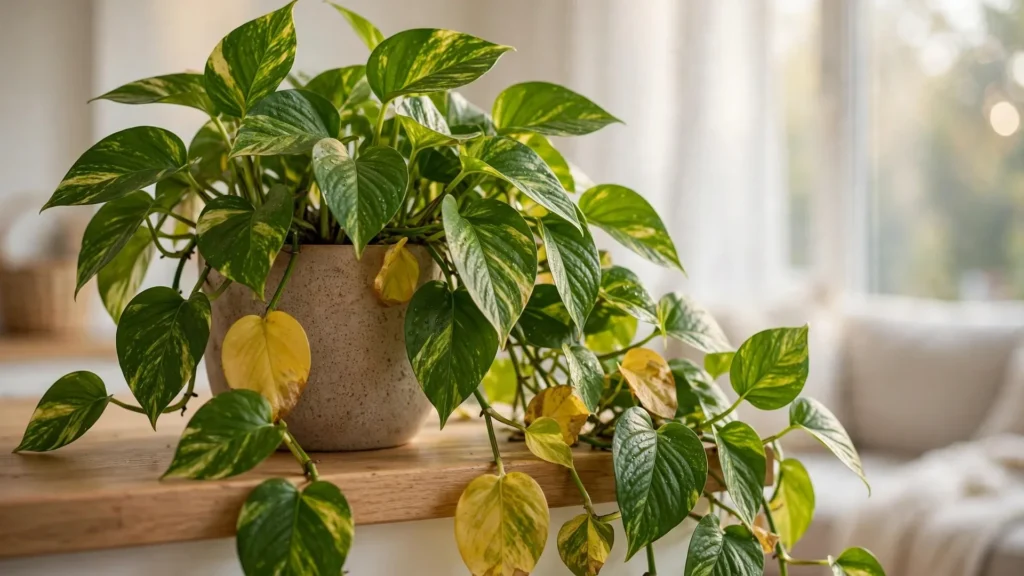
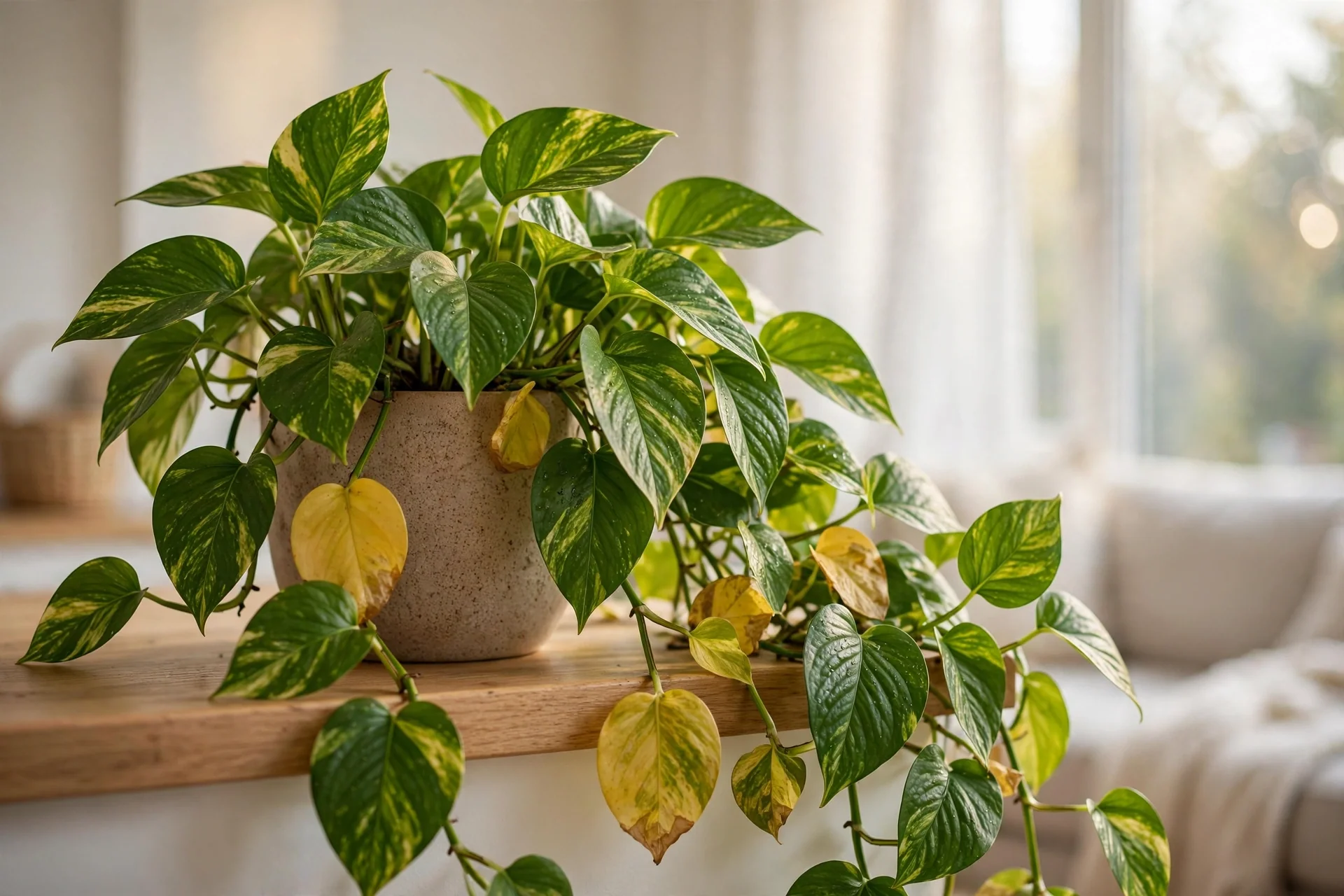
Why Your Pothos Leaves Are Turning Yellow (And How to Fix Each Cause)
You gave it decent light and watered it on time. Then one morning your pothos leaves turning yellow stare back at you anyway. Pothos is one of the most forgiving houseplants you can own, and most causes of yellowing are simple to fix once you know which one you are dealing with. This guide opens with a pattern table so you can diagnose the cause in minutes, then walks through all 9 causes with exact fixes.
The most common reason pothos leaves turn yellow is overwatering. Check the soil first: if the top 2 inches feel wet and the leaves are soft and limp, stop watering and let the soil dry out fully. Other causes include underwatering, too much or too little light, nutrient deficiency, fertilizer burn, root rot, cold drafts, pests, and the natural aging of old leaves.
Diagnose by pattern. Soft yellow leaves with wet soil point to overwatering. Dry crispy yellowing with dry soil points to underwatering. Patchy yellowing on the sun-facing side means too much direct sun. Yellow leaves never turn green again, so fix the cause, prune the spent leaves, and watch for healthy new growth within a few weeks.
I learned this with my first pothos. I watered it on a fixed weekly schedule, the bottom leaves slowly went yellow, and the soil felt fine on top. But two inches down it was soggy, and the pretty cache pot had no drainage. Now I check two inches deep before every watering, and yellow leaves are a thing of the past.
Why Pothos Leaves Turn Yellow
A green leaf is green because of chlorophyll, the pigment the plant uses to capture light. When pothos gets stressed, it pulls nutrients like nitrogen out of the leaf first, and chlorophyll breaks down. Yellow is simply the color left once the green is gone. That process is the same no matter the cause. What differs is where the yellowing starts and how fast it spreads, and those clues are your diagnosis.
Read the Pattern First
Match what you see with the first column, then confirm with the second. This narrows your cause in under a minute.
| What you see | Soil feels like | Most likely cause |
|---|---|---|
| Only oldest bottom leaves yellow, rest healthy | Normal | Natural aging |
| Yellow, soft limp leaves from the base | Wet or damp | Overwatering |
| Yellow with dry crispy edges, wilted | Bone dry | Underwatering |
| Patchy bleached yellow on sun-facing side | Normal | Too much direct sun |
| Even yellowing of oldest leaves, slow growth | Normal | Too little light |
| Uniform yellowing, oldest first, stunted | Normal | Nitrogen deficiency |
| Yellow with brown edges after fertilizing | Crusty top | Fertilizer burn |
| Fast yellowing, mushy stems, bad smell | Wet and sour | Root rot |
What to Check Before You Change Anything
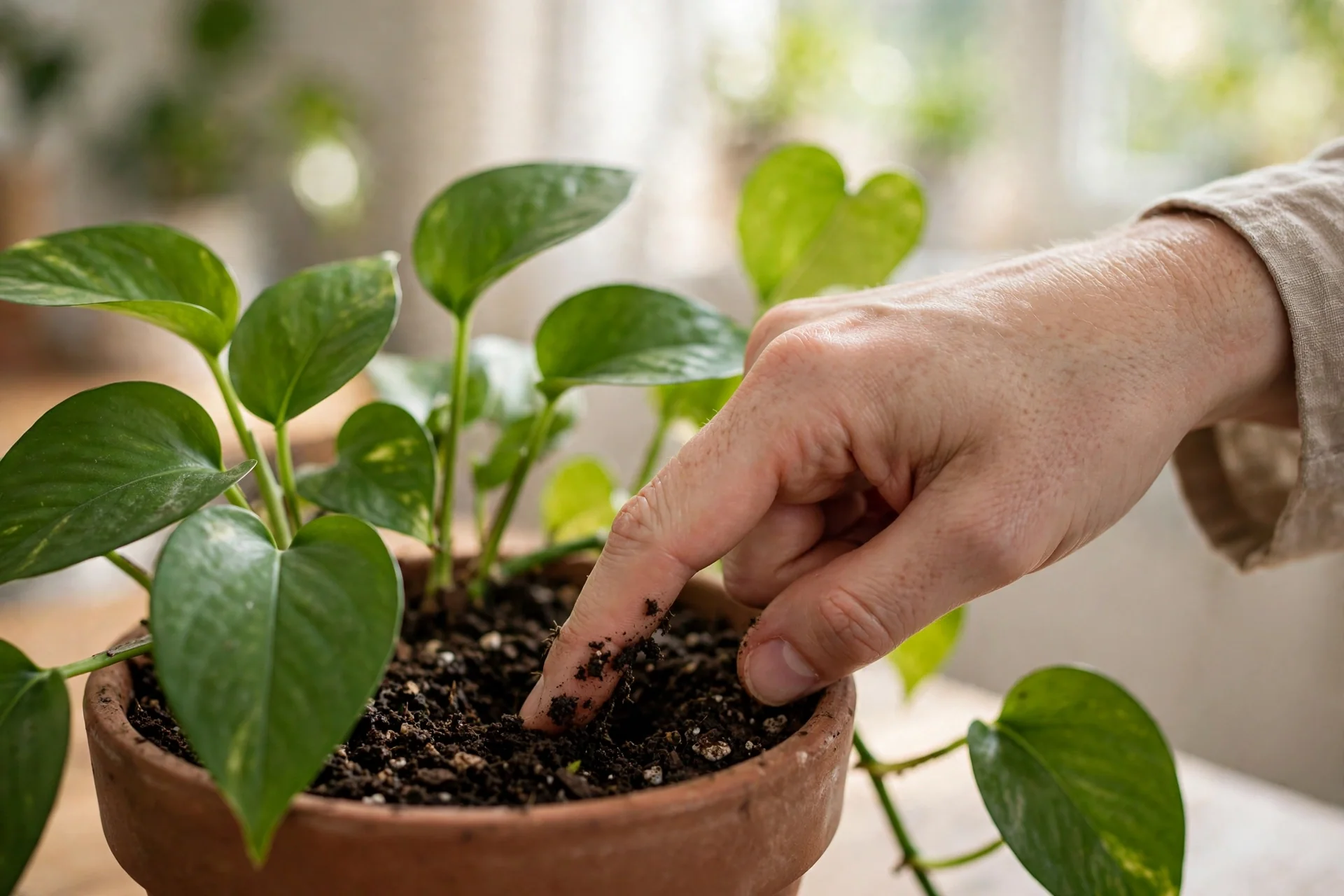
Push your finger two inches into the soil and note wet, damp, or dry. Lift the pot. A heavy pot with a sad plant usually means waterlogged soil. Look at the light. Is the plant in hours of direct sun, or in a dark corner? Think about recent changes. A repot, a move, a new fertilizer, or a season change explains a lot. Look under the leaves for pests or webs. Finally, check the pot itself. No drainage hole or a pot much bigger than the root ball both trap moisture.
If your watering habits need a reset after this diagnosis, our guide on how to water indoor plants properly walks through the finger test and drainage basics.
1. Overwatering
The most common cause of all. Pothos evolved in tropical forests where soil drains and dries between rains. When the mix stays soggy, roots cannot get oxygen. They rot, and rotting roots cannot feed the leaves.
Leaves feel soft or limp and almost translucent, and yellowing starts on the lower older leaves. The soil is wet two inches down and the pot feels heavy. If only a few leaves are yellow, stop watering and let the top half of the soil dry out. If the plant is very soggy, unpot it, trim any brown or mushy roots with clean scissors, and repot into fresh well-draining mix with roughly 20 to 30 percent perlite.
Water by soil dryness from now on, not by calendar. Also check the pot. A decorative pot with no drainage, or a pot far bigger than the root ball, traps moisture even with correct watering. If you keep confusing the two watering extremes, our comparison of overwatering vs underwatering plant signs shows the differences side by side.
2. Underwatering
Underwatering looks different. Leaves turn yellow with dry, crispy edges and curl or wilt. The soil is bone dry all the way down, often pulling away from the pot edges, and the pot feels light.
Water slowly until it drains from the bottom holes, wait a few minutes, then water once more so the whole root ball is evenly moist. Then feel the soil every few days and water when the top two inches are dry. Alternating between bone dry and soaking stresses the plant, and that stress alone can yellow leaves.
3. Too Much Direct Sunlight
Pothos grows under tree canopies in the wild, so it evolved for filtered light, not direct sun. A few hours of direct sun through a south or west window scorches the leaves. The yellowing looks patchy or bleached, appears mostly on leaves facing the window, and sometimes comes with brown crispy spots.
Move the plant a few feet back from the window, or to a north or east-facing window with bright indirect light. A sheer curtain works like sunglasses and lets you keep the same spot.
4. Too Little Light
Very low light causes yellowing too, though it takes longer to appear. Without enough light the plant cannot photosynthesize enough to maintain its leaves, and the oldest leaves yellow first. Growth slows, and new leaves come in smaller than usual.
Move the plant to a brighter room, even if the light is indirect. For genuinely dark spaces, a grow light on a timer for 12 to 14 hours a day changes the picture completely. Watch out for one trap. A pothos in very low light uses less water, so a normal watering schedule quietly overwater it.
5. Nutrient Deficiency
Pothos is not a heavy feeder, but after a year or more in the same mix the nutrients run out. The yellowing pattern tells you which one is missing. Nitrogen deficiency is the most common: leaves lose green evenly, starting with the oldest, and growth slows. Magnesium deficiency shows as yellowing between the veins while the veins stay green. Iron deficiency is rare and turns new leaves yellow while old ones stay green.
During spring and summer, feed with a balanced liquid fertilizer diluted to half strength every four to six weeks. Skip feeding in fall and winter. For suspected magnesium deficiency, a soil drench of one teaspoon of Epsom salt per gallon of water helps.
6. Fertilizer Burn
Too much fertilizer yellows leaves from the opposite direction. Excess salts pull moisture away from the roots, and the leaves respond with yellow and brown edges, wilting, and stunted growth. This often happens when someone fertilizes right after seeing yellow leaves, hoping it will help.
Flush the soil. Pour plenty of water through the pot and let it drain completely. Repeat three to four times to wash the excess salts out, then hold off on feeding for at least a month.
7. Root Rot
Root rot is the advanced stage of overwatering. Fungi and bacteria thrive in soggy, airless soil and attack the roots. Healthy roots are white and firm. Rotting roots are brown or black, mushy, and smell bad. According to the University of Florida extension service, Phytophthora root rot is the most common disease affecting pothos (ask.ifas.ufl.edu/publication/PP340).
Unpot the plant, rinse the roots, cut every mushy root back to firm healthy tissue with disinfected scissors, and repot into fresh sterile mix. Water sparingly for the first few weeks. If most roots are gone, take cuttings from the healthy vines and propagate them instead.
8. Cold Drafts and Temperature Stress
Pothos prefers 60 to 85 degrees Fahrenheit. Cold drafts from a drafty window, an exterior door, or an AC vent blowing directly on the plant cause yellowing, sometimes with brown edges, on the side facing the cold source. Move the plant away from drafts and vents. Temperature stability matters more than the exact number on the thermostat. In winter, keep pothos away from cold exterior walls and drafty entryways.
9. Pests
Pests yellow leaves as a side effect of feeding. Spider mites leave tiny yellow speckles and fine webbing, usually on leaf undersides. Mealybugs show as white cottony clusters at stem joints. Scale appears as small brown bumps on stems. Fungus gnat larvae feed on roots, and a bad infestation can damage roots enough to yellow the leaves.
Inspect leaf undersides and stem joints closely. Wipe leaves with a damp cloth, treat with neem oil or insecticidal soap per the label, and repeat weekly for three to four weeks.
When Yellow Leaves Are Not a Problem
Not every yellow leaf is a crisis. Pothos drops its oldest leaves as part of normal growth, especially on older, well-established vines. If only one or two of the oldest bottom leaves are yellowing at a time and the rest of the plant looks healthy with active new growth, do nothing. Remove the spent leaf to keep the plant tidy.
If you grow a golden pothos, check whether it is variegation. Natural variegation has clean, consistent boundaries between yellow or cream areas and green areas. Problem yellowing spreads unevenly and hits leaves that were solid green. If your golden pothos is losing variegation and going all green instead, it needs more light.
What to Do If Leaves Keep Yellowing
Give the plant two to four weeks after your fix. The plant first stabilizes, then pushes new growth, and that pause is normal. Look for these good signs. No new leaves turn yellow. Existing yellow stops spreading. New growth comes in green and full-sized.
If yellowing still continues after that, re-diagnose instead of trying harder. The first diagnosis was probably wrong, usually low light misread as overwatering or vice versa. Also check for two causes at once. Low light plus frequent watering is the classic pair. When in doubt, unpot and look at the roots. Brown and mushy means root rot. A dense root mass with almost no soil means root-bound.
Should You Cut Off the Yellow Leaves
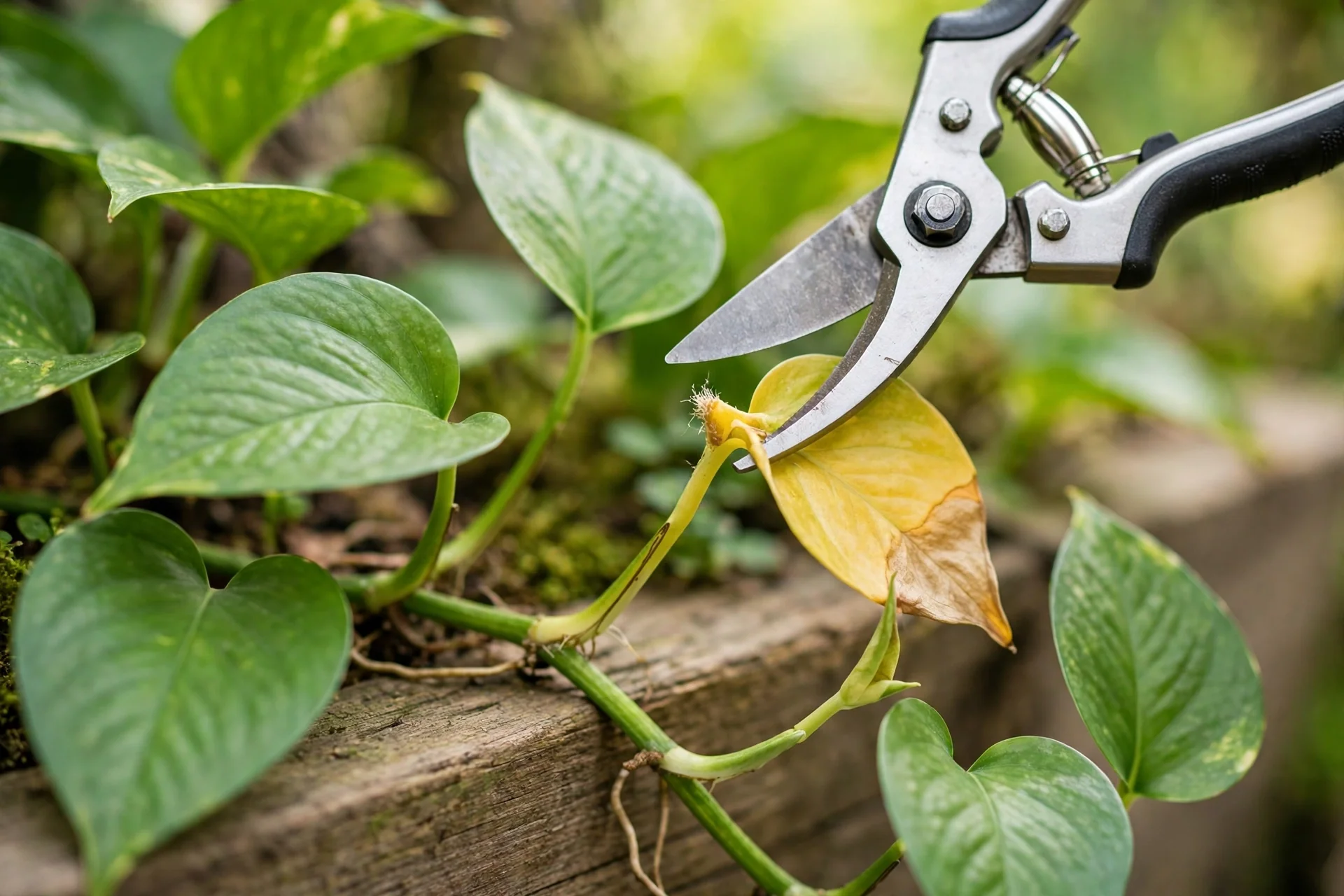
Yellow leaves will not turn green again. Once the chlorophyll is gone, that leaf is done. Prune fully yellow leaves with clean scissors, cutting the leaf stem near the base. This keeps the plant tidy and lets the plant direct energy to healthy growth.
One caution. If more than half the leaves are yellow, remove them gradually over a few weeks rather than all at once. Always disinfect your scissors before and after. For a broader look at this topic across all houseplants, see our general guide on how to fix yellow leaves on indoor plants.
FAQs
Pothos yellowing looks alarming, but it is one of the most solvable problems in houseplant care. Diagnose the pattern, fix the one cause that matches, and give the plant a few weeks to show new green growth. For the full care picture, our pothos care guide has everything in one place, and it pairs well with our renter-friendly hanging pothos ideas.
Can yellow pothos leaves turn green again?
No. Once a leaf has fully turned yellow, the chlorophyll is gone for good. Fix the cause so new leaves grow in green.
Should I cut off yellow leaves from my pothos?
Yes. Prune fully yellow leaves with clean scissors near the stem base. Remove them gradually if more than half the leaves are yellow.
How often should I water pothos to avoid yellow leaves?
Water only when the top two inches of soil are dry, not on a schedule. For most indoor pothos that is roughly every one to two weeks.
Do yellow leaves mean my pothos is dying?
Not usually. A few yellow leaves are normal and easy to fix. Fast-spreading yellowing with mushy stems means root rot, which needs quick action.
Can I save a pothos with severe root rot?
Often yes, if any firm white roots remain. Cut away the mushy roots, repot in fresh mix, and water sparingly. Otherwise, propagate healthy cuttings.
Pingback: How to Propagate Pothos Cuttings: Water, Soil & Layering
Pingback: Snake Plant vs Pothos Plant: Which Is Right for You? (2026)
Pingback: How to Propagate Pothos Plant: Water, Soil & Layering
Pingback: How Often to Water a Pothos Plant? The Soil-First Guide