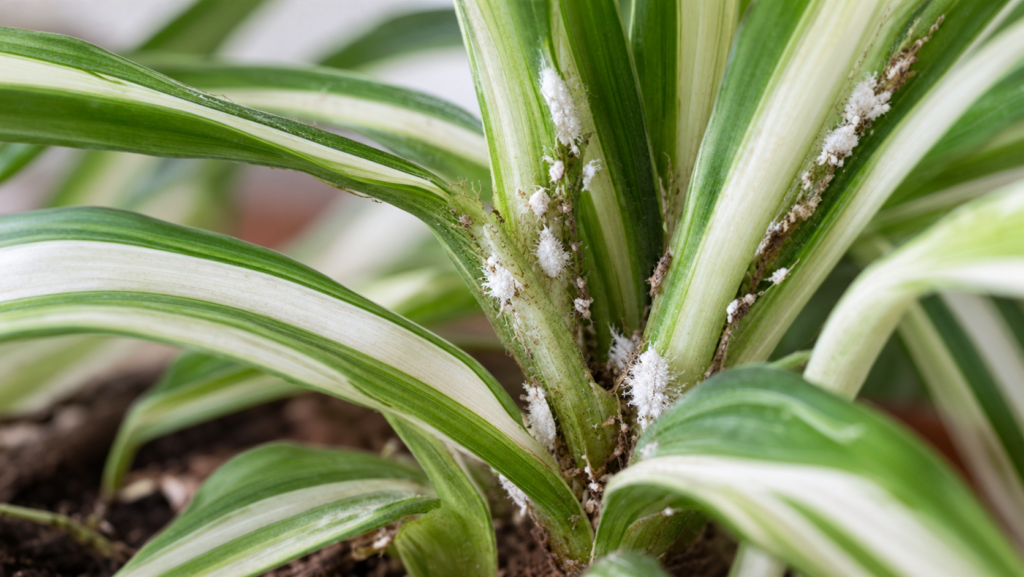
Spider Plant Pests & Diseases stay uncommon compared to most houseplants, since the tough, fast-growing nature of Chlorophytum comosum discourages many common invaders and infections. Mealybugs and spider mites account for most pest cases, while root rot from overwatering causes the majority of disease-related problems, and knowing the early signs of each keeps a small issue from turning into a serious one.
Quick Answer
Spider plant pests and diseases most often mean mealybugs, spider mites, or root rot from overwatering. Mealybugs show up as white, cottony clusters near leaf joints, spider mites leave fine webbing and speckling, and root rot shows as soft, dark roots with yellowing leaves.
Quick Take
Spider plants face a short, predictable list of pests and diseases, led by mealybugs, spider mites, scale insects, fungus gnats, and root rot. Sap-sucking pests like mealybugs and scale cluster in visible spots and respond well to physical removal alongside insecticidal soap. Spider mites hide on leaf undersides and thrive in dry conditions, responding better to increased humidity and thorough rinsing. Root rot, the most serious of the group, stems from consistently wet soil and requires trimming damaged roots and repotting to resolve. Catching any of these early, through a quick weekly check of the leaves, joints, and soil, keeps treatment simple.
In practice, distinguishing a pest problem from a disease problem starts with checking whether visible insects or webbing exist on the leaves, since most spider plant diseases show through the roots and soil rather than the foliage first. Chlorophytum comosum resists most pests reasonably well when healthy, so a plant already stressed by poor light, overwatering, or compacted soil attracts and supports both pests and disease more easily than a thriving one.
Mealybugs
Mealybugs appear as small, oval insects covered in a white, waxy coating that gives them a cottony, fuzzy look. They cluster in leaf joints and along the base of the plant, feeding on sap and excreting a sticky substance called honeydew that sometimes grows a black, sooty mold underneath. Dabbing visible clusters with a cotton swab soaked in rubbing alcohol kills them on contact, followed by a full spray of insecticidal soap or diluted neem oil repeated every seven to ten days for two to three treatments.
Spider Mites
Spider mites measure smaller than a pinhead, making direct identification difficult, so the damage they leave usually gives the first clue. Fine, dry speckling across the leaf surface, along with delicate webbing between leaves, signals an active infestation. Spider mites thrive in dry, warm conditions, so raising humidity and rinsing leaves thoroughly with lukewarm water knocks down populations, followed by insecticidal soap or neem oil applied every five to seven days for two to three weeks.
Scale Insects
Scale insects appear as small, flat, brown or tan bumps that stay stationary on stems and leaf undersides rather than moving around like mealybugs. A hardened, waxy shell covers each insect, making sprays less effective until the shell gets scraped off first with a fingernail or soft brush, followed by insecticidal soap application to catch newly hatched insects.
Fungus Gnats
Fungus gnats show up far more often around the soil than on the leaves, drawn to consistently damp potting mix rather than the plant tissue directly. Adult gnats look like tiny, dark flies hovering near the soil surface, while their larvae feed just below it. Letting the soil dry out fully between waterings removes the breeding ground fungus gnats need and usually solves the problem without additional treatment.
Root Rot
Root rot develops from soil that stays wet for extended periods, starving the roots of oxygen and allowing decay to set in. Soft, yellowing leaves, a mushy base, and a sour smell from the soil signal an active problem. Pulling the plant from its pot confirms the cause: healthy roots stay firm and pale, while rotted roots turn dark, soft, and foul-smelling. Trimming away damaged roots and repotting into fresh, fast-draining soil gives the plant its best chance at recovery.
Leaf Spot and Fungal Issues
Leaf spot occasionally appears as small, dark, water-soaked spots on the leaves, usually following prolonged high humidity combined with poor air circulation. Removing affected leaves and improving airflow around the plant, along with avoiding water sitting directly on the foliage, prevents most cases from spreading further.
Spider Plant Pests and Diseases at a Glance
| Issue | Type | Key Sign | Treatment |
| Mealybugs | Pest | White, cottony clusters | Alcohol swab, insecticidal soap |
| Spider mites | Pest | Fine webbing, speckling | Humidity, insecticidal soap |
| Scale | Pest | Flat brown or tan bumps | Scrape off, insecticidal soap |
| Fungus gnats | Pest | Small flying insects | Let soil dry out fully |
| Root rot | Disease | Soft, dark, smelly roots | Trim roots, repot |
| Leaf spot | Disease | Dark, water-soaked spots | Improve airflow, remove leaves |
How to Prevent Spider Plant Pests and Diseases
Preventing spider plant pests and diseases starts with keeping the plant healthy overall, since stressed plants attract problems far more easily than thriving ones. Wipe leaves down with a damp cloth every few weeks, checking joints and undersides for early signs. Avoid overwatering, keep the plant in good light, and quarantine any new plant for two to three weeks before placing it near an existing collection to catch hidden infestations early.
Regular care can help you spot problems before they become severe. Our Spider Plant Care Guide explains the everyday care routine your plant needs to stay healthy.
Final Takeaway
Spider plant pests and diseases stay rare overall, and catching mealybugs, spider mites, or root rot early keeps treatment simple. Identify the specific issue first, since pests and root problems call for different responses, and keep the plant well lit, properly watered, and occasionally wiped down to prevent most future issues before they start.
FAQ
What are the most common spider plant pests and diseases? Mealybugs and spider mites cause most pest issues, while root rot from overwatering causes most disease problems on spider plants.
How do I get rid of mealybugs on a spider plant? Dab visible clusters with a cotton swab soaked in rubbing alcohol, then treat the whole plant with insecticidal soap or neem oil every seven to ten days.
Does root rot always kill a spider plant? Not if caught early. Trimming damaged roots and repotting into fresh, well-draining soil often saves a plant even with moderate root rot.
Are spider plant pests harmful to humans or pets? No, mealybugs, spider mites, scale, and fungus gnats pose no direct danger to humans or pets, though it’s best to keep pets away during treatment.
Why does my spider plant keep getting pests? Repeated infestations usually point to an underlying stress factor like poor light or overwatering, since a weakened plant attracts pests more easily.
Can I use natural treatments for spider plant pests? Yes, insecticidal soap and diluted neem oil work well for most spider plant pests and stay gentler than harsher chemical pesticides.