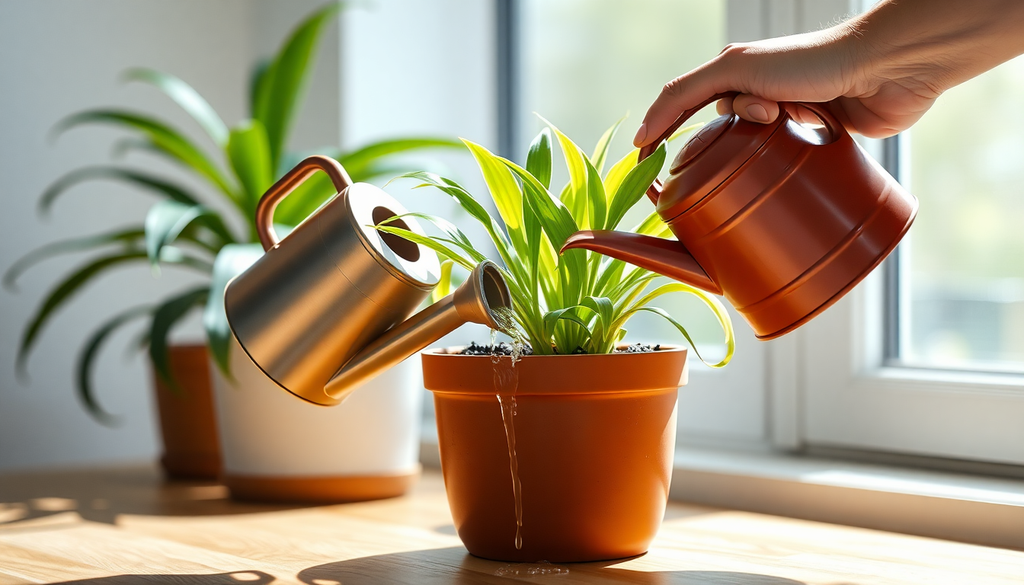
Getting spider plant watering right comes down to one habit: checking the soil instead of following a fixed calendar. Spider plants are forgiving, but a rigid weekly schedule still leads to overwatering in winter and underwatering in summer for most owners.
This guide gives you a starting frequency, shows you how to adjust it by season and light, and helps you spot the early signs of both overwatering and underwatering before they damage the plant.
Quick Answer
Water a spider plant when the top 1 to 2 inches of soil feel dry, which usually works out to once every 7 to 10 days in spring and summer and every 2 to 3 weeks in fall and winter. Always check the soil first, since light, temperature, and pot size all shift the actual timing.
Quick Take
Spider plants store water in thick, fleshy roots, which makes them tolerant of missed waterings but vulnerable to root rot from consistently soggy soil. Water thoroughly until it drains from the bottom of the pot, then let the top inch or two of soil dry out before watering again. Reduce frequency in winter, when the plant grows slower and uses less water, and increase it during active growth in warmer months.
One mistake many spider plant owners make is watering on a strict weekly schedule regardless of how the soil actually feels. In practice, the finger test tells you far more than any calendar, since a spider plant sitting in bright light or a warm room dries out faster than the same plant in a cooler, dimmer spot.
Why Watering Schedules Alone Don’t Work
A spider plant’s water needs change with light, temperature, humidity, and pot size, so a fixed number of days rarely fits year-round. A plant near a bright window in summer can dry out within a week, while the same plant in a dim corner during winter may still hold moisture after three weeks.
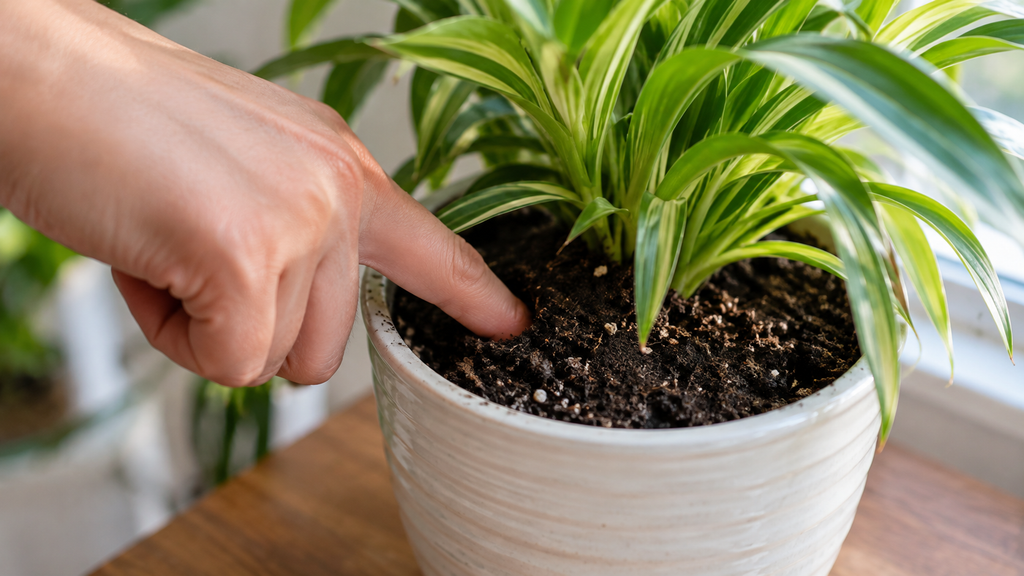
Checking the soil before every watering removes the guesswork. Push your finger about an inch into the potting mix, and water only if it comes out dry.
How Often to Water a Spider Plant by Season
Spring and Summer
During active growth, spider plants typically need water every 7 to 10 days. Warmer temperatures and longer daylight hours pull moisture from the soil faster, so check it more often during heat waves.
Fall and Winter
Growth slows considerably in cooler months, and the plant needs noticeably less water. Every 2 to 3 weeks is common during this period, though you should still confirm with a soil check rather than counting days.
Watering Frequency by Season
| Season | Typical Frequency | Why |
|---|---|---|
| Spring | Every 7-10 days | Active growth, warmer temperatures |
| Summer | Every 7-10 days, sometimes sooner | Higher heat and light speed up drying |
| Fall | Every 2-3 weeks | Growth slows as temperatures drop |
| Winter | Every 2-3 weeks | Dormant period, minimal water use |
How to Water a Spider Plant Correctly
Water thoroughly at each session rather than giving small sips often. Pour water evenly across the soil surface until it runs freely from the drainage holes, which flushes out mineral buildup and reaches the full root system.
Empty any water that collects in the saucer within 30 minutes. Standing water at the base keeps the bottom roots wet long after the top soil has dried, which encourages root rot.
Room-temperature water works better than cold water straight from the tap, since cold water can shock the roots. Filtered or distilled water helps if your tap water is high in fluoride or chlorine, both of which contribute to brown leaf tips over time.
Signs of Underwatering
An underwatered spider plant shows thin, curling leaves and soil that pulls away from the sides of the pot. Leaf tips often turn brown and dry, and the whole plant can look limp or deflated between waterings.
Recovery is usually fast once you resume regular watering. Water thoroughly and check the soil again after a few days rather than immediately repeating a heavy watering.
Signs of Overwatering
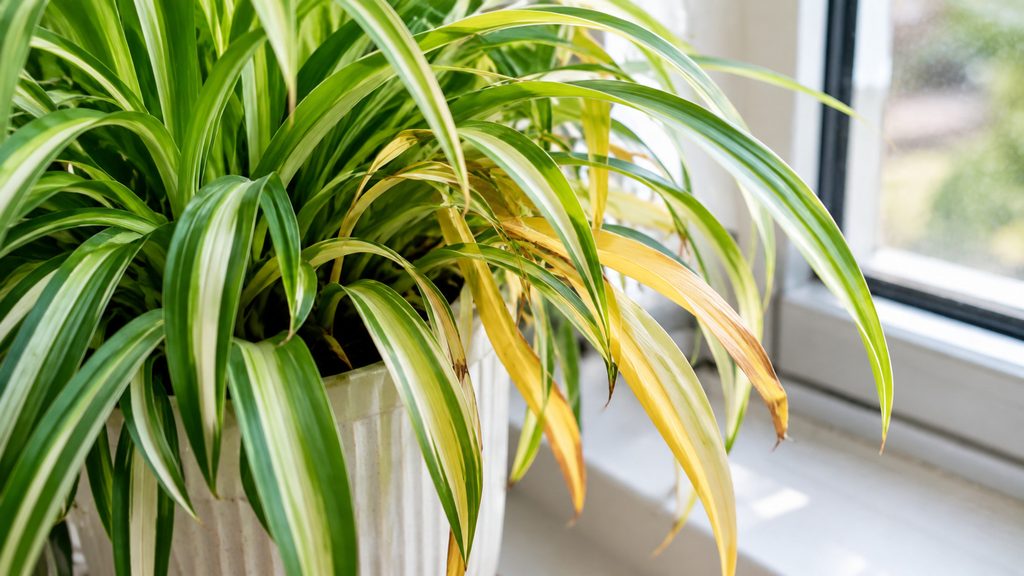
Overwatering shows up differently, usually as yellowing leaves, soft or mushy stems, and a musty smell coming from the soil. Left unaddressed, this leads to root rot, where roots turn brown or black and lose the firmness of healthy roots.
If you catch overwatering early, letting the soil dry out completely before the next watering often solves it. In more advanced cases, you may need to remove the plant from its pot, trim away rotted roots, and repot it into fresh, well-draining soil. A soil mix that drains too slowly makes this worse, so choosing the right potting mix matters as much as the watering routine itself.
Watering Mistakes to Avoid
A common mistake is watering on autopilot, following a fixed schedule without checking the soil first. This leads directly to the overwatering and underwatering patterns described above.
Using a pot without drainage holes is another frequent problem, since excess water has nowhere to go and pools around the roots. Dense, heavy potting soil that holds too much moisture creates a similar risk, even with a well-timed watering routine.
Light also plays a direct role in how fast soil dries between waterings. If you’re working with a shaded room or a north-facing window, best light for spider plant in low-light apartments breaks down how light levels change your entire watering pace.
FAQs
How do I know if my spider plant needs water?
Check the top 1 to 2 inches of soil with your finger. If it feels dry, water thoroughly, and if it still feels moist, wait a few more days.
Can I water my spider plant every day?
No, daily watering almost always leads to soggy soil and root rot in spider plants. Let the top inch or two of soil dry between waterings instead.
Do spider plants like to be watered from the bottom?
Yes, bottom watering works well for spider plants and can help avoid getting the crown of the plant wet. Set the pot in a shallow tray of water for 15 to 20 minutes, then let it drain fully.
Why are the tips of my spider plant leaves turning brown?
Brown tips often come from fluoride or chlorine in tap water, though inconsistent watering and low humidity can also contribute. Switching to filtered or distilled water frequently resolves this over a few weeks.
Should I mist my spider plant instead of watering the soil?
Misting adds humidity but does not replace watering the soil, since the roots absorb moisture from the potting mix, not the leaves. Continue regular soil watering alongside any misting for humidity.
How much water does a spider plant need each time?
Water until it flows freely from the drainage holes, then discard any excess that collects in the saucer. The exact amount depends on pot size, so let drainage guide you rather than a fixed measurement.
Conclusion
Spider plant watering comes down to checking the soil rather than following a strict schedule, watering thoroughly every 7 to 10 days in warmer months and every 2 to 3 weeks in cooler ones. Watch for curling, dry leaves as a sign of underwatering and yellowing, soft stems as a sign of too much water, and adjust your routine before either problem takes hold.
For soil, feeding, and light guidance beyond watering, see the full Spider Plant Care Guide. drooping that usually reverses within a day or two of the next watering.
Pingback: Best Light for Spider Plant: 2026 Guide