
Yellow leaves on a snake plant are not a death sentence. They are a warning signal.
Snake plant leaves turning yellow tell you something specific has gone wrong in the plant’s environment or care routine. The problem started days or weeks before you noticed the color change. By the time yellow appears, the stress is already advanced.
The good news: snake plants recover well when you identify the right cause and fix it fast. This guide covers every reason snake plant leaves turn yellow, including yellow and brown, yellow spots, yellow and black, yellow and white, and yellow at the base. Each cause has a specific diagnosis method and a direct fix.
Work through this guide from the top. The causes are ordered by how often they actually occur.
Before You Diagnose: Do a Quick Visual Check
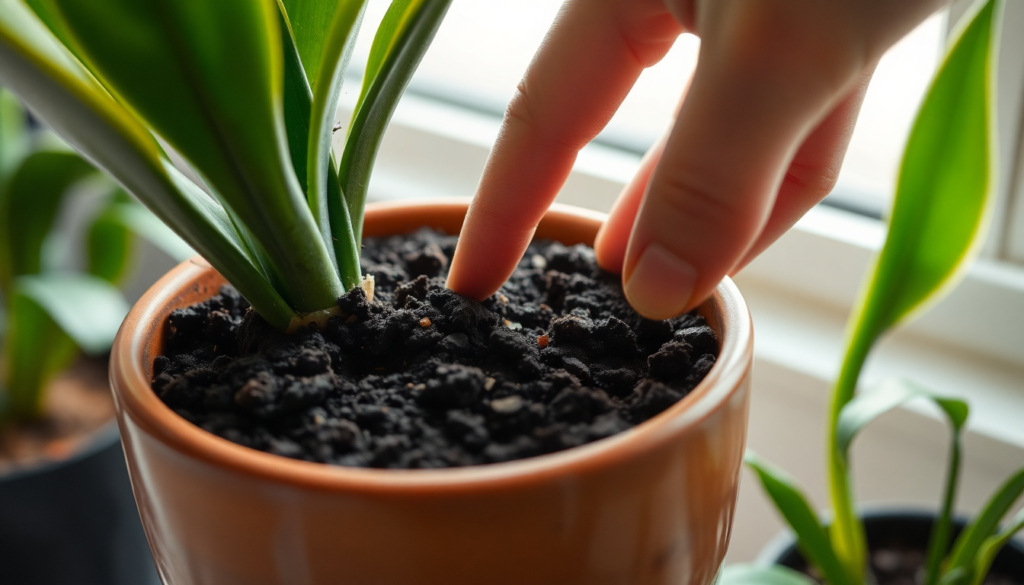
Snake plant leaves turning yellow follow patterns. The pattern tells you the cause before you do anything else.
Check these four things first:
- Which leaves are yellow? Oldest leaves at the base yellowing slowly = natural aging. Multiple leaves across the plant yellowing together = stress response.
- How do the yellow leaves feel? Soft and mushy = overwatering or root rot. Firm but pale = light or nutrient issue. Dry and crispy at edges = sunburn or underwatering.
- What does the soil feel like? Wet or sour-smelling soil after days without watering = drainage problem. Bone dry and pulling away from pot edges = underwatering.
- Where are the yellow patches on the leaf? Yellow at the base = root rot. Yellow spots = pests or fungal disease. Yellow on the side facing the window = sunburn. Uniform pale yellow = nutrient deficiency or low light.
These four checks narrow down the cause in under 2 minutes. Now match your observation to the causes below.
Cause 1: Overwatering (Accounts for 90% of Cases)
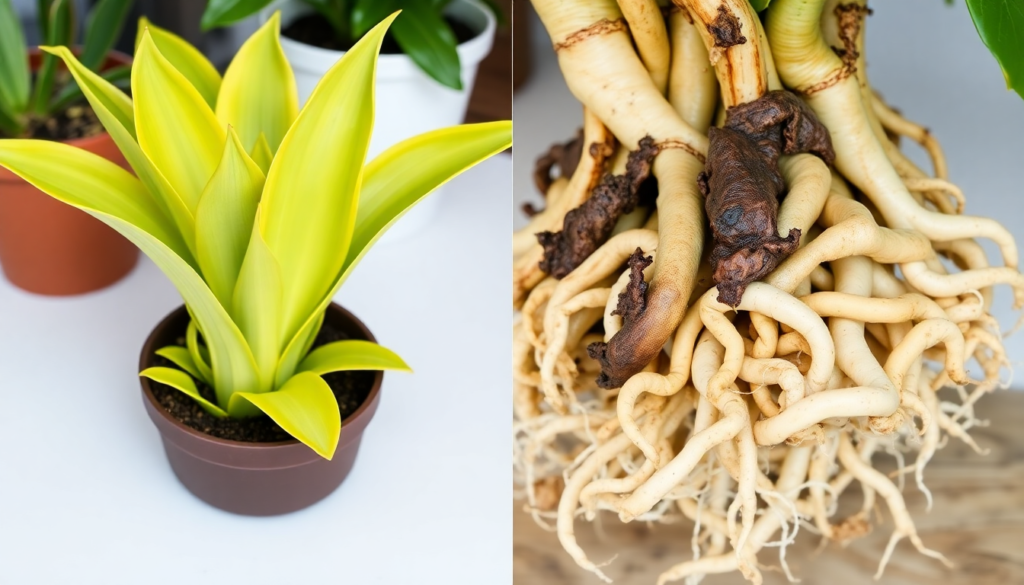
Overwatering is the leading cause of snake plant leaves turning yellow. In 92% of cases where multiple leaves yellow simultaneously and feel soft, overwatering or the root rot it causes is responsible.
Snake plants (Dracaena trifasciata) are succulents. They store water in their thick leaves and rhizomes. When roots sit in wet soil, oxygen supply to the root system cuts off. Root cells begin dying. Nutrient and water absorption drops. Chlorophyll in the leaves breaks down. Yellow appears first at the base of mature leaves, then spreads upward.
How to recognize overwatering:
- Leaves turn yellow from the bottom up and feel soft or squishy when touched.
- Soil stays damp for more than 48 hours after watering.
- A sour or musty smell comes from the soil.
- Leaves at the base detach easily when touched. This is the wilting leaves on snake plant symptom most owners see too late.
- Dark, mushy, or black roots when you unpot the plant.
How to fix it: Stop watering immediately. Slide the plant out of its pot. Inspect every root. Healthy roots are firm and white or tan. Rotten roots are dark brown, black, soft, and smell foul. Cut off all rotten sections with clean scissors. Let the healthy roots air dry in a shaded spot for 12 to 24 hours. Repot into fresh, fast-draining soil mix (50% cactus mix, 30% perlite, 20% coarse sand). Do not water for 5 to 7 days after repotting.
Going forward, water your Sansevieria only when the top 2 to 3 inches of soil feel completely dry. In most indoor environments this means watering every 2 to 4 weeks in spring and summer, and every 4 to 6 weeks in fall and winter.
Never leave a snake plant sitting in a saucer of standing water. Even 2 to 3 hours in standing water starts suffocating the roots.
Cause 2: Poor Soil Drainage (The Hidden Overwatering Problem)
Your watering schedule looks correct. You wait weeks between waterings. But the snake plant leaves are still turning yellow.
The problem is not how often you water. It is what the soil does with the water after you apply it.
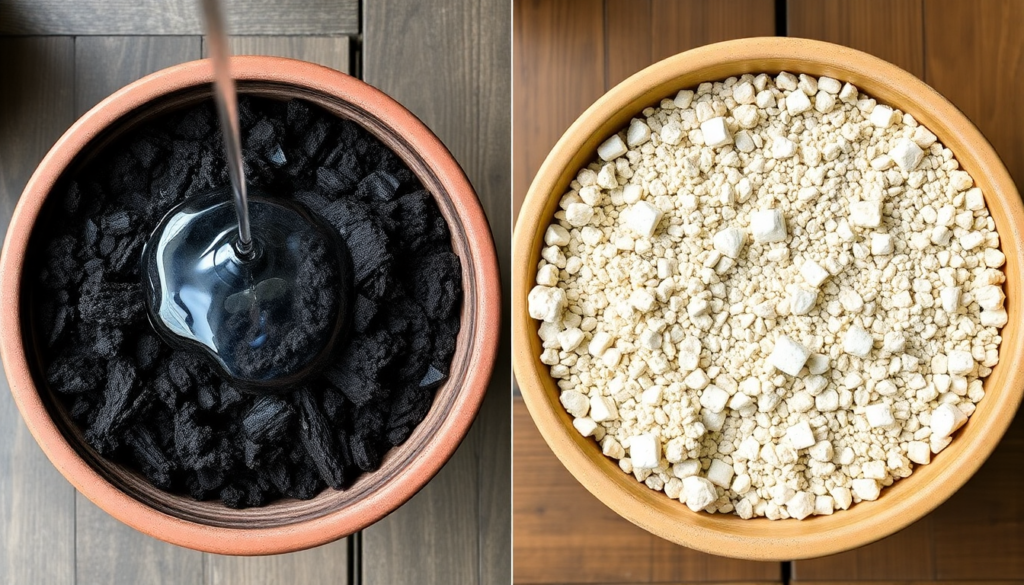
Standard potting mix contains high amounts of peat moss. Peat retains water for days in indoor conditions. Even when you water infrequently, dense peat-based soil keeps roots in a wet environment long enough to trigger stress and eventual root rot. The snake plant leaves turning yellow and brown symptom you see is a soil drainage problem, not a watering frequency problem.
How to recognize poor drainage:
- Water puddles on the soil surface before soaking in.
- Lower leaves yellow even when your watering schedule seems correct.
- The soil surface forms a hard crust when dry.
- The soil compacts visibly over time and pulls away from the edges of the pot.
How to fix it: Repot into a fast-draining mix: 40% potting mix, 30% perlite, 20% coarse sand, 10% pine bark fines. If you want a pre-made shortcut, use 70% cactus mix combined with 30% perlite. Always pot in a container with at least one drainage hole. Terracotta pots help soil dry faster because they are porous.
Cause 3: Underwatering
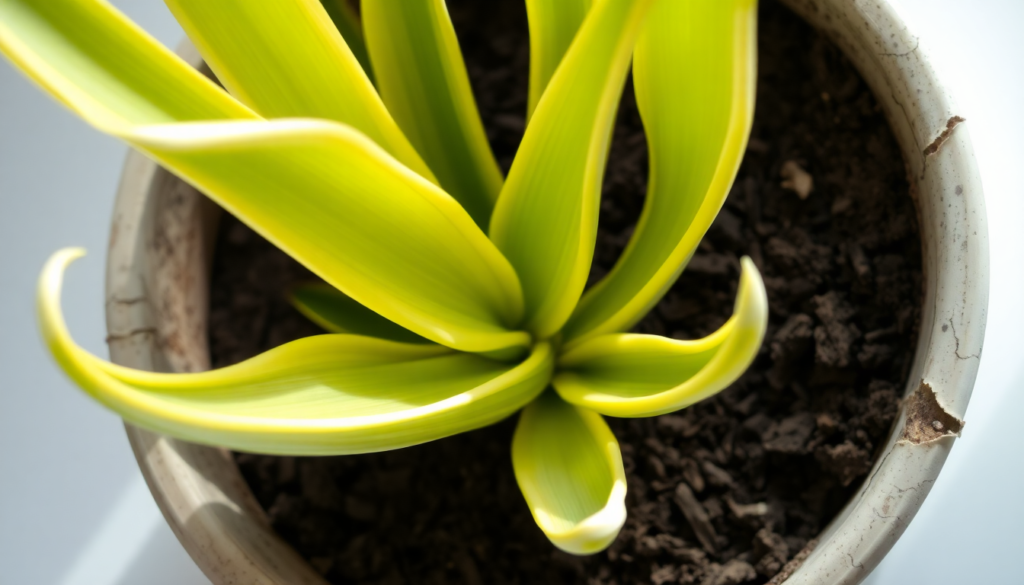
Underwatering causes yellowing less often than overwatering, but it does happen. Snake plants store water in their leaves and draw on those reserves during drought. When reserves run out, the leaves begin to lose their green pigment and turn pale yellow.
Unlike overwatering, underwatering yellowing looks different. Leaves feel firm and slightly crispy rather than soft and mushy. The plant looks stiff but pale. Leaves curl inward slightly at the edges before the yellowing fully develops.
How to recognize underwatering:
- Soil is bone dry and has pulled away from the edges of the pot.
- Leaves feel firm but look pale yellow-green rather than deep green.
- The pot feels unusually light when you lift it.
- No new growth has appeared in several months.
How to fix it: Water the plant thoroughly until water drains freely from the drainage holes. Let it drain completely. In very dry soil that has pulled away from the pot, the water may run straight through without soaking the root ball. If this happens, set the pot in a shallow tray of water for 20 to 30 minutes so the soil rehydrates from the bottom up. Then remove and allow to drain.
Cause 4: Too Much Direct Sunlight (Sunburn)
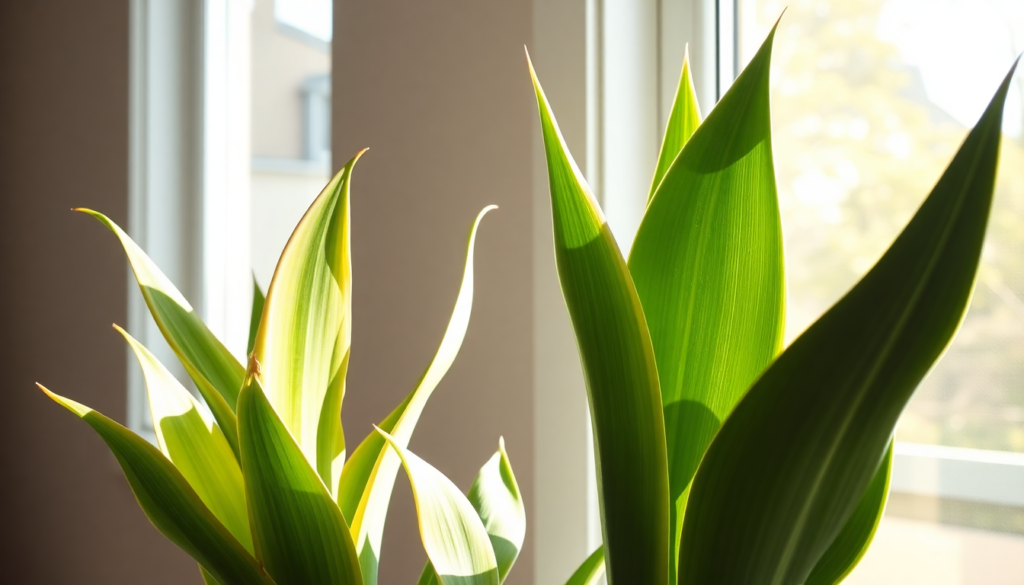
Snake plants tolerate a wide range of light conditions. They do not tolerate direct midday sun for extended periods. Harsh direct sunlight bleaches the chlorophyll from snake plant leaves, producing the yellow and white or yellow and brown leaf pattern you see on the side facing the window.
This is one of the most identifiable snake plant problems because the yellowing appears only on one side of the plant, the window-facing side. The shaded side of the same plant stays green.
How to recognize sunburn:
- Yellow or pale patches appear specifically on leaves facing the window or light source.
- Affected leaves also show dry, crispy brown edges.
- Leaves feel dry rather than soft.
- The problem appeared after you moved the plant to a sunnier location.
How to fix it: Move the plant 3 to 5 feet away from the window, or hang a sheer curtain to diffuse the direct light. Snake plants grow best with 4 to 6 hours of bright indirect light daily. Gentle morning sun from an east-facing window works well. Harsh afternoon sun from a south or west-facing window without diffusion causes sunburn.
Yellow or white patches from sunburn do not reverse on existing leaves. Remove severely damaged leaves at the base. New growth appears with correct coloring once you fix the light conditions.
Cause 5: Too Little Light
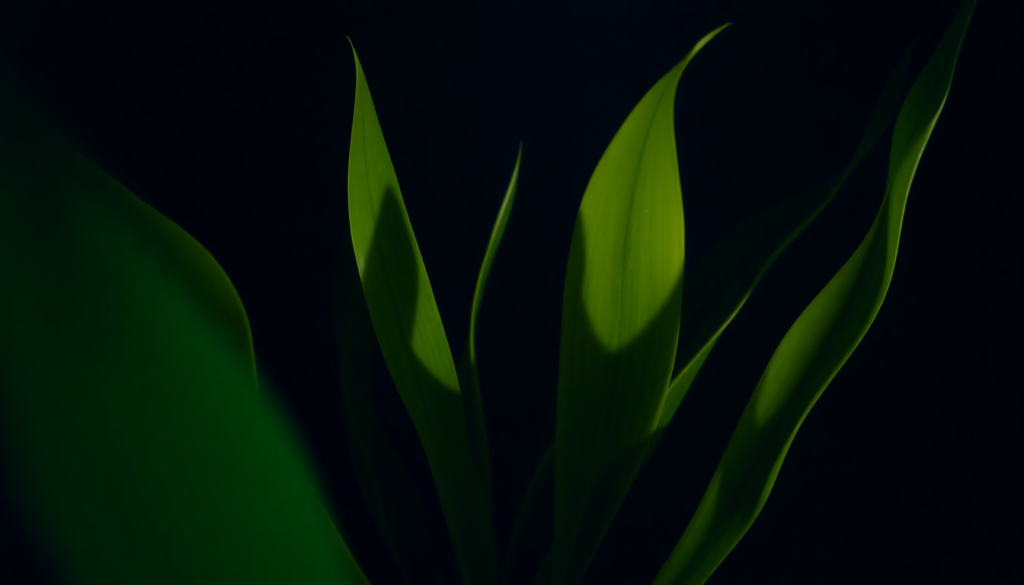
Low light causes slow yellowing across multiple leaves. Unlike sunburn which yellows one side, low-light yellowing spreads evenly and gradually. The plant loses its deep green color and becomes pale, dull, and washed out.
Variegated Sansevieria varieties like Laurentii (with yellow-edged leaves) are more sensitive to low light than solid green types because they contain less chlorophyll to begin with.
In very low light, the snake plant also stops using water at a normal rate. This means the soil stays wet far longer, which compounds the yellowing by creating conditions for root rot on top of the light deficiency problem.
How to recognize low-light yellowing:
- Even, gradual fading across multiple leaves rather than patchy or one-sided yellowing.
- Plant has not produced new growth in months.
- Leaves become elongated and weak rather than firm and upright.
- Variegation fades or disappears on previously patterned leaves.
How to fix it: Move the plant to a brighter location gradually. Do not take a plant from a dim corner and place it directly in bright light. Introduce it to increased light over 2 to 3 weeks to prevent shock. If natural light is not available, a full-spectrum LED grow light positioned 12 to 18 inches above the plant for 10 to 12 hours daily produces results equivalent to a bright window.
Cause 6: Temperature Stress and Cold Drafts
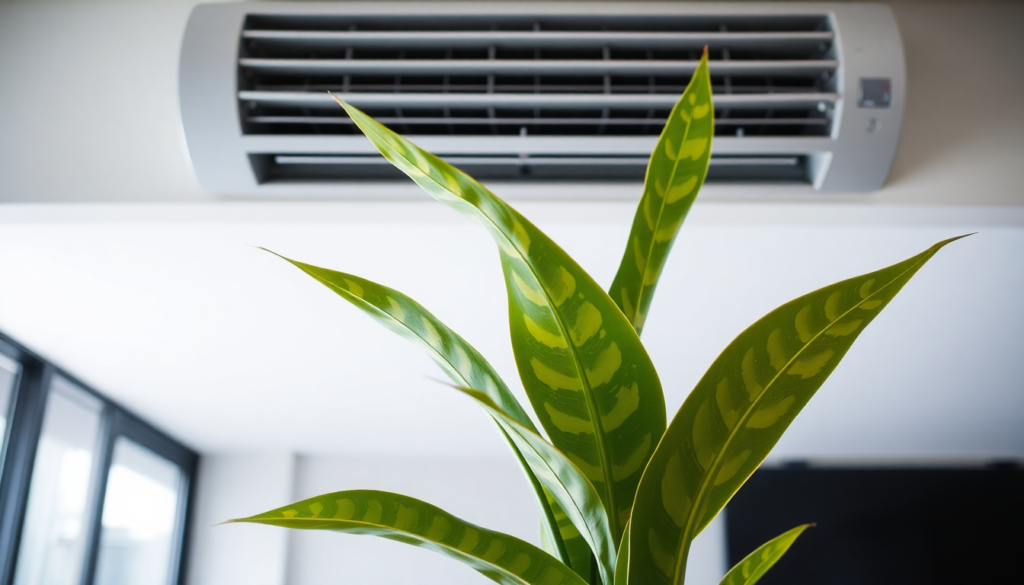
Snake plants are tropical plants. They handle stable indoor temperatures well. They do not handle sudden temperature swings, cold drafts, or direct blasts of cold air conditioning.
Below 50 degrees Fahrenheit (10 degrees Celsius), snake plant leaf cells suffer cold damage. The damage appears as irregular water-soaked yellow patches, often on outer leaves. These patches progress to yellow and brown, then yellow and black in severe cases as the damaged tissue dies and darkens.
Common sources of temperature stress:
- Air conditioning vents blowing directly onto the plant.
- Placement next to a drafty window or exterior door in winter.
- Being placed outdoors when night temperatures drop below 55 degrees Fahrenheit.
- Sitting on a cold tile floor in an unheated room during winter.
How to fix it: Move the plant away from drafts and vents. Maintain temperatures between 60 and 80 degrees Fahrenheit year-round. In winter, move the plant away from cold window glass. A plant touching a cold window pane in winter will develop cold damage on the leaves in contact with the glass first.
Cause 7: Nutrient Deficiency or Fertilizer Burn
Snake plants are light feeders. They do not need frequent fertilizing. But after 2 or more years in the same soil with no feeding, the available nutrients deplete and leaves begin fading to dull yellow.
The specific pattern tells you which nutrient is missing. Nitrogen deficiency causes overall yellowing and slow growth across the whole plant. Magnesium deficiency yellows older leaves first. Iron deficiency yellows newer leaves while the veins stay green (this pattern is called interveinal chlorosis).
The opposite problem, over-fertilizing, causes fertilizer burn. You see yellow leaf edges with crispy brown tips, and white crusty mineral salt deposits appear on the soil surface.
How to recognize nutrient issues:
- Uniform pale yellowing across all leaves after 2 or more years in the same soil = deficiency.
- Yellow edges with crispy brown tips and white soil crust = fertilizer salt burn.
- Slow or no new growth alongside yellowing = likely deficiency.
- Yellowing appeared shortly after heavy feeding = likely burn.
How to fix nutrient deficiency: Fertilize once a month during spring and summer with a balanced liquid fertilizer (10-10-10 NPK) diluted to half strength. Do not fertilize in fall or winter. Worm castings mixed into the top inch of soil during spring repotting provide a slow-release nutrient boost.
How to fix fertilizer burn: Flush the pot thoroughly with plain water for 30 to 60 seconds to wash out accumulated salt deposits. If burning is severe, repot into fresh soil. Avoid fertilizing for 2 to 3 months after a burn event.
Cause 8: Pest Infestation
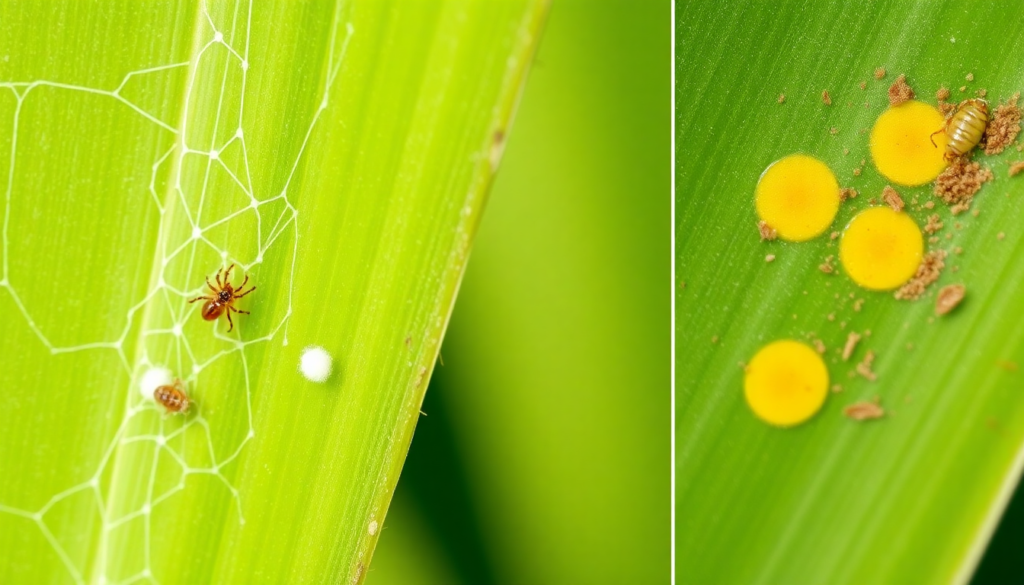
Pests are not the most common cause of snake plant yellowing, but they do occur. Spider mites, mealybugs, aphids, thrips, and fungus gnats all cause leaf damage that produces yellow spots or yellow streaks on the leaf surface.
Spider mites and mealybugs are the two most frequent offenders. Spider mites suck sap from the leaf surface and leave behind yellow speckling or a mottled yellow and green pattern. Mealybugs produce white cottony clusters near the base of leaves and cause yellow spots where they feed.
How to recognize pest damage:
- Yellow spots that appear in irregular patterns rather than the even fading of nutrient deficiency.
- Fine webbing visible near the crown or leaf base (spider mites).
- White cottony deposits at leaf bases or stem junctions (mealybugs).
- Sticky residue on leaves (aphids and scale).
- Small brown shell-like bumps on leaf surfaces (scale insects).
How to fix it: Move the affected plant away from other houseplants immediately. Wipe all leaf surfaces with a soft cloth dampened with 70% isopropyl alcohol. Apply neem oil or insecticidal soap spray to both sides of every leaf. Repeat every 7 days for 3 treatment cycles to interrupt the pest life cycle. For mealybugs in leaf crevices, use a small brush dipped in rubbing alcohol to reach the colonies.
Cause 9: Root Bound Pot
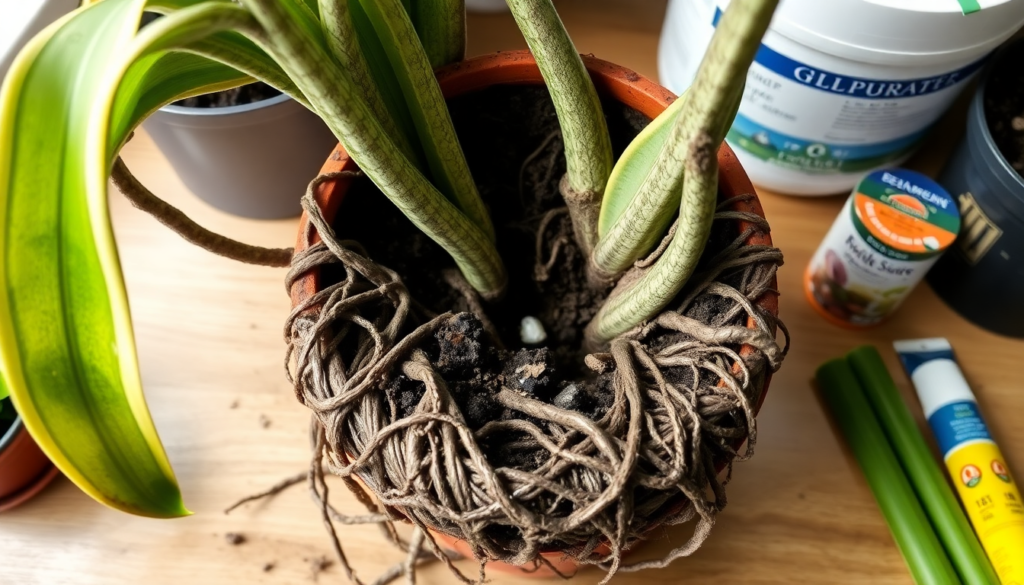
A snake plant that has outgrown its pot shows yellowing as a stress signal. When roots fill the entire container and have no room to expand, the plant cannot absorb water or nutrients efficiently. Existing leaves begin to yellow slowly. New growth stops.
Root-bound Sansevieria also dries out much faster than normal because roots have replaced most of the soil volume. You may notice the plant needs watering much more frequently than before. That is the rootbound signal.
How to recognize a rootbound snake plant:
- Roots visibly growing out of drainage holes.
- Roots circling the surface of the soil.
- The plant dries out within 24 hours of watering.
- No new leaves have appeared in months despite good light and watering.
- The pot feels solid and heavy with no give when you squeeze it (plastic pots).
How to fix it: Repot into a container 1 to 2 inches larger in diameter. Never jump more than one pot size. Fill with fresh fast-draining soil mix. Repotting a rootbound snake plant typically triggers new leaf production within 4 to 6 weeks.
Cause 10: Natural Aging (When Yellow Is Normal)
Not every yellow leaf signals a problem.
Snake plants are living organisms. Their oldest leaves, typically the outermost ones at the base of the plant, naturally yellow and brown as they complete their lifecycle. This aging process is slow and affects one or two leaves at a time, not multiple leaves simultaneously.
How to tell aging yellowing from stress yellowing:
- Aging: One or two oldest base leaves turn yellow slowly over weeks. The rest of the plant looks healthy, firm, and deeply green.
- Stress: Multiple leaves across the plant yellow together, especially if they feel soft, show spots, or the yellowing spreads rapidly.
If it is natural aging, prune the yellow leaf off at the soil line with clean scissors. The plant redirects that energy to new growth.
Quick Diagnosis Guide: Yellow Leaf Pattern + Cause
| Yellow Pattern | How Leaf Feels | Most Likely Cause |
| Yellow from base up, spreading upward | Soft, mushy | Overwatering or root rot |
| Uniform pale yellow-green across whole plant | Firm but dull | Low light or nutrient deficiency |
| Yellow patches on window-facing side only | Dry, crispy edges | Sunburn from direct light |
| Yellow spots in irregular pattern | Firm with sticky or webbed surface | Pest damage |
| Yellow leaf edges with brown crispy tips | Firm, white soil crust visible | Fertilizer salt burn |
| Irregular water-soaked yellow patches | Soft in patches | Cold damage or temperature stress |
| One or two outer base leaves yellowing slowly | Firm, rest of plant healthy | Natural aging |
| Multiple leaves yellowing after soil stays wet | Soft, soil smells sour | Poor drainage, compacted soil |
Snake Plant Yellow and Brown Leaves
Snake plant leaves turning yellow and brown together indicate the problem is progressing past the early warning stage.
Yellow means stress is active. Brown means tissue death has begun. Yellow and brown together on the same leaf tells you the stressor (usually overwatering or sunburn) has been present long enough to kill leaf cells.
Yellow and brown at the base = root rot is already advanced. Act immediately. Unpot, inspect roots, remove rot, repot in dry fresh soil.
Yellow and brown at the tips only = minor stress from fertilizer burn, low humidity, or fluoride in tap water. Switch to filtered or rainwater. Flush soil to remove mineral buildup.
Yellow and brown along the edges = sunburn, cold damage, or fertilizer burn depending on leaf feel and location.
Snake Plant Yellow Spots
Yellow spots on snake plant leaves point to one of three causes:
Pest damage: Spider mites create a speckled yellow stippling pattern across the leaf surface. Mealybug feeding creates irregular yellow patches near the base. Treat with neem oil or insecticidal soap on a 7-day cycle for 3 weeks.
Fungal disease: Fusarium and Pythium fungi thrive in soggy soil and cause yellow spots that progress to brown with a water-soaked edge. Fix the soil drainage problem first. Remove affected leaves. Apply a copper-based fungicide to the remaining healthy foliage.
Cold water spots: Watering snake plants with cold water directly on the leaves leaves yellow or white spots where the cold water contacts warm leaf tissue. Always water at the soil level, not on the leaves. Use room-temperature water.
Snake Plant Yellow and Black Leaves
Yellow and black together is the most serious color combination. Black tissue in a snake plant means cell death is advanced.
Yellow progresses to brown, then black as overwatering damage or cold injury deepens. If you see yellow and black leaves with mushy texture, root rot has spread significantly into the crown of the plant (the central growing point).
Act the same day. Unpot immediately. Remove all rotten roots and any black mushy leaf bases. If the crown itself is black and mushy, the plant is very difficult to save. If any healthy white roots or firm green leaf sections remain, cut away all compromised tissue, let it air dry, and repot in dry fresh gritty mix. Do not water for 7 to 10 days.
Yellow and White Snake Plant Leaves
Yellow and white on snake plant leaves means one of two things:
Sunbleaching: Prolonged direct sun bleaches leaf pigment from green to yellow to white. The affected area is always on the light-facing side and feels dry. Fix: Move out of direct sun.
Variegation loss or gain: Some Sansevieria varieties naturally have white or pale yellow sections in their variegation pattern. New leaves on Laurentii and other variegated types emerge pale and gain their full color as they mature. This is normal and not a problem.
If white patches appeared suddenly on a previously all-green section of leaf, check for cold damage (white, water-soaked patches on leaves near windows or drafts) or powdery mildew (fuzzy white coating on the leaf surface). Powdery mildew indicates too much moisture and poor air circulation. Remove affected leaves, improve airflow, and reduce watering.
Problems With Snake Plants: What Yellow Leaves Tell You About Overall Plant Health
Yellow leaves are always a symptom, never the root problem. The root problem is always one of: too much water, wrong soil, wrong light, wrong temperature, depleted nutrients, pests, or wrong pot size.
Snake plants with yellow leaves can fully recover in one growing season when you correctly identify and fix the actual cause. A plant that was yellowing from overwatering and root rot, properly treated and repotted in spring, produces healthy new leaves within 6 to 10 weeks.
Do not cut yellow leaves and call it fixed. The yellow leaf is the messenger. Fix the environment.
How to Prevent Snake Plant Leaves Turning Yellow: 6 Rules
- Water only when the top 2 to 3 inches of soil are completely dry. Check with your finger before every watering. Never follow a fixed calendar schedule.
- Use fast-draining soil mix with at least 30% perlite. Repot every 2 to 3 years with fresh mix.
- Keep the plant in bright indirect light for 4 to 6 hours daily. No dark corners. No all-day direct sun.
- Maintain temperatures between 60 and 80 degrees Fahrenheit. No cold drafts, no AC blasts.
- Fertilize lightly in spring and summer only. Half-strength balanced liquid fertilizer once per month. Stop completely in fall and winter.
- Check leaves monthly for pests. Catching an infestation early prevents the 3 to 4 week treatment cycle needed to clear an established colony.
FAQ
Why are my snake plant leaves turning yellow?
The most common cause is overwatering or the root rot it causes. Check the soil first. If it smells sour or feels wet days after watering, overwatering is your problem. Other causes include poor drainage, insufficient light, sunburn, temperature stress, nutrient deficiency, pests, and natural aging.
Can yellow snake plant leaves turn green again?
Sometimes. If pale yellowing was caused by low light, moving the plant to brighter indirect light can restore green color over several weeks. If the leaf has turned fully yellow or developed brown patches, the chlorophyll is permanently gone from those areas. Remove the leaf and let the plant produce new healthy growth.
Why are my snake plant leaves turning yellow and brown?
Yellow and brown together means the problem has progressed past early stress into tissue damage. Most commonly this is advanced overwatering damage or sunburn. Check roots for rot if the base is soft. Check for direct sun exposure if the damage is on the window-facing side only.
Why does my snake plant have yellow spots?
Yellow spots on snake plant leaves indicate pest damage (spider mites, mealybugs), fungal infection, or cold water contact on warm leaves. Look for webbing or sticky residue to confirm pests. Treat with neem oil on a 7-day cycle for 3 weeks.
What are the most common problems with snake plants?
Overwatering and root rot, poor drainage, insufficient light, and temperature stress account for the vast majority of snake plant problems. Pests and nutrient issues are less common but do occur. Most problems with snake plants show up first as yellow leaves.
Why are my snake plant leaves turning yellow and black?
Yellow and black leaves indicate advanced root rot or severe cold injury. Black tissue means cell death is spreading. Unpot the plant immediately, remove all black and mushy sections, and repot in dry fresh well-draining soil. This is the most urgent snake plant problem and requires same-day action.
Should I cut off yellow snake plant leaves?
Yes, once the leaf is fully yellow or has developed yellow and brown patches. Cut at the soil line with clean sharp scissors. This stops the plant from directing energy toward a dying leaf and redirects it to healthy growth. Do not cut until you have also fixed the underlying cause.
Why are my snake plant leaves wilting?
Wilting leaves on snake plant, where leaves droop, collapse, or lose their upright posture, is most commonly caused by overwatering and root rot. The roots can no longer support the plant structurally. Other causes include pot size problems and insufficient light causing etiolation.

Pingback: Can Snake Plants Live Without Sunlight? The Truth (2026)