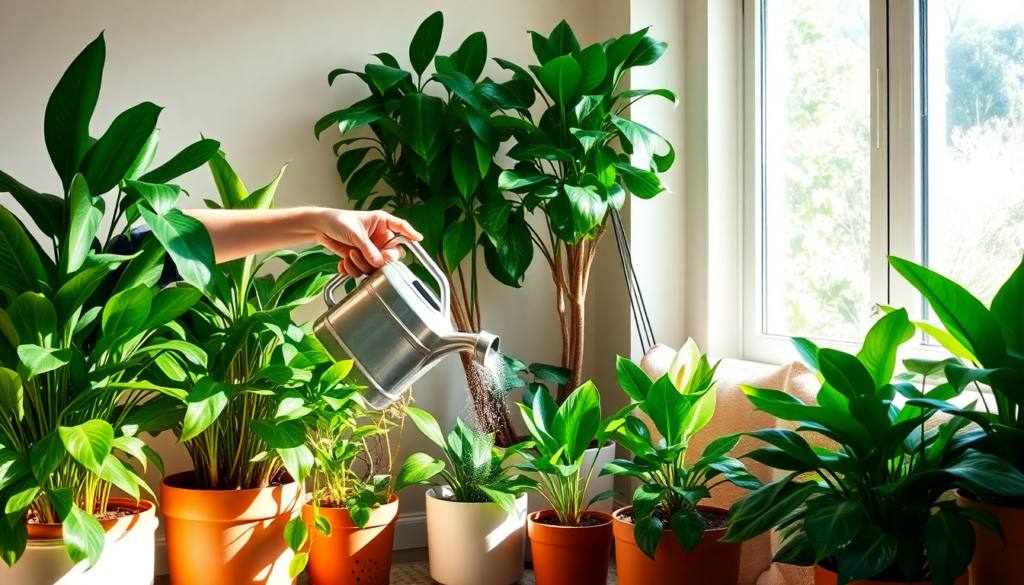
Quick Answer: Water indoor plants deeply only when the top 1 to 2 inches of soil feel dry. There is no universal schedule. Light, pot size, soil, and season change everything. Check with your finger before every watering, soak until water drains from the bottom, and always empty the saucer.
I used to think watering plants was the easiest part of plant care.
You pour water. The plant grows. Simple, right?
That is exactly what I believed when I bought my first few houseplants. I watered them every Sunday without fail. It did not matter if the soil was dry or still damp. Sunday meant watering day.
Within two months, my snake plant turned mushy, my peace lily developed yellow leaves, and my pothos stopped growing completely. I was confused because I thought I was being consistent and responsible.
That is when I realized something important:
Plants do not need a schedule, they need attention.
Learning how to water indoor plants properly completely changed the way I care for them. It is not about more water or less water. It is about timing, soil, light, pot type, and even the kind of water you use.
First, Let’s Simplify the Concept
Watering is not only about giving moisture. It is how nutrients move from the soil to the leaves. It affects root health, oxygen flow, and growth speed. Too much water suffocates roots. Too little dehydrates them. Poor timing creates stress.
When beginners ask me for a watering guide, I tell them something surprising: there is no universal schedule. There are principles. Once you understand those, you will naturally know when your plants need water without guessing.
Let’s break down the real causes of watering mistakes, and how to fix them.
1. Watering on a Fixed Schedule (The Biggest Beginner Mistake)
My Experience
I used to water all my plants every Sunday, no matter what. One winter week, the soil was still damp, but I watered anyway. Within days, leaves started yellowing. That is when I realized fixed schedules do not work.
Signs You’re Over-Scheduling
- Soil still moist when watering again
- Fungus gnats appearing
- Leaves turning soft
Step-by-Step Fix
- Stop calendar-based watering
- Check soil 2 inches deep with your finger
- Water only when the top layer is dry (for most plants)
If you want a concrete example of what a soil-first routine looks like, see our pothos watering schedule. The same finger-test principle applies to almost every houseplant.
2. Shallow Watering Instead of Deep Watering
My Experience
In the beginning, I poured a little water on top, enough to feel done. But the lower roots never received proper moisture. Growth slowed. Deep watering is one of the most important principles of proper plant care.
Signs of Shallow Watering
- Lower soil remains dry
- Weak root development
- Wilting even after watering
Step-by-Step Fix
- Water slowly until it drains from the bottom
- Let excess water drain completely
- Empty the saucer after 10 to 15 minutes
Deep watering must become a habit. A quick splash only wets the top inch and trains roots to stay shallow, where they dry out fastest.
3. Using Pots Without Drainage
My Experience
I once bought a beautiful decorative pot with no drainage hole. Within weeks, the roots began rotting. Proper drainage plays a major role because roots need both moisture and oxygen.
Signs of Poor Drainage
- Sour-smelling soil
- Yellowing leaves
- Mold on the soil surface
Step-by-Step Fix
- Always use pots with drainage holes
- Place a nursery pot inside decorative containers
- Never let plants sit in standing water
4. Ignoring Seasonal Changes
My Experience
My summer routine killed a plant in January. I kept watering on warm-weather rhythm while the plant sat in short days and cool air, barely growing. The soil stayed wet for two weeks straight.
Signs You’re Missing the Season Shift
- Soil stays wet much longer than in summer
- Growth stalls but you keep the same frequency
- Winter yellowing with no other explanation
Step-by-Step Fix
- Cut frequency by roughly half in fall and winter
- Let the soil dry deeper between waterings in cold months
- Resume normal rhythm only when new growth appears in spring
5. Using the Wrong Type of Water
My Experience
My spider plant developed brown leaf tips no matter what I did. The culprit was my tap water. Fluoride and mineral buildup were stressing it. Switching to rested water fixed new growth within a month.
Signs of Water Quality Issues
- Brown, crispy leaf tips (especially spider plants and calatheas)
- White crust on the soil surface
- Slow decline despite correct watering frequency
Step-by-Step Fix
- Let tap water sit uncovered overnight before using it
- Use filtered or rainwater for sensitive plants
- Flush the soil with clean water every few months to wash out salt buildup
Most hardy plants, like pothos and snake plants, tolerate normal tap water fine. It is the sensitive ones that punish you for it.
6. Watering at the Wrong Time of Day
My Experience
I used to water at night after work. Leaves stayed damp for hours in cool air, and I started seeing fungal spots. Moving watering to the morning ended the problem.
Signs of Bad Timing
- Fungal spots on leaves
- Musty smell from the soil surface
- Problems that appear despite a good schedule
Step-by-Step Fix
- Water in the morning so foliage and topsoil dry by evening
- Avoid late-evening watering, especially in humid rooms
- If mornings are impossible, water early afternoon. Never water right before lights-out.
7. Not Adjusting for Plant Type
My Experience
I watered my succulent on the same day as my fern. The fern thrived. The succulent rotted. Same water, same day, yet completely different plants with completely different needs.
Signs You’re Treating All Plants Alike
- Desert plants rotting while tropicals thrive (or vice versa)
- One plant always looks thirsty, another always looks soggy
Step-by-Step Fix
- Group plants by water needs: drought-tolerant, average, and thirsty
- Learn each plant’s native habit. Succulents store water, ferns do not.
- When in doubt, look up the specific plant: our pothos plant care guide shows how different one common plant’s needs are from a cactus
8. Ignoring Soil Type
My Experience
Two identical pothos, same light, same watering, yet one thrived and one struggled. The difference was the soil. One sat in dense peat that stayed soggy. The other sat in a chunky mix that breathed.
Signs of Bad Soil
- Soil stays wet for a week or more
- Water pools on top instead of absorbing
- Soil has shrunk and pulled away from the pot edge
Step-by-Step Fix
- Use a well-draining indoor mix, not garden soil
- Add perlite or orchid bark for plants that hate wet feet
- Repot when soil is compacted, usually every 1 to 2 years
Prevention Strategy
Consistency matters more than perfection. When you build consistent habits, proper watering becomes second nature. Check the soil, water deeply, drain fully, adjust with the seasons. That is the entire system.
Once you understand these principles, most common plant problems become preventable. Yellow leaves, gnats, and rot are usually watering problems wearing different costumes. Our yellow leaves troubleshooting guide walks through each cause when things still go wrong.
How often should I water my indoor plants?
There is no single answer. Most houseplants want water when the top 1 to 2 inches of soil are dry. That is roughly weekly in summer and every 2 to 3 weeks in winter. Always test the soil instead of following a calendar.
Is it better to water indoor plants from the top or bottom?
Both work. Top watering is faster and flushes out fertilizer salts. Bottom watering encourages deep roots and keeps the surface dry, which helps against fungus gnats. Either way, drainage afterward is non-negotiable.
Why do my plants get yellow leaves even when I water regularly?
Regular watering is often the problem, not the solution. Soft yellow leaves usually mean the roots have been wet too long. Check the soil before each watering and let it dry between sessions.
Can I use tap water for indoor plants?
Yes, for most plants. Let it sit overnight to dissipate chlorine. Sensitive plants like spider plants and calatheas do better with filtered water if your tap water is hard or fluoridated.
How do I know if I am overwatering?
Soft, yellowing lower leaves, soil that stays wet for days, fungus gnats, and a sour smell from the pot. When in doubt, wait. Underwatering is almost always the safer mistake.
Final Thoughts
I have overwatered. I have underwatered. I have used the wrong pots and the wrong water. But once I truly understood these principles, everything changed.
You do not need perfection. You need awareness. And when watering stops feeling stressful and starts feeling natural, you will know you have got it right.
Pingback: Pothos Care: The Complete Beginner Guide for Apartments
Pingback: Pothos Leaves Turning Yellow? 9 Causes & How to Fix Them