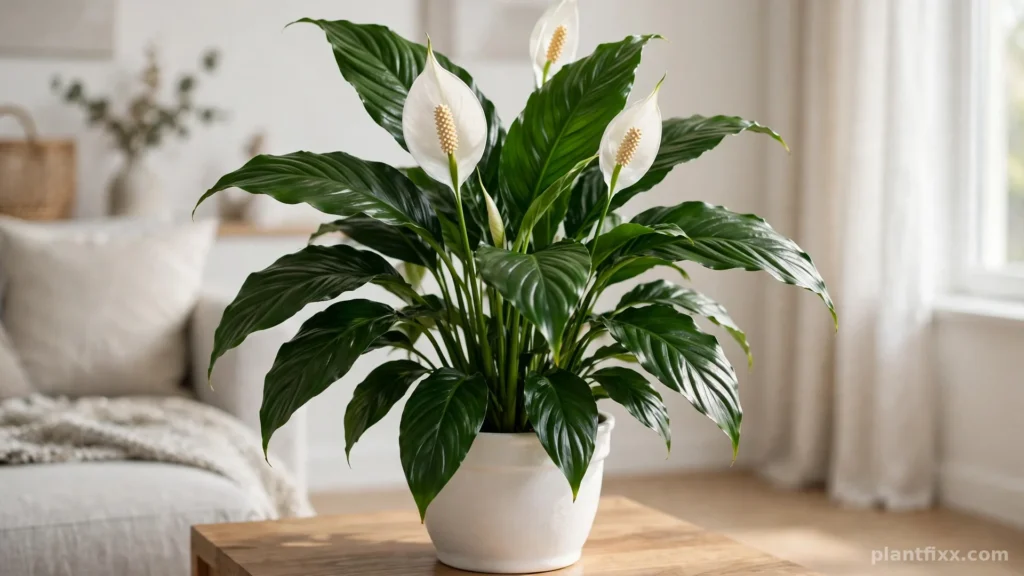
You brought the peace lily plant home for its glossy leaves and calm white blooms. Days later you catch your cat chewing a leaf like it is the best grass in the house. Now you are asking the question every cat owner eventually asks: is peace lily toxic to cats?
The short answer is yes. But toxic covers a wide range. Here is the calm version: what is inside the plant, how it differs from the lilies that can kill a cat, what happens when a cat chews it, and what to do in the first five minutes.
Quick Answer: Yes, a peace lily plant is toxic to cats, though the danger is mild and local. Chewing any part releases needle-like calcium oxalate crystals that sting the mouth, cause drooling and sometimes vomiting. It is not a true lily, so it never damages the kidneys, and most cats recover on their own within a few hours.
Quick Take: Every part of a peace lily plant carries insoluble calcium oxalate crystals: the leaves, the stems, the white spathe and the yellow spadix. The sting is mechanical, not a chemical poison, so the reaction stays in the mouth and gut. A small nibble usually ends with drooling and a skipped meal. Do not induce vomiting. Rinse the mouth, offer water, watch for swelling or repeated vomiting, and call your vet if either appears. Placement is the real fix: a spot your cat cannot physically reach.
After years of keeping peace lilies in a house with two cats, I learned the real risk the slow way: one chewed leaf, one dramatic afternoon of drooling, and a cat that never touched the plant again. Most owners hang the plant high and call it done, while the bookshelf beside it gives the cat a perfect launchpad.
Why a Peace Lily Plant Stings: What Is Actually in the Leaves
A peace lily plant (Spathiphyllum) stores its defense in specialized cells packed with microscopic, needle-shaped calcium oxalate crystals called raphides. When a cat bites into a leaf, those needles fire into the soft tissue of the mouth, tongue and throat. The sting is mechanical, not chemical: the crystals never dissolve into the blood, so nothing is absorbed like a true poison. The damage happens at the point of contact, in the split second of the bite, which is why the reaction stays local and fades. Every part carries the crystals, though cats almost always go for the leaves first, since the long blades look and feel like grass.
How to Tell If Your “Lily” Is Really a Peace Lily Plant
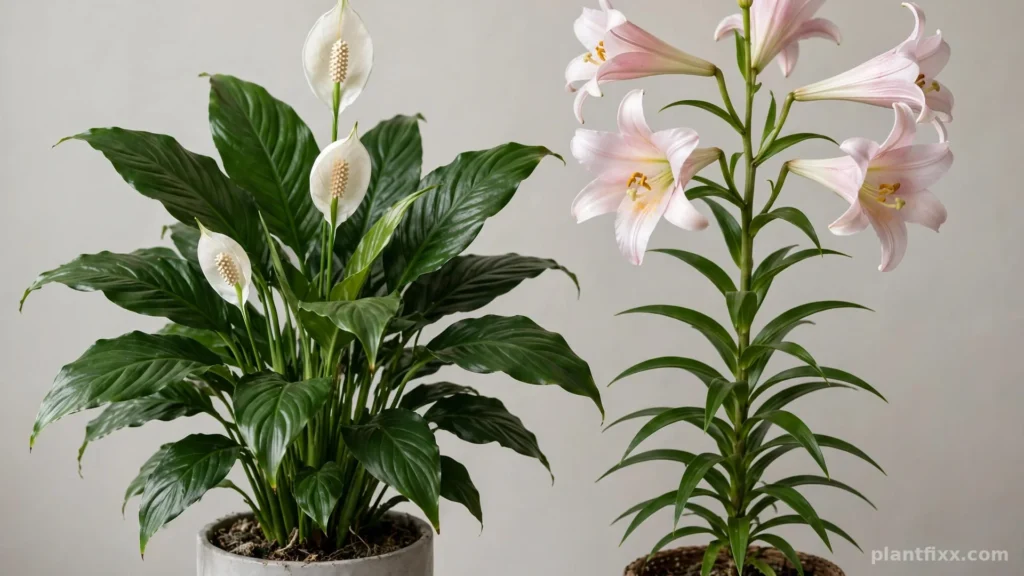
The name peace lily is a marketing name, not a botanical one, and knowing which plant you own decides whether you face a sore mouth or an emergency. A peace lily plant grows broad, dark green oval leaves on long stalks with white hood-like blooms and no woody stem. Its risk is a mouth sting from crystals, never kidney damage.
True lilies (Lilium and Hemerocallis, including Easter lily, tiger lily, daylily and stargazer) look very different: narrow strappy leaves on an upright stem and large showy trumpet or star-shaped flowers, often strongly scented. For cats these are an emergency, since a tiny nibble, a lick of pollen or a lap of vase water can cause fatal kidney failure. Then there are the close cousins with the same sting: dieffenbachia, anthurium, calla lily and philodendron. Same Araceae family, same calcium oxalate crystals, same mouth irritation, never kidney damage. Unsure which plant your cat chewed? Photograph the whole plant, the flowers and the chewed leaf, and send the photos to your vet before you call.
What Happens After a Cat Chews a Peace Lily Plant
The sequence arrives in a predictable order, because the crystals act on contact.
If your cat only took one bite
The sting lands at once: the cat drops the leaf, paws at the mouth and starts drooling. Within minutes comes lip smacking and maybe one bout of retching, then mild mouth soreness and a skipped meal. A cat eating normally by the next morning is a cat in the clear.
If your cat chewed for a while
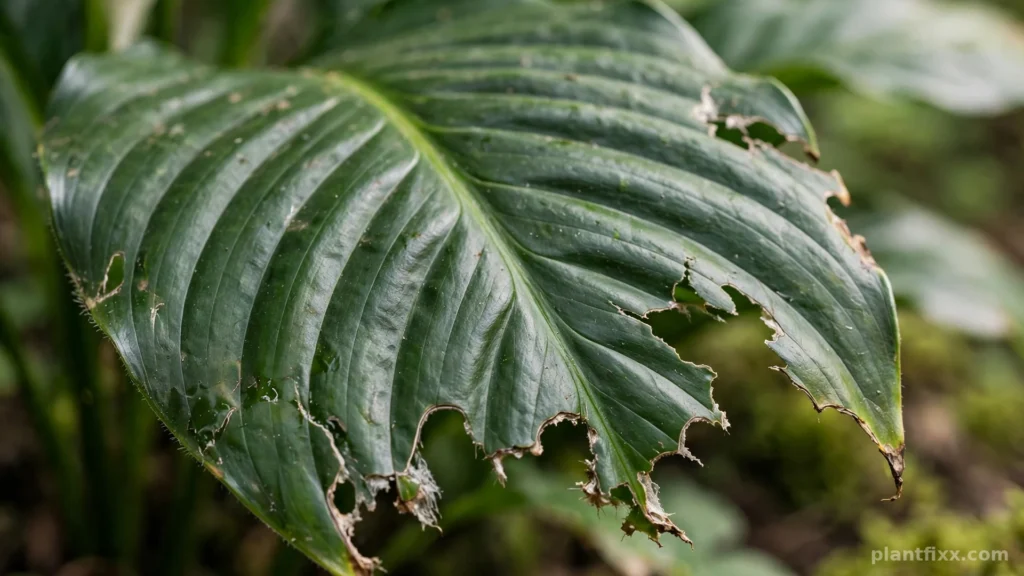
A determined chewer takes in more crystals before the pain stops it: heavier drooling, repeated vomiting, swollen lips or tongue, and a cat that hides and refuses water. This is where home care ends and the vet takes over, since dehydration and throat swelling move faster in small, young or senior cats.
Can a Peace Lily Plant Kill a Cat?
No. Typical exposure is a mild, local irritation that resolves on its own. Peace lily poisoning is painful, not lethal, and fatalities from peace lily alone are not documented. The ASPCA lists the clinical signs as oral irritation, intense burning of the mouth and tongue, drooling, vomiting and difficulty swallowing. (ASPCA)
| Plant | Danger level | Why it matters |
|---|---|---|
| True lilies (cats) | Life-threatening | A tiny nibble or pollen can cause fatal kidney failure |
| Sago palm (cats, dogs) | Life-threatening | Attacks the liver |
| Peace lily plant (cats, dogs) | Mild irritant | Local mouth sting, fades on its own |
The rare exception is significant throat swelling that affects breathing. That is always an emergency, even though it is uncommon. For the same honest breakdown on another common plant, see our snake plant toxicity guide for cats and dogs.
What to Do in the First Five Minutes
Rinse first. Hold off on anything drastic. Watch the clock.
- Clear the mouth. Remove plant pieces still in your cat’s mouth, then rinse the gums, lips and tongue with cool water.
- Soothe the sting. Offer cool water, or a few laps of low-sodium broth.
- Move the plant out of the room so a second chew cannot happen while you watch the first.
- Note the time, roughly how much was chewed, and every symptom. A short log helps if you call the vet.
- Do not induce vomiting unless a vet or poison hotline tells you to. Forcing needle crystals back up rakes the throat a second time.
Save these numbers now: ASPCA Animal Poison Control (888-426-4435) and Pet Poison Helpline (855-764-7661), both staffed around the clock. Go to the emergency vet for difficulty breathing, significant mouth or throat swelling, repeated vomiting, a cat that cannot swallow, or any chance the plant was a true lily. When you call, have the plant’s name (peace lily plant, Spathiphyllum), how much was chewed, and the current symptoms ready.
The Next 24 Hours: What Recovery Looks Like
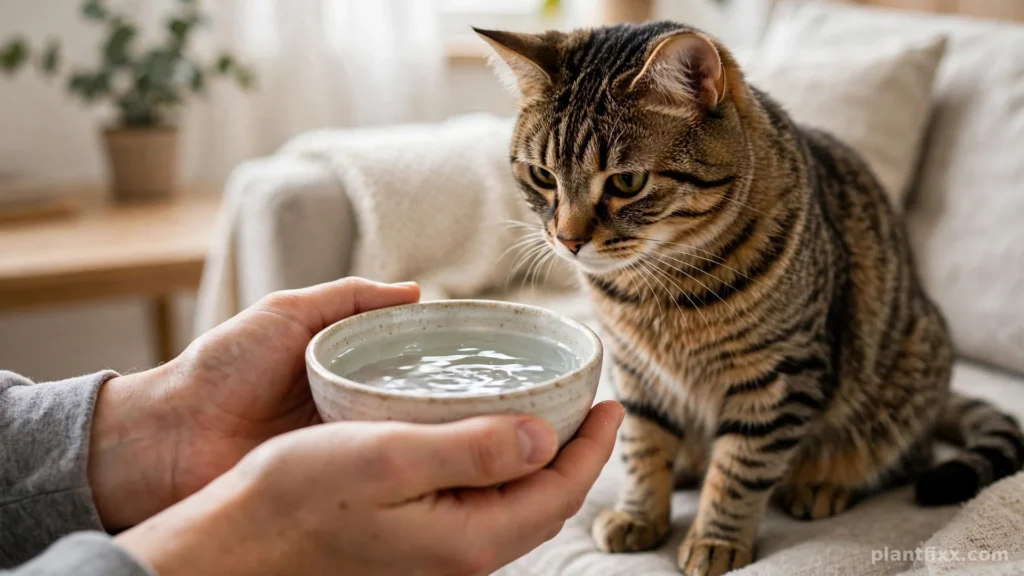
Most cats turn the corner fast. Drooling eases within a few hours, mouth soreness fades overnight, and appetite returns by the next meal. Offer water freely and keep meals small and soft for a day. Normal drinking, normal litter box use, and a cat that plays again are your green flags. If vomiting returns, if the cat still refuses water the next day, or if swelling lingers, call the vet.
How to Keep a Peace Lily Plant in a Home With Cats
You do not need to rehome the plant. Placement beats every gadget, but only if your cat genuinely cannot reach the spot. Cats chew peace lily leaves partly because the long, grass-like blades trigger the same instinct as outdoor grass, and partly out of boredom, so move the plant and give the cat something better to chew.
The surest barrier is a closed door; no cat outwits it. A high shelf works only when no furniture nearby offers a launchpad, and a hanging basket fails the moment a curtain or bookshelf sits within jumping distance. For the chewing instinct, keep a pot of cat grass near your cat’s favorite spot as a safe redirect. Always pick up fallen leaves after pruning. Still unsure about the other plants on your shelves? Run each one through our Pet Safe Plant Checker to see which are safe for cats and dogs and which need the same high-shelf treatment.

Peace Lily Plant Safety for You, Not Just Your Pets
Touching an intact peace lily plant does nothing at all. Trouble starts when sap from a cut leaf meets skin: it can leave a red, itchy irritation, and sap in the eyes stings. Wear gloves when you prune or repot, and wash your hands afterward.
Pet-Safe Swaps That Fill the Same Spot
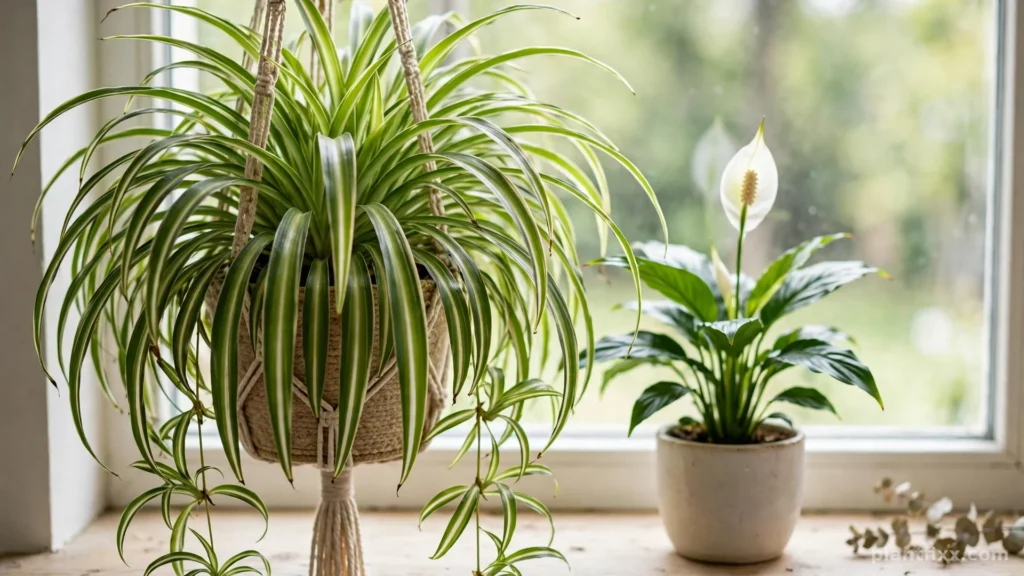
If the worry is simply not worth it in your home, plenty of plants fill a peace lily plant’s role without the toxicity. A spider plant is the easiest starting point: forgiving, arching, and completely non-toxic to cats and dogs. Parlor palm and Boston fern give you the same lush, low-light look with none of the risk.
Frequently Asked Questions
Is a peace lily plant as dangerous as a lily for cats?
No. True lilies can cause fatal kidney failure from a tiny nibble, a speck of pollen or a lap of vase water. A peace lily plant causes a painful but local mouth irritation. Different danger tiers entirely.
Can a peace lily plant kill a cat?
Very unlikely. Typical exposure is a mild mouth irritation that fades within hours. Severe throat swelling is rare but always needs an emergency vet.
Should I get rid of my peace lily plant if I have a cat?
No. The toxicity is a mild, local mouth sting, so placement solves it. Keep the plant where your cat cannot reach it and save the emergency numbers.
Is peace lily pollen or vase water dangerous to cats?
Not like true lily pollen. Peace lily pollen will not cause kidney failure, though licking it can still irritate the mouth.
What do I do first if my cat chews a peace lily plant leaf?
Clear plant pieces from the mouth, rinse with cool water, and offer water to drink. Do not induce vomiting unless a vet or poison hotline says so.
The Calm Takeaway
A peace lily plant earns its toxic label honestly, but the label means a brief mouth sting, not a poison that stalks your cat’s organs. Learn the difference from true lilies, rinse a chewed mouth, keep the hotlines saved, and give the pot a spot your cat cannot reach. Want to audit the rest of your collection? Run every plant on your shelves through the Pet Safe Plant Checker.
<
Pingback: Best Pet Safe Low Light Indoor Plants for Cats and Dogs