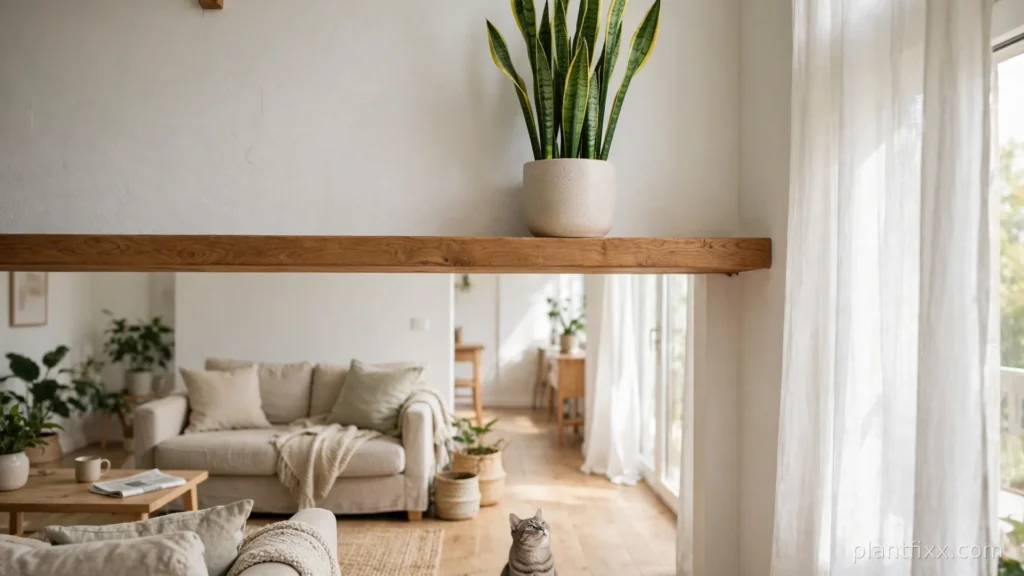
You bring home a snake plant for its stiff leaves and its reputation for surviving neglect. Then your cat bites a low leaf, or your puppy chews the edge, and one search tells you the plant is toxic.
A snake plant is toxic to cats and dogs, but the reaction is usually a short stomach upset, not an emergency. How bad it gets comes down to how much your pet ate, its size, and your response speed.
Quick Answer: Yes, a snake plant is toxic to cats and dogs. The ASPCA lists it as toxic to both species because its saponins irritate the mouth and gut, and the usual result is drooling, vomiting, or diarrhea. Most cases stay mild and clear within a day or two, but you should still remove access and call your vet for guidance.
Quick Take: A snake plant carries saponins, soap-like compounds that irritate the mouth and gut when a pet chews a leaf. Expect drooling, vomiting, or diarrhea within a couple of hours, and most pets recover within a day or two with basic care. Your first moves are simple: take the plant away, check how much was eaten, and call your vet or a poison line for guidance. Do not force vomiting unless a professional tells you to. Long term, height beats every spray or deterrent, and a pet-safe swap works when placement alone is not enough.
What Makes a Snake Plant Toxic to Pets
The ASPCA lists the snake plant (Sansevieria trifasciata, now often sold as Dracaena trifasciata) as toxic to both cats and dogs. The toxic principle is a group of compounds called saponins: natural soap-like chemicals the plant uses as defense against pests and fungi, which irritate the cells lining a pet’s mouth and gut on contact.
That irritation is the whole mechanism behind the symptoms. A pet chews a leaf, the saponins sting the mouth and gut lining, and the body responds with drooling, nausea, vomiting, or diarrhea. Saponins run through all parts of the plant, and every variety carries them, so the differences between snake plant varieties come down to looks and size, not safety.
One mistake many people make is judging the risk by the size of the bite mark. A small chewed edge can still bring vomiting in a kitten, while a large dog can mouth a leaf tip and show nothing worse than drool. Kittens, puppies, and bored dogs push past the bitter first taste.
Symptoms in Cats and Dogs
The signs look the same in both species, and almost all involve the gut. Symptoms usually show within a couple of hours.
| Symptom | In cats | In dogs |
|---|---|---|
| Drooling | Common and often the first sign | Common, with lip smacking |
| Vomiting | Common, sometimes repeated | Common, sometimes repeated |
| Diarrhea or loose stool | Common | Common |
| Nausea and loss of appetite | Refuses food, sits quietly | Refuses food, turns from treats |
| Lethargy | Hides or sleeps more than usual | Lies down, low interest in play |
| Mouth irritation | Pawing at the mouth, lip swelling in rare cases | Pawing at the mouth, lip swelling in rare cases |
Cats often show drooling and vomiting first, while dogs often add diarrhea. Small pets feel a nibble more than large ones do, so a kitten that chewed a leaf tip deserves a vet call sooner than a large adult dog.
How Much Is Dangerous?
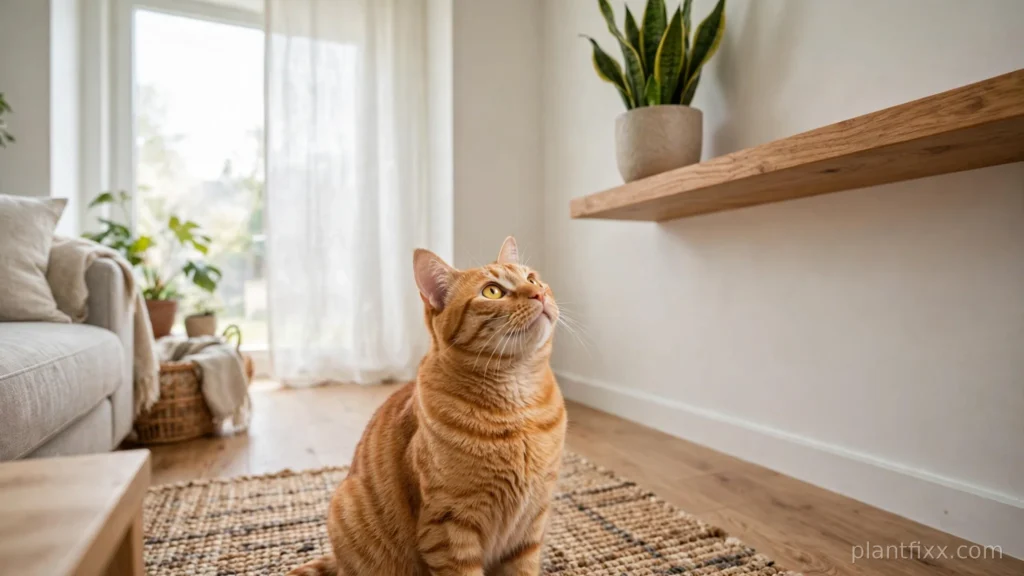
There is no published toxic dose for snake plant saponins in cats or dogs. Vets judge each case by how much the pet swallowed, the size of the pet, and the pet’s sensitivity. A lick rarely causes more than brief drooling. A chewed leaf tip can bring vomiting and diarrhea. A large amount, or any amount eaten by a kitten, puppy, toy breed, or pet with a health problem, warrants a prompt vet call.
The bitter taste and tough leaf turn many pets away after one bite, and a big mouthful is rare. Do not treat that bitterness as protection. Plenty of pets chew anyway out of boredom, teething, or habit.
What to Do If Your Cat or Dog Eats a Snake Plant
Split the job in two: your half at home, and the vet’s half at the clinic.
- Take the plant away and move the pet to another room.
- Check the mouth gently and remove any stuck leaf pieces.
- Note how much was chewed. Save a leaf piece or photo for the vet.
- Offer fresh water.
- Call your vet, the ASPCA Animal Poison Control Center at (888) 426-4435, or the Pet Poison Helpline at (855) 764-7661, and describe what happened. A consultation fee may apply.
Do not force vomiting, and do not give milk, oil, or home remedies unless a professional tells you to.
At the clinic, the vet decides based on timing and symptoms. If the pet arrives soon after eating, the vet may induce vomiting or give activated charcoal, then fluids and supportive care. A lick or a single mouthing rarely needs any of that.
When to Call the Vet Right Away
Call at once if you see any of these red flags:
- Repeated vomiting, or vomit or stool with blood in it
- Refusal to drink water, or signs of dehydration
- Lethargy that deepens instead of lifting
- Swelling of the mouth, lips, or tongue
- Trouble breathing
- Symptoms that last past 12 to 24 hours or keep getting worse
- A kitten, a puppy, a very small pet, or a pet with an existing health problem
- A large amount eaten, or you are unsure how much was eaten
While you wait, keep watching behavior, appetite, water intake, energy, and stool. A pet that keeps drinking, stays alert, and passes one normal stool is usually on the way back.
Signs Your Pet Is Recovering
Recovery has a clear pattern. Drooling stops first, then vomiting stops, then appetite returns. Water intake, stool, and energy return to normal. Most pets follow this path within a day or two. If symptoms stall or return, call the vet again and say exactly what changed.
How to Keep a Snake Plant in a Home With Pets
You do not have to give up the plant. You have to remove access, and the methods rank clearly from most to least reliable.
- Height first: a tall shelf, a mantel, or a hanging planter above the cat’s jump line and the dog’s reach. This is the one method that works alone.
- A pet-free room the animal cannot enter, with the door kept closed.
- A sturdy plant stand where pets cannot knock it over. A mature snake plant in a heavy pot can hurt a pet if it topples.
- Pebble top-dressing over the soil to stop dogs that dig in pots.
- Bitter sprays or citrus peel at the base. These rank last, since some pets ignore them and sprays wear off.
Training helps, but it is a backup, not a defense. A pet that behaves while you watch may still chew when the house is empty.
Check the rest of the room too. Pothos carries its own irritants, covered in our guide on whether a pothos plant is toxic to cats and dogs. Our picks for the best snake plant for bedroom still apply: keep it out of paw reach there too.
Pet-Safe Alternatives That Look Like a Snake Plant
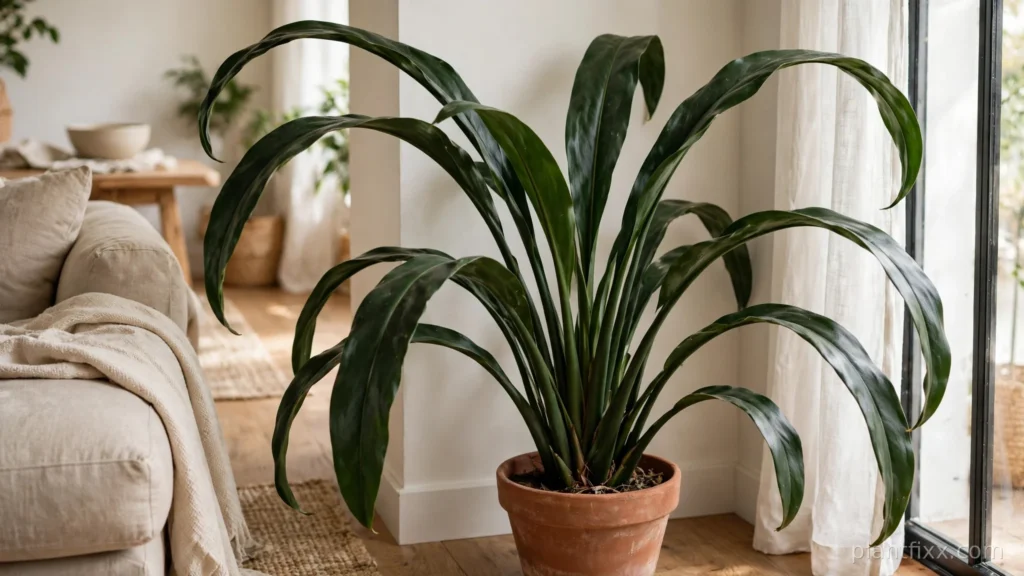
If placement alone does not feel safe enough, swap the plant for a lookalike. Match the trait you loved most:
- Loved the tall, upright sword leaves? The cast iron plant is the closest match: upright, tough in low light, non-toxic.
- Loved the striped, upright foliage? A spider plant reads the same way in a pot and is pet-safe.
- Wanted a lush, low-light floor plant? A parlor palm fills the corner, non-toxic.
- Wanted a sculptural shape that needs little water? A ponytail palm is soft, slow, and non-toxic.
Re-check any pick against the ASPCA non-toxic plant list before you buy.
FAQs
Can I keep a snake plant if I have a cat?
Yes, if the plant sits fully out of reach: a high shelf, a hanging planter, or a room the cat cannot enter.
What happens if my dog eats a snake plant leaf?
Expect drooling, vomiting, and diarrhea within a couple of hours. Most dogs recover within a day or two. Call your vet if vomiting repeats or the dog refuses water.
Will a snake plant kill my cat or dog?
A typical nibble is not fatal. It causes a short stomach upset that clears with basic care. Large amounts, very small pets, or pets with health problems still need prompt vet care. True lilies, sago palm, and oleander are far more dangerous.
How long do snake plant poisoning symptoms last?
Most pets show signs within a couple of hours and recover within a day or two. Symptoms past 24 hours, or getting worse, need a vet visit.
Should I make my pet vomit after eating a snake plant?
No. Do not force vomiting unless a vet or poison control professional tells you to. It can cause more harm than the leaf itself.
Is a snake plant toxic to humans too?
Yes, mildly. The same saponins irritate a person’s mouth and gut, so a chewed leaf can bring a stomach ache. Keep the plant away from toddlers, and call US Poison Control at 1-800-222-1222 if a child swallows a piece.
Are all snake plant varieties toxic?
Yes. Every snake plant variety carries the same saponins, so no cultivar is the safe one. Variety changes the look, not the risk.
A Calm Way to Handle It
A snake plant is toxic to cats and dogs, and that fact deserves respect, not panic. The saponins irritate the mouth and gut, and the upset clears within a day or two in most cases. Your job is the part you control: remove access, watch the symptoms, call the vet when the signs say so, and place the plant out of paw reach.
If you want to keep the plant healthy too, read our snake plant care guide for watering, light, and repotting.
Pingback: Snake Plant Care Guide: Water, Light & Mistakes to Avoid
Pingback: 9 Snake Plant Varieties for Apartments (2026)