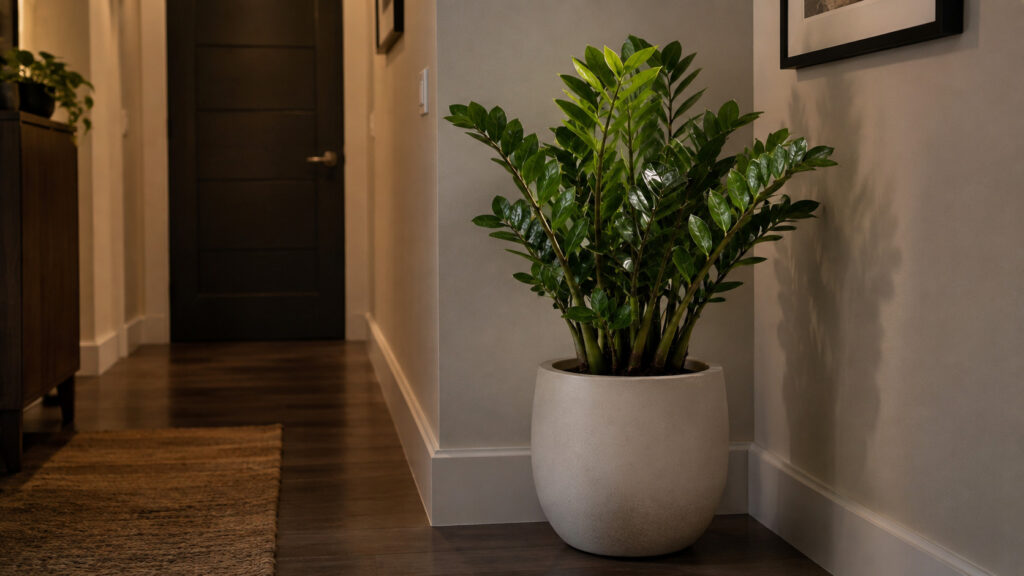
The best low-light spots for ZZ plant placement are not the same in every room, since bathroom low light, hallway low light, and bedroom low light all behave differently even though they share the same general label. Matching the room to the plant’s habits, rather than placing it anywhere labeled dim, gets you a fuller, healthier plant.
This guide goes room by room through the apartment spots where a ZZ plant genuinely performs, along with the specific reason each one works and what to watch for in that particular spot.
Every recommendation here assumes a standard apartment with limited natural light, whether that means a north-facing unit, an interior room, or a space with no direct window view at all.
Quick Answer
The best low-light spots for a ZZ plant in an apartment are hallways, interior corners away from windows, bathrooms with some ambient light, and desks or shelves set back from a north-facing window. It tolerates these dim conditions better than almost any other houseplant, though growth stays slower than it would in brighter light.
Quick Take
A ZZ plant’s tolerance for low light comes from its underground rhizomes, which store enough water and energy for the plant to coast through dim conditions that would stall most other houseplants. This makes it one of the only plants genuinely suited to hallways and interior rooms that receive no direct window light at all, not just rooms with a dim but present window. Growth slows considerably in these spots, but the plant holds its shape and glossy appearance for years rather than declining.
One mistake many apartment owners make is assuming any dark corner works equally well for a ZZ plant, when rooms with zero ambient light, such as a closet or a windowless interior space with no daylight reaching it at all, still fall outside what even this plant can tolerate long term.
Hallways
Hallways are often the darkest usable space in an apartment, since their only light usually comes secondhand through doorways or from adjacent rooms rather than a window of their own. A ZZ plant is one of the few houseplants that genuinely performs here, since it does not need a direct light source the way most plants do.
Place it in a spot with floor clearance where residual light from nearby rooms still reaches it during the day, rather than a fully enclosed dead-end corner with no light path at all.
Interior Corners Away From Windows
A corner several feet back from the nearest window, common in studio apartments and open-concept layouts, works well for a standard-size ZZ plant. The plant’s upright, architectural form fills vertical space without needing the floor footprint a bushier plant would require.
Rotate the pot a quarter turn every few weeks in this kind of spot, since a plant positioned well away from its light source leans gradually toward whatever ambient light does reach it if left in one position too long.
Bathrooms With Some Ambient Light
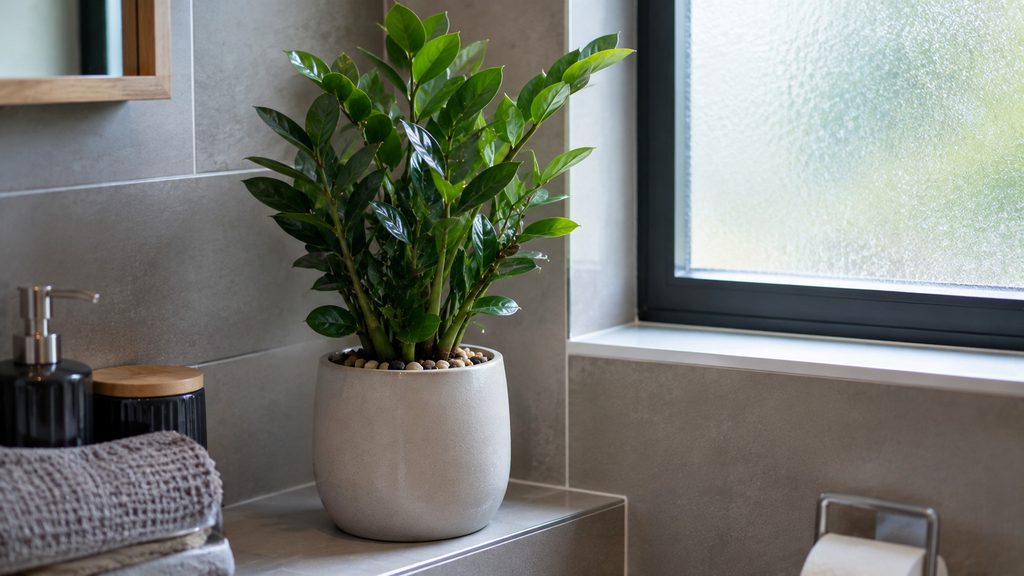
A bathroom with a small or frosted window, or one lit mainly by overhead lighting, suits a ZZ plant surprisingly well. The humidity swings from regular showers do not bother this plant the way they might a drought-focused succulent, as long as the room gets at least some daily ambient light beyond a single small light fixture.
Avoid a fully windowless bathroom lit only by a light left on briefly during use, since that falls short of the consistent daily light the plant needs even at its most tolerant.
Bedrooms Away From the Main Window
A bedroom corner or a spot beside a dresser or wardrobe, away from the primary window, works well for a standard ZZ plant as a floor plant. Its structural presence adds visual interest without demanding the bright light most bedroom floor plants need to stay healthy.
This placement suits the plant’s slower, steadier growth pattern well, since a bedroom is typically a space people want to feel calm and settled rather than fast-changing.
Desks and Shelves Near North-Facing Windows
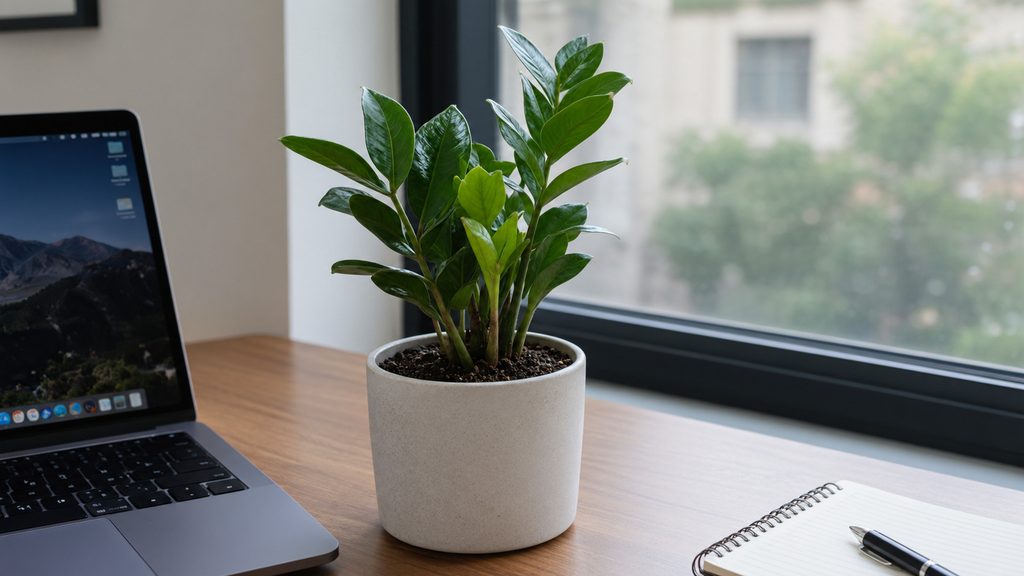
A desk or shelf positioned near, though not directly against, a north-facing window gives a compact variety like ZZ Zenzi enough light to stay proportional and healthy in a home office or workspace. North-facing light stays soft and consistent throughout the day without the direct-sun risk that comes with other window directions.
This spot works particularly well in apartments where the north-facing room is also the one used for work, since the plant requires so little ongoing attention.
Best Low-Light Spots at a Glance
| Room/Spot | Light Source | Best Variety Size |
|---|---|---|
| Hallway | Secondhand light from nearby rooms | Standard or Zenzi |
| Interior corner | Ambient room light, no direct window | Standard |
| Bathroom | Small/frosted window or overhead light | Standard or Zenzi |
| Bedroom corner | Away from main window | Standard |
| Desk/shelf near north window | Soft, consistent north light | Zenzi |
Spots to Avoid Even for a ZZ Plant
A fully enclosed closet, a windowless storage nook, or any space with zero daily light reaching it falls outside what even a ZZ plant tolerates long term. Low light still means some usable daily brightness, not the complete absence of it.
If your apartment genuinely has no spot meeting this minimum, a full-spectrum LED grow light running 10 to 12 hours a day closes the gap in any of the rooms listed above. For the full watering adjustment that comes with placing your plant in a dimmer spot, see the how often to water ZZ plant guide.
FAQs
Can a ZZ plant survive in a windowless bathroom?
Only if the bathroom has consistent daily ambient light from overhead fixtures used regularly. A bathroom with no window and minimal lighting use falls short of what the plant needs long term.
Which ZZ plant variety is best for a small apartment desk?
ZZ Zenzi, the compact dwarf variety, stays proportional to a desk or shelf at 12 to 18 inches tall, making it a better fit than the standard-size plant in tight spaces.
Will a ZZ plant in a hallway ever grow new stems?
Yes, though growth will be noticeably slower than in brighter rooms. A hallway with reliable secondhand light from adjacent rooms still supports occasional new growth over time.
Is a north-facing window considered low light for a ZZ plant?
A north-facing window provides soft, consistent light that falls on the lower end of what this plant prefers, but it still counts as usable light rather than true low light, especially compared to an interior room with no window at all.
How do I know if a spot in my apartment is too dark even for a ZZ plant?
If you cannot comfortably read a book in that spot during the day without additional lighting, it likely falls below what the plant can sustain long term without a grow light.
Do all ZZ plant spots need the same watering frequency?
No, darker spots dry out more slowly and need water less often than spots closer to a window. Adjust your watering interval based on the specific placement rather than a single fixed schedule.
Conclusion
The best low-light spots for ZZ plant placement in an apartment come down to matching the room’s actual light source, whether that is secondhand hallway light, a small bathroom window, or soft north-facing daylight, rather than treating every dim corner as interchangeable. Choose the spot that fits your layout, adjust watering to match the lower light, and expect slower but steady growth in exchange for a plant that thrives where almost nothing else will.
Pingback: ZZ Plant for Office: Does It Survive Fluorescent Light?
Pingback: How Big Do ZZ Plants Get? Mature Height & Growth (2026)