
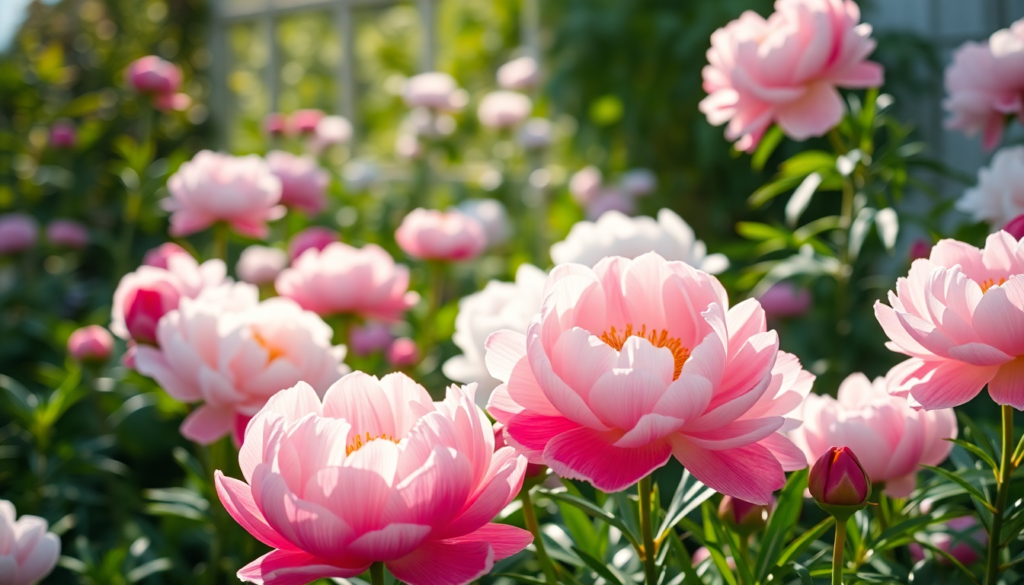
Peonies are one of those rare plants that feel both nostalgic and luxurious at the same time. Their full, romantic blooms look straight out of a cottage garden, yet they’re tough, cold-hardy, and surprisingly low maintenance once established.
If you’ve been searching for a peony planting guide that actually walks you through how to plant peonies, care for them year-round, and avoid common mistakes, you’re in the right place.
Why Peonies Are Worth the Wait
Peonies are perennials, meaning they come back every year, often for decades. Some established plants have been known to thrive for 50+ years with minimal intervention.
They offer:
- Massive, fragrant blooms
- Long lifespan
- Cold hardiness (Zones 3–8)
- Low maintenance once established
- Excellent cut flowers
But here’s the catch: peonies don’t like to be rushed or moved often. That’s why understanding proper planting and long-term care is essential.
Peony Planting Guide: Step-by-Step for Strong Roots
This peony planting guide covers exactly how to plant peonies the right way from day one.
1. Choose the Right Location
Peonies need:
- 6–8 hours of full sun
- Well-draining soil
- Good air circulation
- Space to grow (3–4 feet wide)
Avoid planting too close to walls or dense shrubs. In small yards, give them their own dedicated space instead of crowding them into tight foundation beds.
Pro Tip: Morning sun is especially important in humid US regions, it helps dry foliage and prevent disease.
2. Prepare the Soil Properly
Peonies hate soggy roots.
Improve soil by mixing:
- Compost
- A small amount of aged manure
- Loamy garden soil
Ideal pH: 6.5–7.0
If you’re planting in heavy clay, amend generously. Raised beds are a smart option for small homes with drainage issues.
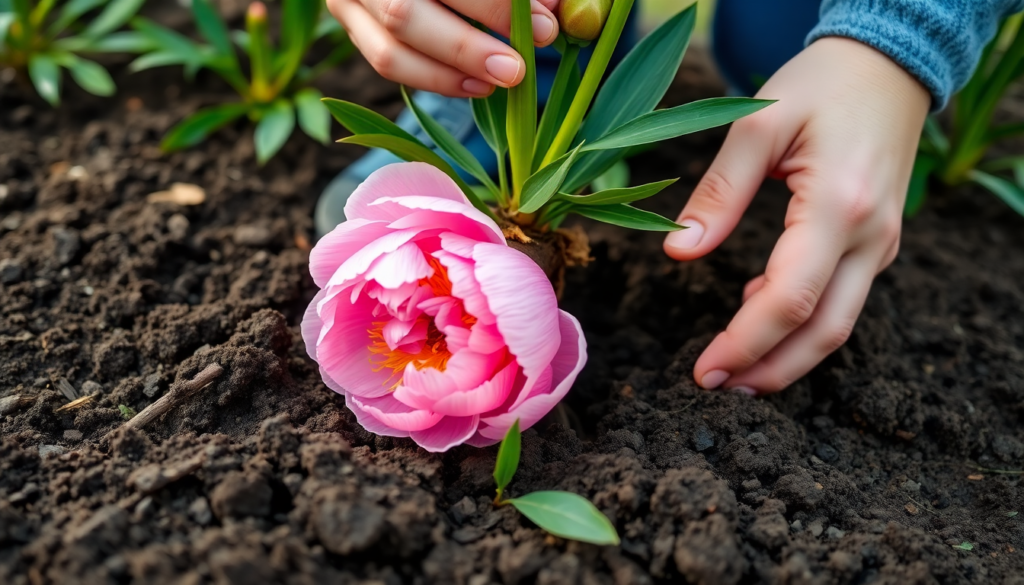
3. How to Plant Peonies Correctly
This is where most gardeners go wrong.
When learning how to plant peonies, depth matters more than anything else.
- Place the root so the “eyes” (small pink buds) face upward.
- Cover with only 1–2 inches of soil.
- Do not plant deeper than 2 inches.
Planting too deep is the #1 reason peonies don’t bloom.
Water thoroughly after planting, but don’t drown the soil.
Peony Sprout Stages: What to Expect
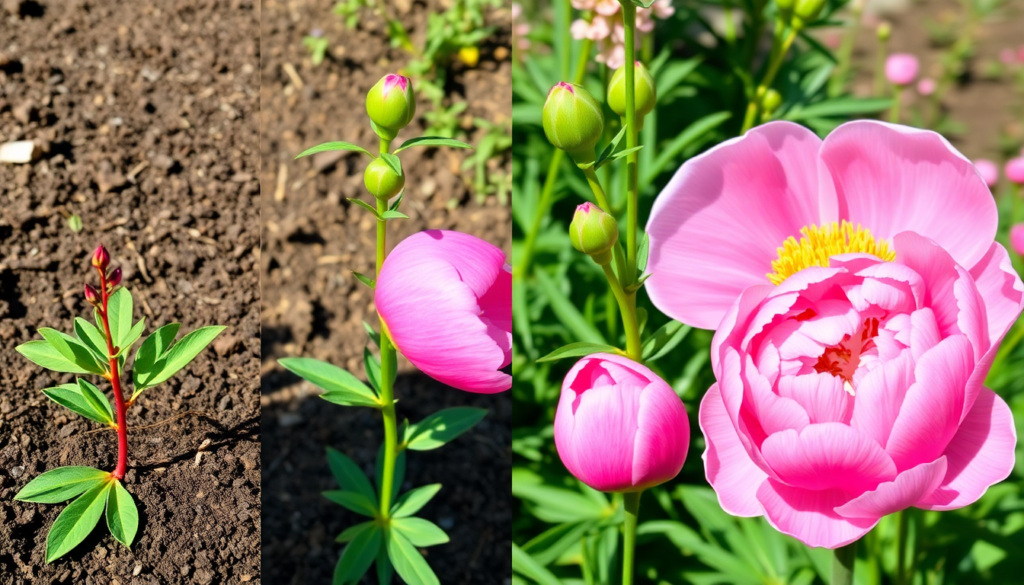
Understanding peony sprout stages helps you avoid unnecessary worry.
- Early Spring: Red or pink shoots emerge from soil.
- Mid-Spring: Stems elongate, leaves unfurl.
- Bud Stage: Tight green balls form.
- Bloom Stage: Flowers open over 7–10 days.
- Post-Bloom: Foliage remains lush through summer.
Don’t cut back foliage early, it’s feeding next year’s blooms.
Peony Pruning and Deadheading: When and How
Proper peony pruning and deadheading keeps plants tidy and healthy.
Deadheading After Bloom
- Snip spent flowers just above the first full leaf.
- Prevents seed production.
- Redirects energy into root growth.
Fall Pruning
In late fall:
- Cut herbaceous peonies to ground level.
- Remove and discard foliage (don’t compost if diseased).
- Clean area to prevent fungal problems.
Tree peonies should NOT be cut to the ground, only prune dead wood.
Peony Staking and Support for Heavy Blooms
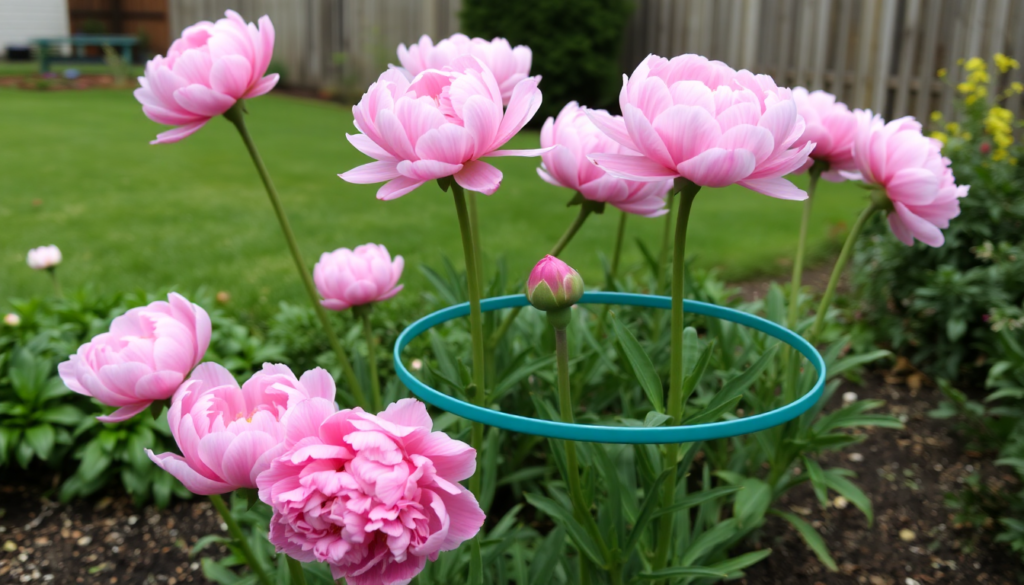
Large blooms + rain = drooping stems.
That’s why peony staking and support is essential.
Options:
- Metal peony rings
- Grid-style supports
- Bamboo stakes (budget-friendly)
- Decorative plant cages
Install supports early in spring before stems get tall.
In small gardens, choose green supports that visually disappear.
Common Peony Diseases and How to Prevent Them
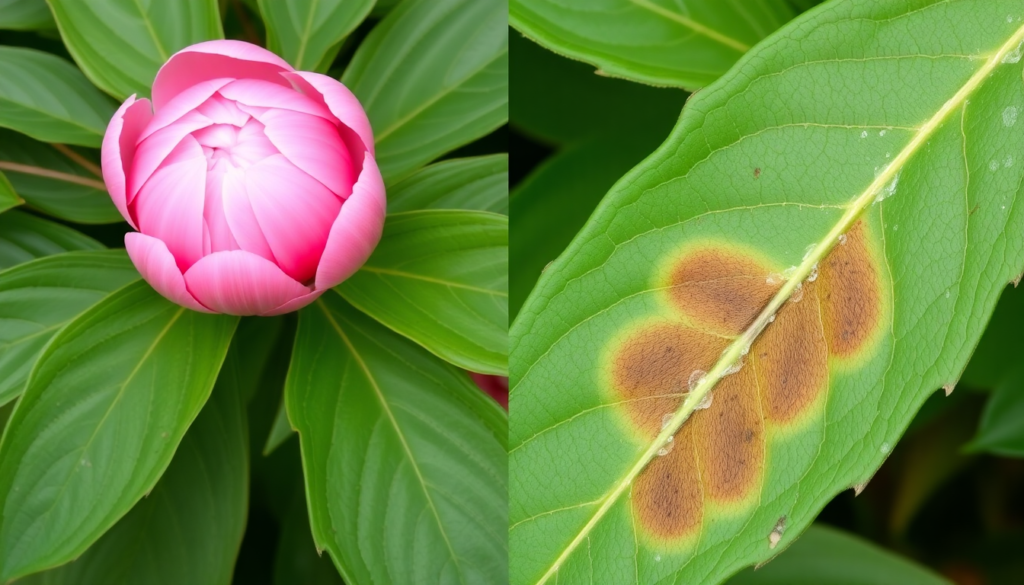
Knowing common peony diseases helps you act fast.
1. Botrytis Blight
- Blackened buds
- Rotting stems
Fix: Improve air circulation, remove affected parts.
2. Powdery Mildew
- White coating on leaves
Fix: Increase sun exposure and spacing.
3. Leaf Spot
- Brown or purple spots
Fix: Clean up debris in fall.
Preventative steps:
- Avoid overhead watering.
- Space plants properly.
- Clean tools between plants.
Winter Care for Peonies
Peonies love cold winters, it actually helps them bloom better.
Winter Care for Peonies Includes:
- Cut back herbaceous types in fall.
- Apply light mulch after ground freezes.
- Remove mulch early spring.
Do not heavily mulch crowns, this can prevent blooming.
In warmer US zones (7–8), ensure they receive adequate winter chill.
Dividing Peony Plants (When & How)
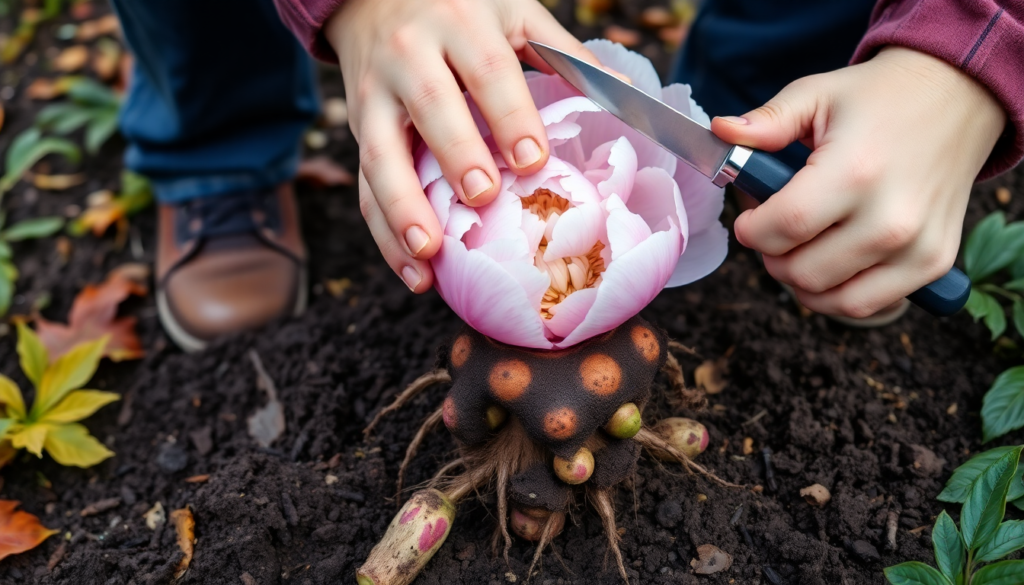
Dividing peony plants isn’t required often. Only divide if:
- Blooms decline
- Plant is overcrowded
- You want to propagate
Best time: Early fall.
Steps:
- Dig carefully around root ball.
- Lift and rinse soil off.
- Cut sections with 3–5 eyes each.
- Replant following this peony planting guide depth rules.
Small-Space Styling Tips for Peonies
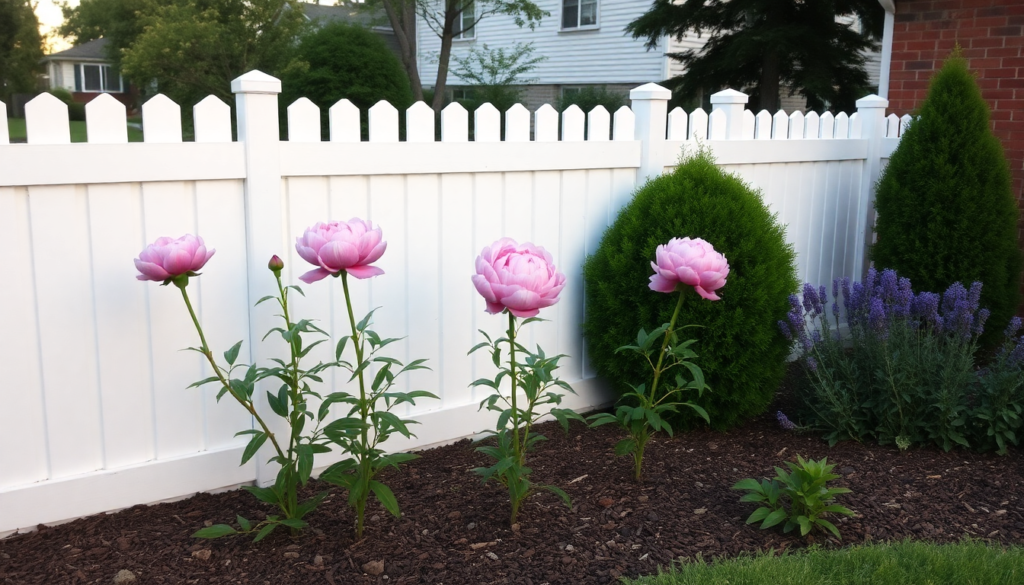
Even renters can grow peonies if space allows outdoor planting.
Ideas:
- Plant along fence lines.
- Create a 3-plant symmetrical border.
- Pair with boxwoods for structure.
- Add lavender for contrast.
For small yards, limit to 1–3 plants for a curated look.
Peonies don’t thrive in containers long term, so avoid pots unless temporary.
Buying Guide: Choosing the Right Peonies
When shopping, you’ll find:
- Bare-root peonies (best value)
- Potted nursery plants (faster results)
- Herbaceous vs tree vs Itoh hybrids
What to Look For
- Firm roots
- 3–5 visible eyes
- No mold
- Reputable nursery
Who Should Buy Peonies?
- Homeowners wanting long-term landscape investment
- Cottage garden lovers
- Cut flower enthusiasts
If you move frequently, peonies may not be ideal since they dislike transplanting.
Expert Insight
As a landscape-focused gardener working with small suburban properties, I’ve seen homeowners give up on peonies too early. The biggest mistake? Planting too deep or overwatering in the first year. Once established correctly, peonies often outperform trendier perennials in longevity, resilience, and bloom size.
Patience in year one pays off for decades.
Conclusion: Start with the Right Peony Planting Guide
Growing peonies isn’t complicated, but it does require doing things right from the start.
This peony planting guide shows you exactly how to plant peonies, support them properly, manage common peony diseases, handle peony pruning and deadheading, and provide proper winter care for peonies.
If you plant them at the correct depth, give them sun, and avoid overwatering, they’ll reward you with breathtaking blooms year after year.
Ready to add timeless beauty to your yard? Start this fall—and let your peonies grow into a legacy plant.