Empty walls in small apartments often make spaces feel unfinished. Installing an indoor plant wall not only adds greenery but also maximizes vertical space, creating a cozy and inviting atmosphere.
From my experience styling compact US apartments, vertical greenery is one of the best ways to make a room feel curated without taking up valuable floor area. With shelves, hooks, or ladder systems, even renters can achieve a lush plant wall.
This guide covers practical indoor plant wall ideas, styling tips, renter-friendly solutions, and advice that most blogs skip.
Why Indoor Plant Walls Work in Small Spaces
Vertical plant walls draw the eye upward, making ceilings feel taller and rooms feel more open. In my first apartment, I added a simple row of floating shelves with a few trailing plants, and the space immediately felt more layered and welcoming.
This approach also reduces clutter because you don’t need to spread plants across tables or counters. Even a small wall section can transform a room if plants are layered with varying heights and textures.
Tip: Mix trailing and upright plants like pothos and snake plants for depth. Using consistent pot colors keeps the wall from looking chaotic.
1. Floating Plant Wall Shelves
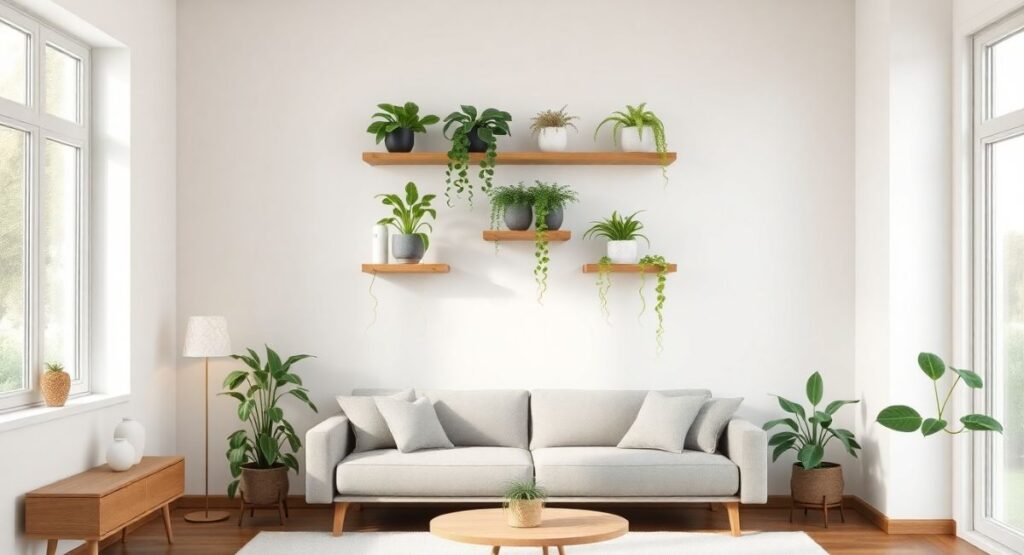
Floating shelves are a simple and renter-friendly way to create a vertical plant wall. When I first installed them in my 700 sq ft apartment, the wall went from blank to eye-catching instantly.
I placed trailing pothos on the top shelves and more structured snake plants on lower shelves.
The key is spacing. Leave enough room between plants so they don’t feel crowded, and vary the textures to keep it visually interesting. Lightweight shelves with proper anchors are essential to avoid wall damage.
Over time, I noticed that these vertical lines made the room feel taller and more organized. This method is low-commitment, easy to rearrange, and adds instant greenery.
2. Ladder Shelf Plant Wall
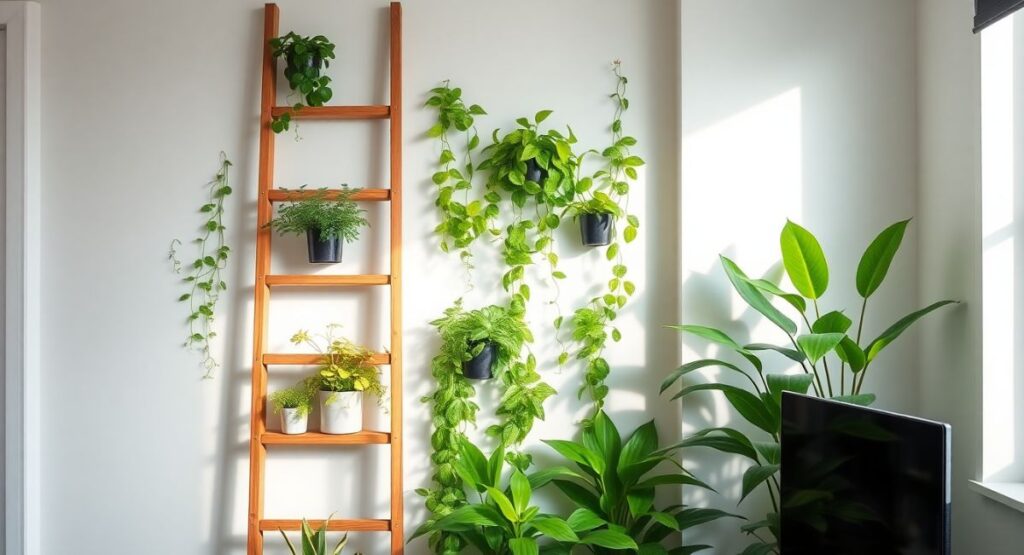
Ladder shelves are perfect for renters who don’t want to drill holes. I set up a ladder shelf in a corner, arranging trailing plants on the top rungs and small upright plants on lower rungs. The result was a layered green corner that added height without taking floor space.
One tip I learned is to rotate plants every few weeks to ensure even sunlight exposure. Ladder shelves also let you mix in decorative items like candles or small sculptures, which creates a curated, personal look. This approach is flexible, affordable, and adds visual interest to an otherwise empty corner.
3. Grid Panel Plant Wall DIY
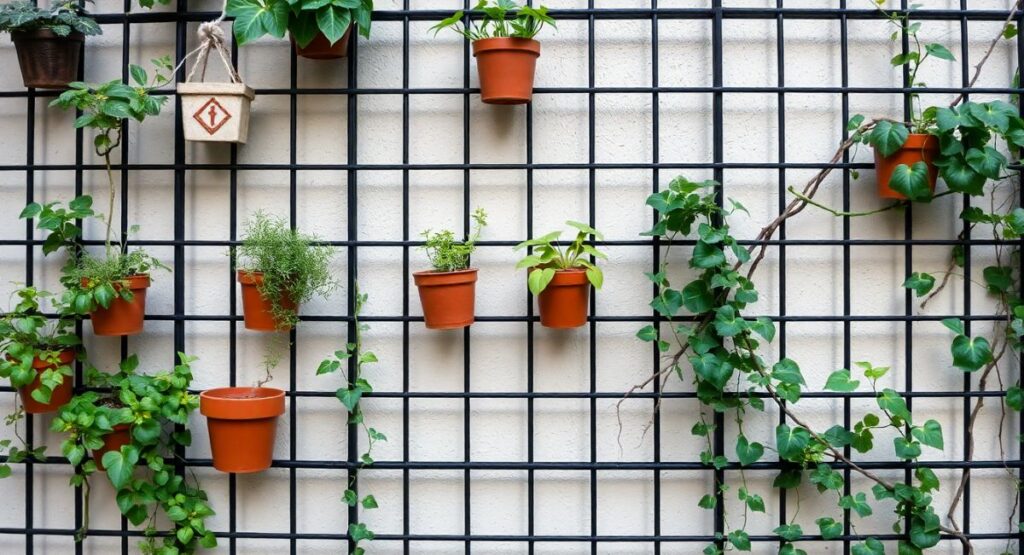
Grid panels are an affordable DIY option. I installed a metal grid in my living room and used S-hooks to hang small pots. The setup was fully adjustable, allowing me to move plants around or swap in seasonal favorites.
I also added clip-on LED lights for extra brightness in the corner. Lightweight pots are a must to prevent bending or sagging. This approach creates a modern, flexible indoor plant wall that can grow with your plant collection.
4. Plant Wall with Grow Lights
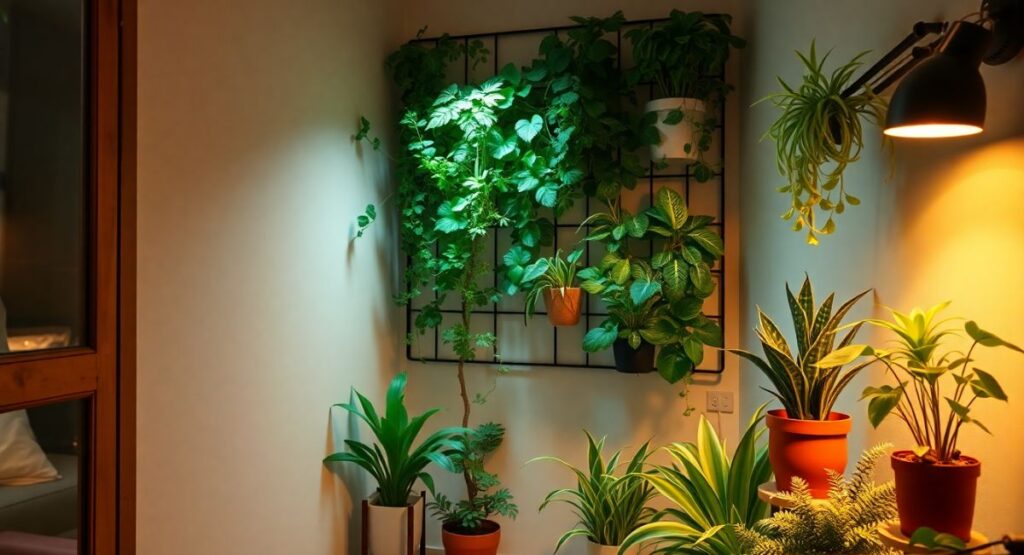
Not all apartments have bright windows. Using grow lights ensures your plants thrive even in low-light areas. I added LED strips behind my floating shelves, and plants like pothos and philodendron doubled their growth compared to shaded corners.
Tip: Keep lights 6–12 inches above the foliage and run them 8–10 hours daily. This creates lush greenery without risking heat damage. Grow lights are especially useful for renters who cannot rearrange furniture for more sunlight.
5. Corner Wrap Plant Wall
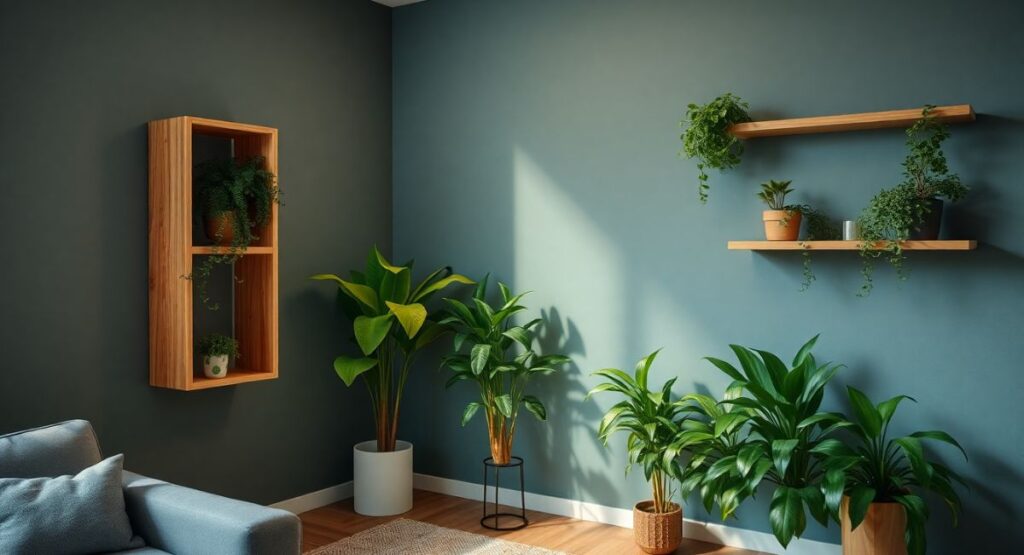
Corners often go unused, but they’re perfect for vertical plant walls. I set up a wraparound shelf in my apartment, placing trailing vines along both walls. The effect was immersive and made the small living room feel lush and cozy.
Hooks can help guide vines neatly along walls for a polished look. Even just one corner shelf with a few plants can turn a dull wall into a living focal point.
6. Plant Wallpaper with Real Plants
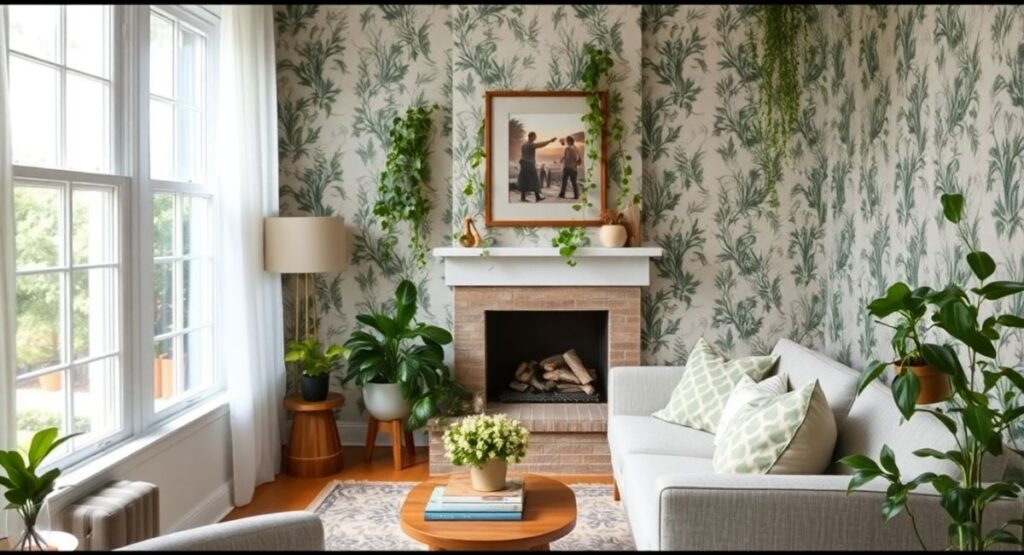
Pairing peel-and-stick plant wallpaper with real greenery creates instant depth without overcrowding. I tried this in my studio apartment and loved how much visual impact it gave without needing many live plants.
Tip: Combine faux and real plants for different textures. It’s also renter-friendly since wallpaper can be removed when moving out.
7. Vertical Rail Shelves
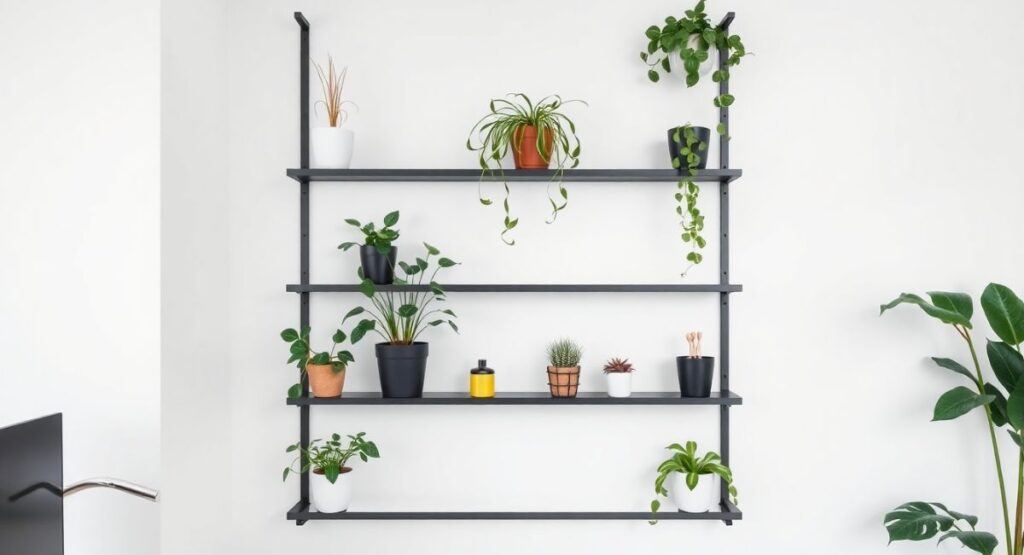
Vertical rail systems allow you to adjust shelf height and spacing. I installed one in my living room and could shift plants seasonally or as the collection grew.
Lightweight pots are crucial to prevent sagging, and arranging plants by height creates a natural layered look. Vertical rails are a flexible solution for renters wanting a semi-permanent display.
8. Hanging Wall Planters
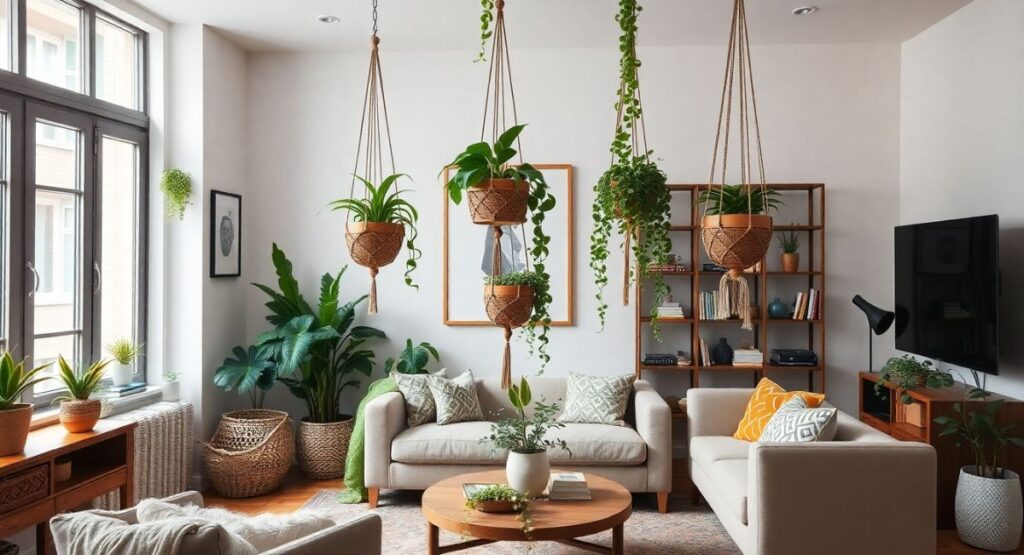
Hanging planters add softness and vertical texture. I used macrame hangers in my small apartment corner, creating movement as the vines trailed downward.
Tip: Space hangers evenly and rotate plants to ensure even sunlight exposure. This adds organic flow to the room and keeps the display looking intentional.
9. Framed Plant Wall Display
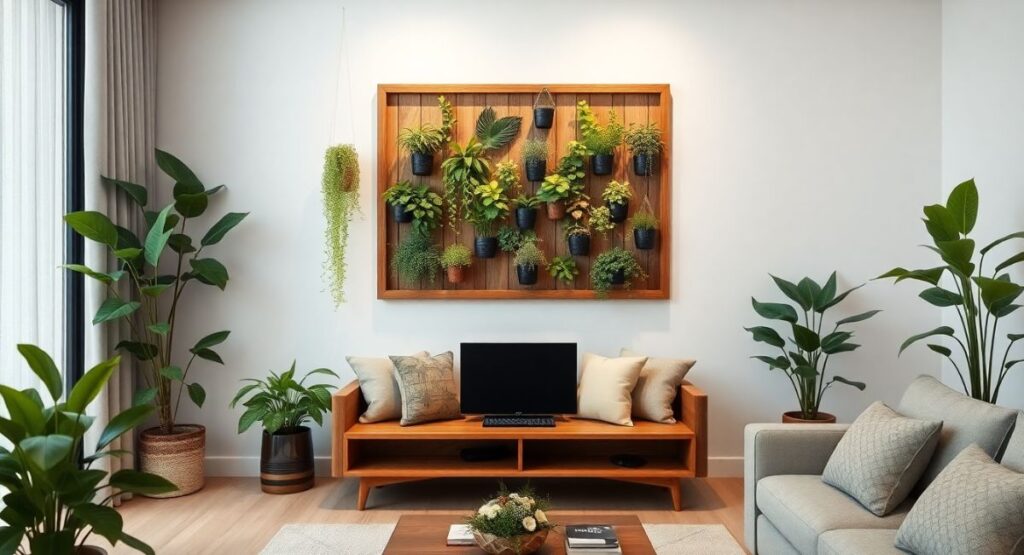
Framing plants transforms them into living artwork. I built a shallow wooden frame and layered plants inside. Mixing trailing and upright species created a gallery-like effect while keeping the wall visually cohesive.
Tip: Use shadow boxes or shallow shelves for better stability and style.
10. Compact Plant Wall for Studio
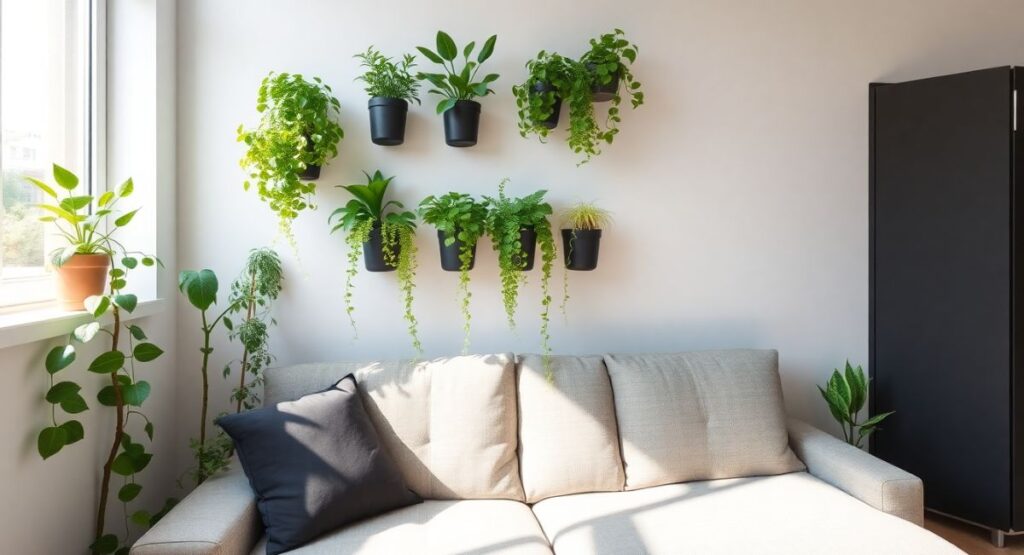
In studios, scale is everything. I kept to 2–3 shelves and small pots to avoid crowding the wall. Keeping pot colors consistent ensures a cohesive look, while varying leaf shapes adds natural texture.
Even small walls can feel luxurious with careful layering and thoughtful plant selection.
Buying Guide
- Weight Capacity: Ensure shelves or rails can support your plants.
- Lighting: Assess sunlight; use grow lights if needed.
- Watering Access: Make sure you can remove plants easily.
- Wall Type: Drywall anchors or tension rods as required.
Who Should Build: Apartment renters, small home owners, or anyone wanting vertical greenery.
Mistakes to Avoid
- Overcrowding shelves
- Mismatched pots
- Ignoring light direction
- Forgetting drip trays
FAQs
- How do I create an indoor plant wall in a small apartment?
Ans:
- What plants work best on indoor plant walls?
- Can I install an indoor plant wall without drilling?
- Do indoor plant walls need grow lights?
- How do I prevent water damage on walls?
Final Thoughts
An indoor plant wall brings warmth, depth, and style to any small apartment. Start with a few shelves, layer plants thoughtfully, and let your vertical garden grow naturally. Even small spaces can feel lush, curated, and inviting with the right setup.
Pingback: 20 Smart Indoor Plant Stand Ideas for Small Homes (2026)