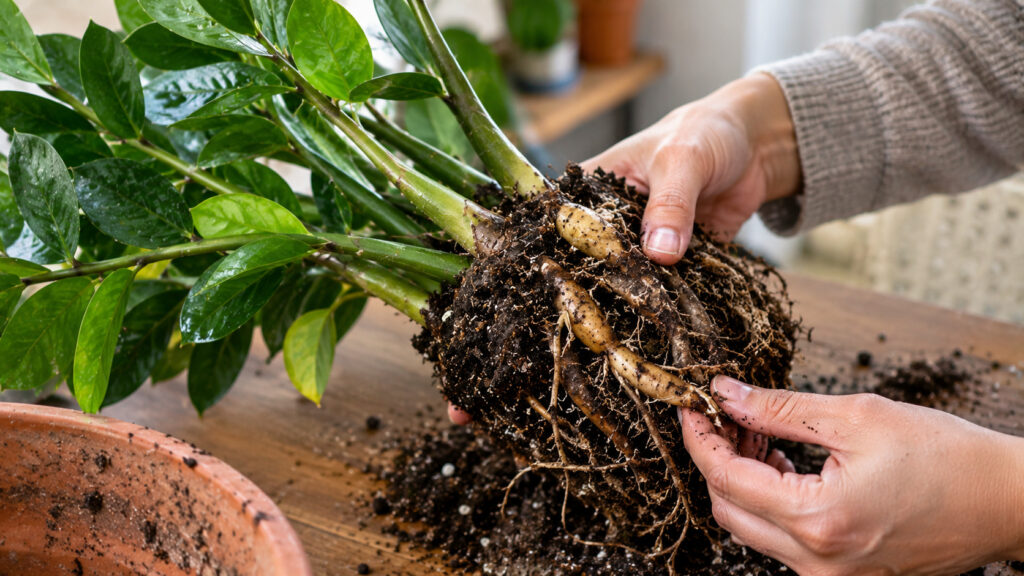
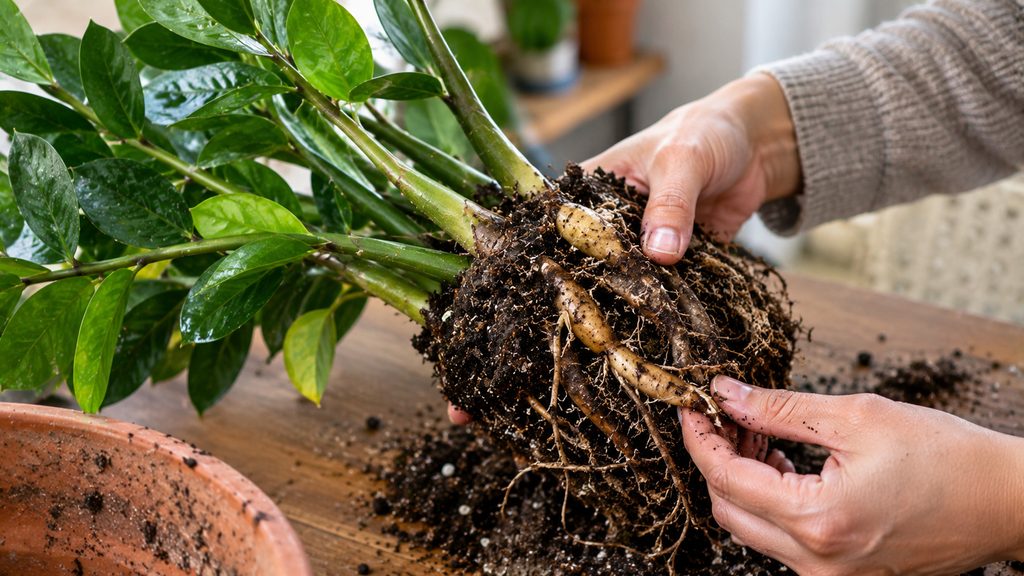
ZZ plant overwatering is the single biggest threat to this otherwise nearly indestructible plant, and it leads directly to root rot if it goes uncorrected. The cruel part is that rot produces symptoms that look almost identical to a thirsty plant, which leads many owners to water more and speed up the damage instead of stopping it.
This guide shows you how to tell rot apart from simple thirst, how to check the rhizomes correctly, and exactly what to do at each stage of severity, from a plant you can save with a dry-out period to one that needs a full rhizome trim and repot.
Work through the signs and the rhizome check before doing anything else, since acting on the wrong diagnosis is what causes most rescue attempts to fail.
Quick Answer
ZZ plant overwatering leads to root rot when soil stays wet long enough to suffocate the rhizomes, and the clearest signs are soil that remains damp days after watering, several leaves yellowing together, and soft or mushy stem bases. Confirm the diagnosis by checking the rhizomes directly, then let the soil dry out for mild cases or trim and repot for advanced rot.
Quick Take
A ZZ plant’s rhizomes store enough water that the plant rarely needs watering more than every few weeks, and soil that stays wet on top of that reserve cuts off the oxygen the roots need to function. According to University of Maryland Extension research on root rot, an overwatered plant can wilt even while sitting in damp soil, since the rotting roots can no longer absorb the moisture around them, which is exactly why so many people respond by watering more. The fix depends entirely on severity: a plant caught early with just a little yellowing and damp but not soggy soil often recovers by drying out alone, while a plant with soft stem bases needs its rhizomes inspected and trimmed before repotting.
One mistake many owners make is judging a ZZ plant’s water needs by how the leaves look rather than by checking the soil or rhizomes directly. In practice, yellowing and wilting from rot look almost the same as yellowing and wilting from thirst, and watering a rotting plant again only accelerates the damage.
Signs of Overwatering to Watch For
Soil that stays visibly damp for several days or longer after your last watering is the earliest and most reliable warning sign, well before any leaf symptoms appear. Several leaves or stems yellowing around the same time, rather than a single old leaf at the base, points toward overwatering rather than natural aging.
Soft or squishy stem bases where they meet the soil are a stronger warning sign, and they usually mean the problem has already reached below the soil line. A sour or swampy smell rising from the pot, especially during watering, often confirms that bacterial or fungal rot has already started.
A pot with no drainage hole, or a decorative cachepot that traps runoff underneath the nursery pot, causes the exact same overwatering symptoms even if your watering habits themselves are otherwise careful.
How Overwatering Turns Into Root Rot
The rhizomes that make a ZZ plant so drought-tolerant work against it once the soil stays wet. These thick, water-storing structures need oxygen from the surrounding soil to function, and waterlogged soil displaces that oxygen, effectively suffocating the rhizome and the roots that depend on it.
Once oxygen is cut off, the tissue begins to break down, turning soft and eventually mushy as rot sets in. Left untreated, this spreads from the roots into the rhizome itself, and in advanced cases up into the stem bases above the soil.
The Rhizome Check: Confirming What You’re Dealing With
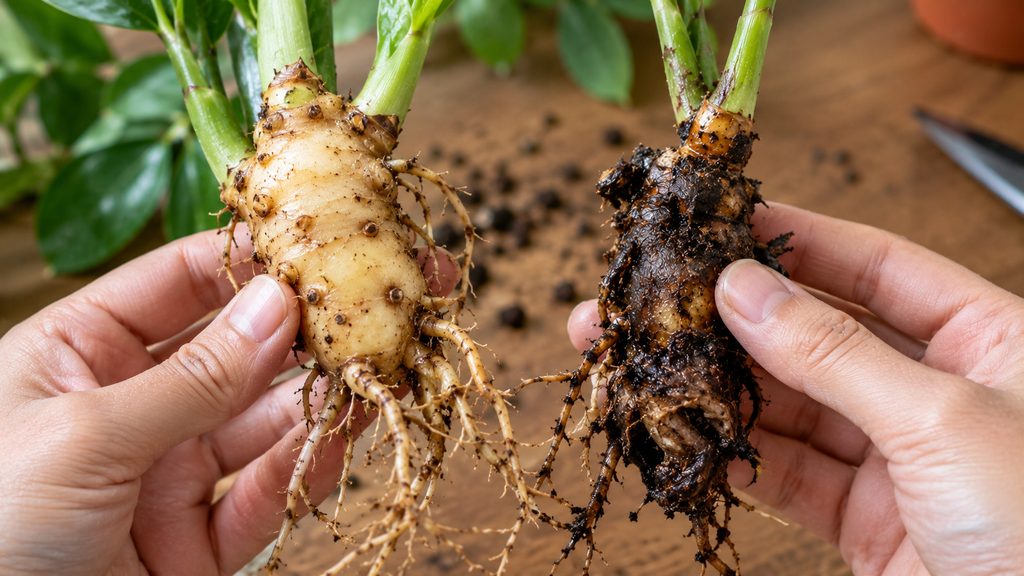
Checking the rhizomes directly removes the guesswork, and the process takes about ten minutes. Slide the plant carefully out of its pot and gently brush away the soil until the rhizomes are visible.
Firm, pale tan or cream-colored rhizomes with a neutral or faintly earthy smell are healthy, even if some surrounding roots look stressed. Soft, mushy, dark brown, or translucent rhizomes with a sour smell are rotting, and this tissue will not recover no matter how the soil is treated afterward.
Rescue Steps by Severity
Mild: Soil Damp, Stems Still Firm
If the rhizomes check out firm and the only symptoms are a little yellowing with soil that feels merely damp rather than soggy, a full repot is not necessary. Stop watering entirely, empty any water sitting in the saucer, and let the soil dry out completely before resuming a normal watering routine.
Moderate: A Few Soft Roots or Rhizome Sections
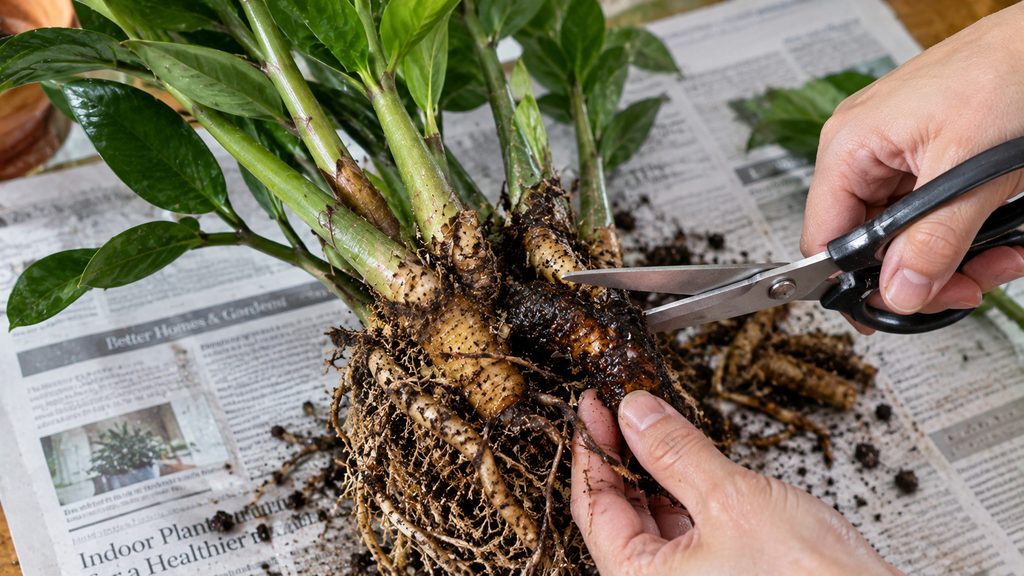
When most rhizomes are firm but a smaller section, or some of the fine roots, feel soft or dark, targeted trimming solves the problem without a full rebuild. Cut away every soft or discolored section with a clean, sharp blade back to firm, cream-colored tissue, then let the cuts air-dry and callus for several hours to a full day before repotting into fresh, fast-draining soil.
Severe: Most Rhizomes Soft or Mushy
If most of the rhizome mass is soft, dark, or mushy, recovery becomes far less certain, though it is often still worth attempting if any firm sections remain. Remove every trace of rot, dust the cut surfaces with cinnamon or a fungicide labeled for houseplant use to reduce reinfection risk, let the cuts callus fully, and repot into a smaller container than before, since an oversized pot holds more moisture than a recovering plant can handle.
Repotting After Root Rot
Use a fresh, well-draining mix, ideally 60 percent standard potting soil combined with 40 percent perlite, rather than reusing the original soil, which may still carry fungal or bacterial contamination. Choose a pot with drainage holes that is the same size or smaller than the original, since a plant recovering from rot has a reduced root system that cannot manage excess soil volume.
Hold off on watering for about a week after repotting to give any remaining cut surfaces time to heal, then resume watering only once the soil has dried out, checking it directly rather than watering on a fixed schedule.
Rescue Steps at a Glance
| Severity | Rhizome Condition | Action |
|---|---|---|
| Mild | All firm, soil just damp | Stop watering, let soil dry fully |
| Moderate | Mostly firm, small soft sections | Trim affected sections, repot in fresh soil |
| Severe | Mostly soft or mushy | Remove all rot, treat cuts, repot smaller |
Preventing Future Overwatering
Checking the soil before every watering, rather than following a fixed schedule, prevents the large majority of overwatering cases before they start. Light and season both change how quickly soil dries, so the same interval that works in a bright summer window will not fit a dim winter corner. The how often to water ZZ plant guide breaks this down in full detail by light level and time of year.
A pot with drainage holes and a fast-draining soil mix also remove much of the risk, since even an occasional overwatering mistake drains away rather than pooling around the rhizomes.
FAQs
Can a ZZ plant recover from root rot?
Yes, in most cases, as long as some firm, healthy rhizome tissue remains after trimming away the rot. Severe cases with little to no healthy tissue left are harder to save but sometimes still recover with careful treatment.
How long does it take a ZZ plant to recover from overwatering?
A mild case recovers within a few weeks once the soil dries out and normal watering resumes. A moderate to severe case involving trimming and repotting can take one to several months before visible new growth appears.
Can I use hydrogen peroxide to treat ZZ plant root rot?
Yes, a diluted solution of 3 percent hydrogen peroxide mixed with water is sometimes used to disinfect rhizomes after trimming rot away, helping reduce the risk of reinfection before repotting.
How do I know if my ZZ plant is overwatered or just thirsty?
Check the soil directly rather than relying on the leaves alone, since both conditions can cause yellowing and wilting. Damp soil days after watering points to overwatering, while bone-dry soil points to thirst.
Should I remove all the leaves from a stem affected by root rot?
Remove only the stem sections connected to rotted rhizomes that cannot be saved, rather than stripping healthy stems as a precaution. Healthy stems connected to firm rhizomes should be left intact.
What potting mix prevents root rot in ZZ plants?
A mix of roughly 60 percent standard potting soil and 40 percent perlite provides the fast drainage ZZ plants need. A cactus or succulent mix with added perlite works as an easier premade alternative.
Is it normal for a ZZ plant to look worse for a while after a root rot rescue?
Yes, some additional leaf yellowing or drop after repotting is common as the plant adjusts and redirects energy toward rebuilding its root system. This typically stabilizes within a few weeks if the remaining rhizomes are healthy.
Conclusion
ZZ plant overwatering becomes root rot once the soil stays wet long enough to suffocate the rhizomes, and the two conditions share enough symptoms with simple thirst that a direct rhizome check is the only reliable way to know which one you are dealing with. Match your response to the severity you find, from a simple dry-out period for mild cases to a full trim and repot for advanced rot, and adjust your watering habits by light and season afterward to prevent it from happening again.
Pingback: 9 ZZ Plant Beginner Mistakes to Avoid (Easy Fixes 2026)
Pingback: How Big Do ZZ Plants Get? Mature Height & Growth (2026)